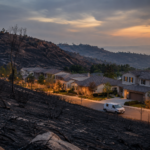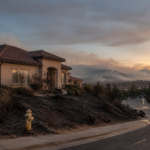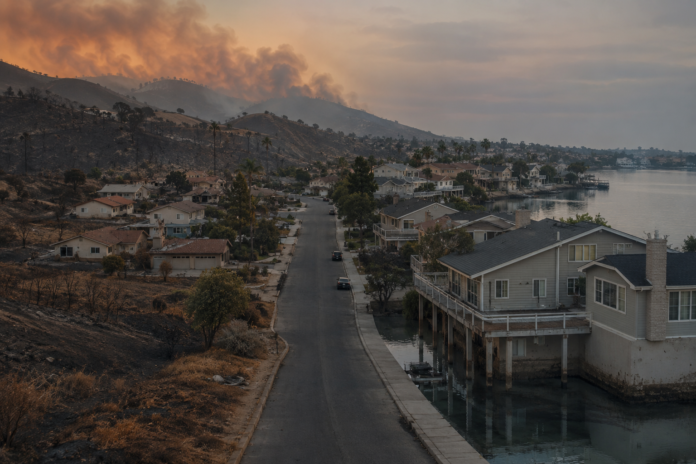
Homes in wildfire and flood zones are no longer priced the way they were a decade ago, and the gap between a hazard-exposed property and a comparable low-risk one is widening every renewal cycle. If you own, plan to buy, or plan to sell in a mapped hazard zone, three numbers matter most: the NFIP flood premium under Risk Rating 2.0 (which can run 3-10 times higher than legacy rates for high-exposure homes), the wildfire-specific insurance surcharge or non-renewal risk in WUI (wildland-urban interface) zip codes, and the resale discount — typically 5% to 15% — that climate-exposed homes are starting to carry relative to otherwise identical properties outside the hazard boundary. This brief breaks down how those numbers are generated, who sets them, and what a homeowner or buyer can actually do about them.
Who Sets This Risk, and What Actually Triggers It
Climate risk pricing in housing is not one system. It is three overlapping ones that rarely talk to each other: the federal flood insurance program, the private and state-backed wildfire insurance market, and the appraisal/resale market that eventually absorbs both. Each has its own trigger.
Flood risk gets triggered the moment a property falls inside a FEMA-mapped Special Flood Hazard Area (SFHA), officially the 100-year floodplain, or Zone AE, A, VE, or a coastal high-hazard zone. Since October 2021, FEMA’s Risk Rating 2.0 methodology replaced the old flat-rate, zone-based system with an address-specific model that factors in distance to water, elevation, flood frequency, and rebuild cost. A house two blocks from a creek can now pay a materially different premium than a house on the same block that sits eighteen inches higher.
Wildfire risk gets triggered by a mix of vegetation density, slope, historical fire perimeter data, and proximity to what insurers call the WUI — the zone where development meets flammable wildland. Unlike flood, there is no single federal wildfire insurance backstop in most states; homeowners rely on private carriers, and increasingly, state-run FAIR Plans (California, Oregon) or similar residual markets when private insurers pull out entirely.
Resale value risk is the slowest-moving trigger, but it is the one that eventually decides what all this actually costs an owner. It shows up as extended days-on-market, buyer financing friction, and appraisal adjustments once enough transaction data accumulates in a hazard-exposed submarket.
The Underwriting Chain, Step by Step
A single property moves through this chain roughly in this order:
- A hazard model (FEMA flood maps, or a private catastrophe model such as those from Verisk, CoreLogic, or Moody’s RMS for wildfire) assigns the parcel a risk score.
- An insurer prices a policy against that score, or declines to offer one at all.
- A mortgage lender requires proof of coverage as a closing condition, which means the insurance price (or unavailability) directly affects financeability.
- An appraiser, working under Fannie Mae and Freddie Mac guidelines, is supposed to note “adverse environmental conditions” but historically has had weak tools to quantify a discount — this is changing as GSEs push climate-risk disclosure into appraisal forms.
- The resale market prices in whatever combination of insurance cost, insurability, and buyer perception survives all of the above.
Break any link in that chain — an insurer that will not write a policy, a lender that will not close without one — and the property can become functionally unsellable at its prior market price, regardless of how appraisers scored it on paper.
It helps to think of this as a relay race rather than a single decision. The hazard model hands its score to the insurer. The insurer hands its price, or its refusal, to the lender. The lender hands a closing condition to the title company. None of these parties is required to coordinate with the others, which is exactly why a homeowner can hold a perfectly valid deed on a home that is, in practical financing terms, stuck. A cash buyer can absorb an uninsurable property and simply self-insure the risk, at least on paper, but a financed buyer cannot, and financed buyers make up the overwhelming majority of the market in most hazard-exposed suburbs. That asymmetry is a large part of why hazard-zone homes increasingly sell to investors and cash buyers at a discount, while traditional owner-occupant buyers quietly self-select out of the pool.
Why the Timing of Remapping Matters More Than the Mapping Itself
One detail that rarely makes it into casual conversations about climate risk is timing. FEMA remaps flood zones on a rolling basis, county by county, and a remap does not require a flood to have happened first — it can be driven by updated rainfall modeling, new development upstream that changes runoff patterns, or simply better lidar elevation data than existed when the previous map was drawn. A homeowner can go to sleep outside a Special Flood Hazard Area and wake up inside one without a single drop of rain falling on their roof. The same is increasingly true for wildfire hazard severity zone maps, which several states update every few years using satellite vegetation data and updated climate projections rather than waiting for a fire event to justify a redraw. This means the risk classification driving your insurance bill can change even when nothing about your specific property has changed at all — which is one reason insurance costs in these categories have been rising faster than home values themselves in several fire- and flood-prone metro areas over the past three renewal cycles.
Flood Risk Pricing: Inside Risk Rating 2.0
Risk Rating 2.0 is the single biggest change to residential flood insurance pricing in the NFIP’s history. Before October 2021, a home’s premium was based almost entirely on its flood zone letter and base flood elevation — a blunt instrument that charged similar rates to very different properties as long as they sat in the same zone. Risk Rating 2.0 individualizes the number using a combination of:
- Distance to the nearest water source and that source’s flood frequency
- Elevation of the structure relative to base flood elevation, including first-floor height
- Type of flooding risk (river, coastal surge, tidal) and its historical severity
- Rebuild cost of the structure, since NFIP payouts are actual-cash-value or replacement-cost based depending on policy type
The practical effect has been sharply uneven. FEMA’s own transition data showed that roughly 23% of policyholders nationally saw immediate premium decreases, while a smaller share — concentrated in the highest-exposure coastal and riverine addresses — saw increases that in some cases exceeded $1,000 to $2,000 per year, phased in under an 18% annual cap for existing policies (new policies and post-sale policies are not capped and can jump to the full risk-based rate immediately upon purchase).
That last detail is the one that trips up buyers most often: flood insurance is not transferable at the seller’s rate. A new policy written the day a sale closes reflects the full, uncapped Risk Rating 2.0 price. A buyer who saw the seller’s $1,800 annual premium during due diligence can find themselves quoted $4,500 once the policy has to be rewritten in their name.
The Mandatory Purchase Trigger Most Buyers Miss
Federal law requires flood insurance whenever a home in an SFHA is financed with a federally backed mortgage — which covers the overwhelming majority of conventional loans, since Fannie Mae and Freddie Mac purchase requirements flow through nearly every major lender. This is not optional and not something a lender can waive. If FEMA remaps a neighborhood into a flood zone after a homeowner already has a mortgage, the lender is required to notify the homeowner and force-place coverage if the homeowner does not obtain it voluntarily — usually at a materially worse rate than a standard policy.
Force-placed flood insurance deserves its own callout because it is the single worst financial outcome in this entire chain, and it is largely avoidable. When a lender force-places a policy, it is not shopping the market on the homeowner’s behalf — it is buying the minimum coverage required to protect its own collateral, at a price set by the lender’s own insurance vendor, with no discount for elevation certificates and no credit for mitigation. Coverage under a force-placed policy often protects only the outstanding loan balance rather than the homeowner’s full equity or contents. Homeowners who receive a force-place notice typically have a narrow window, often 45 days, to produce their own proof of coverage before the lender’s policy takes effect and its cost is added directly to the mortgage escrow account. Because that cost lands inside the monthly mortgage payment rather than as a separate bill, some homeowners do not notice the change until the payment itself has already jumped by several hundred dollars a month.
Grandfathering and Why It Is Losing Its Value
For years, the NFIP allowed a practice called grandfathering: a home built to code and mapped into a lower-risk zone could keep that zone’s rate even after a later remap moved it into a higher-risk designation, provided the policy stayed continuously in force. Risk Rating 2.0 did not eliminate grandfathering outright, but it narrowed its practical value substantially, because the new methodology prices risk at the individual structure level rather than the zone level. Two grandfathered neighbors on the same block can still see very different premiums based on elevation and rebuild cost, even while both technically retain “grandfathered” zone status. A homeowner relying on an old grandfathered rate as a selling point should get written confirmation of exactly what carries over and what resets the moment a policy changes hands, rather than assuming the number on a current bill will transfer intact.
Wildfire Risk Pricing: Non-Renewal Is the Real Number
Wildfire pricing looks different from flood pricing because the constraint is not usually premium size — it is availability. In the highest-risk WUI zip codes across California, Oregon, Washington, and increasingly Colorado and parts of the Mountain West, the binding constraint on home value is whether an insurer will write a policy at all, not what that policy costs.
California’s data illustrates the pattern. State regulatory filings have shown non-renewal rates in the highest-risk wildfire tiers running several multiples above the statewide average, with some ZIP codes seeing double-digit percentages of policies non-renewed in a single year following major nearby fire activity — even for homes that were not directly damaged. When private carriers exit a block or a zip code, homeowners are pushed to the California FAIR Plan, a state-mandated last-resort insurer pool that historically wrote basic, capped-coverage fire policies at a materially higher cost than the standard market, often requiring a separate “wrap” policy to cover liability and other perils the FAIR Plan does not include.
California’s 2024-2025 regulatory reforms (the Sustainable Insurance Strategy) attempted to address this by allowing insurers to use forward-looking catastrophe models — rather than only historical loss data — in exchange for writing more policies in high-risk areas, and by giving insurers a path to pass reinsurance costs through to policyholders. The tradeoff for consumers is a faster path to premium increases in exchange for a (hoped-for) slower path to outright non-renewal.
Mitigation-Based Pricing Is Becoming the Norm
Insurers increasingly price at the structure level, not just the zip-code level, using home-hardening features as rating factors:
- Class A fire-rated roofing versus wood shake
- Ember-resistant vents and enclosed eaves
- Defensible space — cleared vegetation within 5 feet (the ember-ignition zone) and 30 feet of the structure
- Non-combustible siding and deck materials
- Programs such as the IBHS Wildfire Prepared Home designation, which some carriers now recognize with premium credits or renewal guarantees
The gap this creates within a single street can be significant: two homes with identical square footage and identical wildfire hazard scores can see meaningfully different premiums, or one can retain coverage while the other is non-renewed, purely based on defensible space and roofing material.
Reinsurance Pressure Is the Force Behind the Scenes
Homeowners rarely see this layer, but it drives much of what they experience at renewal. Primary insurers do not hold the full risk of a catastrophic wildfire season on their own balance sheets — they lay a large share of it off to reinsurers, the global companies that insure the insurers. After several consecutive years of elevated wildfire losses in the western United States, reinsurance treaty renewals became sharply more expensive, and primary insurers have passed a meaningful share of that cost through to policyholders, either as straight premium increases or as tighter underwriting appetite that shows up as non-renewals. This is part of why wildfire insurance pricing has moved in step-changes rather than gradual increases — a bad fire season two states away can still push up the cost of a policy on a home that has never been within a hundred miles of an active fire, simply because it resets what reinsurers are willing to charge for the next treaty year.
Secondary Perils Are Reshaping the Math Too
Wildfire modeling used to focus almost entirely on direct flame contact with a structure. Insurers now price for a wider set of secondary perils tied to the same events: smoke damage claims, which can affect homes many miles from an actual burn perimeter; post-fire debris flow and mudslide risk on burned hillsides during the following one to three rainy seasons; and water damage from firefighting efforts or damaged municipal infrastructure. A property can sit outside the direct wildfire hazard severity zone and still see a rating impact if it sits downslope from recently burned terrain, because the burn scar itself becomes a new, temporary flood and debris-flow hazard that overlays the original wildfire risk.
Worked Example: Two Comparable Homes, One Hazard Line
Consider a hypothetical but realistic scenario built from typical Risk Rating 2.0 and wildfire-tier pricing patterns. Two three-bedroom homes, each valued at roughly $520,000 before insurance costs are factored in, sit half a mile apart in a foothill community. Home A sits just outside the FEMA-mapped floodplain and the highest wildfire hazard severity zone. Home B sits just inside both boundaries.
Annual Carrying Cost Comparison — Home A (outside hazard zone) vs. Home B (inside hazard zone)
Bars scaled to Home B’s combined cost as the reference point. Figures are illustrative, built from typical Risk Rating 2.0 and wildfire-tier premium ranges reported in regulatory filings, not a quote for any specific address.
The $6,350 annual gap between the two homes does not just sit on an insurance bill — it gets capitalized into the mortgage-qualifying math. At a typical 28% housing-expense-ratio threshold, $6,350 in additional annual carrying cost reduces the loan amount a buyer can qualify for by somewhere in the range of $60,000 to $75,000, depending on the interest rate environment. That is before any resale discount tied to buyer hesitancy or disclosure requirements is applied. Multiply that qualifying-power gap across a whole hazard-zone submarket, and it is easy to see why appraisers in these areas increasingly report softer comparable sales and longer marketing times for the mapped side of the boundary line — even when the physical homes are nearly identical.
There is a second-order effect worth naming, too. Once enough transactions close on the hazard-exposed side of a boundary at prices reflecting that qualifying-power gap, those sales become the comparable sales an appraiser must use for the next transaction in the same zone. Appraisal methodology relies heavily on recent, nearby, similar sales, and once a hazard boundary starts generating its own distinct price trend, it effectively creates two separate micro-markets sitting a few hundred yards apart. Home B’s owner, watching this unfold at the next refinance or sale, often discovers the discount is not a one-time event tied to a single high insurance quote — it becomes embedded in the neighborhood’s appraisal baseline for as long as the hazard designation and insurance gap persist.
Red Flags Reference Table
| Red Flag | What It Signals | Action Before Closing |
|---|---|---|
| Seller’s flood policy premium looks unusually low | Often a legacy pre-Risk Rating 2.0 rate or a grandfathered policy that does not transfer | Get an independent NFIP or private-market quote in the buyer’s own name before waiving contingencies |
| Property received a non-renewal notice in the past 24 months | Carrier has flagged elevated wildfire or flood loss probability at the address level | Request the non-renewal letter and confirm current replacement coverage exists and is bindable |
| Home relies on a state FAIR Plan or residual-market policy | Private market has already declined to insure; coverage may be capped or incomplete | Price in the cost of a wrap policy and confirm the FAIR Plan cap covers full rebuild cost |
| Recent FEMA map revision (LOMR/LOMA pending or denied) | Flood zone status, and therefore mandatory-purchase status, may be about to change | Check FEMA’s Map Service Center for pending Letters of Map Revision before assuming current zone is final |
| No defensible space or Class A roofing in a WUI zone | Structure is likely to be rated in the least favorable wildfire tier available | Get a mitigation inspection quote and factor hardening costs into the offer price |
| Listing agent avoids stating flood zone or fire hazard severity zone in disclosures | Possible disclosure gap — most states require fire hazard severity zone disclosure at minimum | Pull the state-mandated Natural Hazard Disclosure report independently, do not rely solely on the listing |
How to Mitigate or Respond: A Practical Checklist
Whether you are already an owner in a mapped zone or evaluating a purchase, the sequence below is the one that actually moves the number.
- Pull your own hazard data first. Check FEMA’s Flood Map Service Center for your exact parcel and your state fire marshal’s Fire Hazard Severity Zone viewer — do not rely on a listing agent’s characterization or an old survey.
- Get an insurance quote before you get emotionally attached to a property. A pre-offer quote, even a rough one, tells you whether the home is insurable at a workable price and prevents a financing surprise late in escrow.
- Ask for the seller’s loss history (CLUE report) via the listing agent. Prior claims, even ones that did not result in a non-renewal, are visible to any new insurer underwriting the property and will affect your quote.
- Invest in mitigation before your next renewal, not after a non-renewal notice. Defensible space clearing, ember-resistant vents, and elevation certificates for flood zones are all cheaper than the coverage gap they prevent.
- Get an elevation certificate if you are in a flood zone and unsure of your first-floor height. A certificate showing your structure sits above base flood elevation can lower your NFIP premium substantially and is often worth its one-time cost within a single policy year.
- Budget for the uncapped rate, not the seller’s rate, when buying. Use a fresh quote in your own name for mortgage qualification math, not the number on the seller’s current declarations page.
- Ask whether your state has a residual market and what it actually covers. If your only option is a FAIR Plan or similar pool, confirm the coverage limit against full rebuild cost and budget for a supplemental wrap policy.
- Revisit coverage annually, not just at renewal notice. Catastrophe models update after every major regional fire or flood event, and your rating can shift even without a claim on your own property.
Key Takeaways
- Flood insurance pricing under FEMA’s Risk Rating 2.0 is address-specific, not zone-flat, and a seller’s current premium will not transfer to a buyer — new policies price at the full risk-based rate immediately.
- Wildfire risk pricing is increasingly a question of insurability, not just cost — non-renewals in high-severity WUI zones can force homeowners into state FAIR Plans with capped, more expensive coverage.
- Structure-level mitigation — defensible space, Class A roofing, elevation certificates — is one of the few levers homeowners directly control, and it is increasingly recognized in underwriting.
- Combined insurance costs in high-hazard zones can reduce a buyer’s mortgage-qualifying power by tens of thousands of dollars, which shows up later as softer resale values and longer time on market.
- Always verify hazard status and get an independent insurance quote before waiving contingencies — disclosure gaps and legacy policies are the two most common ways buyers get blindsided.
Frequently Asked Questions
Does flood insurance transfer to a new owner when a home is sold?
No. A flood insurance policy does not transfer at the seller’s rate. The buyer must obtain a new policy in their own name, and under FEMA’s Risk Rating 2.0 methodology, that new policy is priced at the full risk-based rate rather than any capped or legacy rate the seller may have been paying.
How much can wildfire risk actually lower a home’s resale value?
Discounts vary widely by market and by how recently a nearby fire occurred, but homes in high wildfire hazard severity zones have shown resale discounts commonly cited in the 5% to 15% range relative to comparable homes outside the zone, driven mainly by insurance cost and availability rather than physical damage.
What is a FAIR Plan and when would I need one?
A FAIR Plan is a state-mandated insurer of last resort that provides basic property coverage when private insurers decline to write a policy, typically in high-wildfire or high-catastrophe-risk areas. Coverage is often more limited and more expensive than standard market policies, and many homeowners need a separate supplemental policy to cover liability and other perils the FAIR Plan excludes.
Can I appeal or reduce my FEMA flood zone designation?
Yes, through a Letter of Map Amendment (LOMA) or Letter of Map Revision (LOMR), which FEMA issues when a property owner can show through elevation certificates or survey data that the parcel does not actually meet the criteria for the mapped flood zone. This can remove the mandatory flood insurance purchase requirement if approved.
Do home hardening upgrades actually lower my wildfire insurance premium?
In many markets, yes. Insurers increasingly use structure-level mitigation — Class A fire-rated roofing, ember-resistant vents, and cleared defensible space — as underwriting factors, and some carriers offer premium credits or renewal guarantees for homes certified under programs like the IBHS Wildfire Prepared Home standard.
References
- Federal Emergency Management Agency — Risk Rating 2.0: Equity in Action methodology documentation
- FEMA Flood Map Service Center — National Flood Hazard Layer data
- California Department of Insurance — Sustainable Insurance Strategy regulatory filings and non-renewal data by ZIP code
- Insurance Institute for Business & Home Safety — Wildfire Prepared Home program standards
- Fannie Mae and Freddie Mac Selling Guides — property eligibility and hazard insurance requirements
- Pricing the Unpredictable: Factoring Physical Climate Risk into Real Asset Valuations — FinanceFundamentals.io