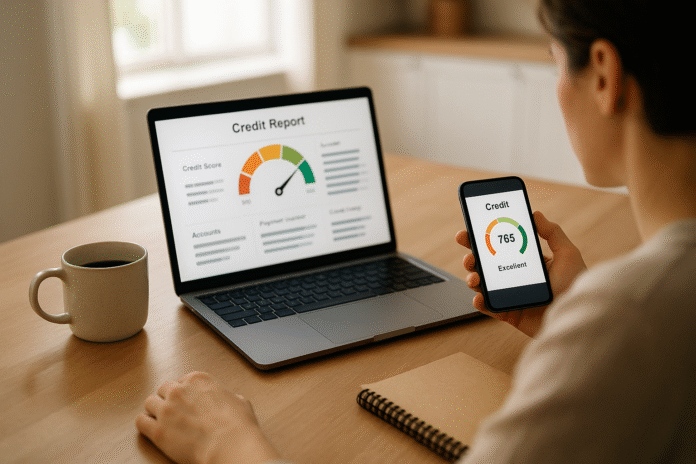
If you’ve been hunting for a new credit card, you’ve probably seen “check for offers without hurting your credit.” That promise hinges on the difference between soft and hard credit inquiries. This guide gives definitive answers—what’s truly score-neutral, when points can drop (and by how much), how long inquiries matter, and the smartest ways to apply. It’s people-first, plain-English, and based on current guidance from sources like the CFPB, FICO, Experian, Equifax, and the FTC.
Quick answer: Checking for card offers or viewing your own reports is a soft inquiry and does not lower your score. Submitting a real application creates a hard inquiry, which can shave a few points off temporarily.
This article is educational, not financial advice. Policies and score models can vary; confirm details with your issuer and refer to official resources cited below.
1. Soft Inquiries: Checking Offers or Your Own Reports Won’t Hurt Your Score
Direct answer: When you check for credit card offers (pre-qualification or preapproval) or pull your own credit, it’s recorded as a soft inquiry and does not affect your credit score. Soft inquiries are visible only to you and are not shown to lenders evaluating you for new credit.
Soft inquiries cover several common actions: pulling your own report, getting prescreened or targeted offers, routine account reviews by an existing lender, and many employer or insurance checks. None of these change your score. Today, you can also monitor your reports more frequently without cost barriers. The CFPB confirms your own checks are score-neutral and points to AnnualCreditReport.com for free online access—now weekly—while a 2023 FTC alert notes that free weekly credit reports are a permanent option going forward. That makes routine self-checks easier and safer than ever.
Numbers & guardrails:
- Soft inquiries: 0 points impact; shown only to you.
- Free credit reports: Via AnnualCreditReport.com, weekly access is permanently available; CFPB also notes additional free Equifax pulls through December 2026.
- Good hygiene: Review each bureau—Equifax, Experian, TransUnion—regularly to catch errors or fraud early.
Mini-checklist
- Check your own reports and scores regularly (score-neutral).
- Use issuer “prequal” tools before you apply.
- Save PDFs or screenshots to track changes over time.
- If something looks off, dispute promptly (see Item 8).
Bottom line: Prequalifying or self-monitoring is safe for your score and smart for decision-making. Use it liberally.
2. Hard Inquiries: Actual Applications Can Trim a Few Points—Temporarily
Direct answer: Submitting a real credit card application triggers a hard inquiry, which can reduce your FICO® Score by less than five points for most people; the impact is small and typically short-lived. Hard inquiries display to lenders and remain on reports for up to two years but generally affect FICO scoring for one year.
That drop varies by profile: newer credit files or many recent applications may feel the impact more. Still, inquiries are a small slice (in FICO’s “new credit” category, ~10% of the score), dwarfed by timely payments and low balances. Practically, one card application seldom moves the needle much unless it’s part of a pattern of frequent new credit. Remember, the inquiry stays visible for two years even though most scoring impact fades after 12 months.
Numbers & guardrails
- Typical impact: <5 points per inquiry (varies).
- Visibility: 24 months on your reports; FICO counts them for 12 months.
- Weight in FICO: “New credit” ~10% of score; inquiries are just part of that slice.
Mini case: A consumer at 735 applies for a travel card. Score dips to 731–733. If they avoid additional hard pulls and keep utilization under ~10–30%, they often see the points rebound within months, and inquiry impact ceases after 12 months.
Bottom line: A hard pull is normal when you actually apply. Expect a small, temporary dip—not a freefall.
3. Prequalification vs. Preapproval vs. Application: Know Which Is Soft (and When)
Direct answer: Prequalification and most preapprovals for credit cards use soft pulls and don’t affect your score. The application you submit after reviewing the offer triggers a hard inquiry. Issuers and the CFPB both frame it this way: soft when they’re checking fit or managing an existing relationship; hard when you formally seek new credit.
In practice, prequalification helps you gauge odds and APR ranges without committing. Preapprovals (including prescreened firm offers) also rely on soft reviews; you’ll see the hard pull only if you accept and apply. A few edge cases—like some credit limit increase requests—can involve a hard pull depending on the issuer’s policy, so it’s wise to ask before proceeding.
How to use prequal safely
- Start with prequal: Check issuer sites for “See if you’re prequalified” without impact.
- Confirm the pull type: Look for “won’t affect your credit score” language; chat support if unclear.
- Apply only when ready: When you click “submit application,” expect a hard inquiry.
Why it matters
Prequal funnels your options, cuts down on unnecessary hard pulls, and can surface targeted offers. You keep control while protecting your score until you’re confident enough to apply.
Bottom line: Treat prequal and preapproval as score-safe scouting; the hard pull comes only when you decide to apply.
4. Bundling Inquiries: Rate Shopping Helps for Loans—Not for Credit Cards
Direct answer: FICO groups multiple mortgage, auto, and student loan inquiries within a short window (about 14–45 days, model-dependent) and treats them as one for scoring; it also ignores the last 30 days for those categories. Credit card applications do not get this “deduplication” treatment.
This design encourages consumers to shop for loan rates without unnecessary score damage. But with credit cards, each application is scored individually. For that reason, chasing many signup bonuses at once can produce multiple dings and may also look risky to lenders reviewing your reports. Space out card applications, and lean on prequal tools to avoid stacking hard pulls.
Numbers & guardrails
- FICO “rate-shopping” window: 14–45 days; loans only. Last 30 days ignored for those loan inquiries.
- VantageScore’s windows differ; lenders can use different models. Assume credit cards aren’t deduped.
- Practical spacing: Many consumers wait 90+ days between card applications to limit cumulative impact.
Checklist: card applications
- Use prequal first; avoid “cold” applications.
- Don’t batch multiple card applications on the same day.
- If you must apply for more than one, separate them by months, not days.
Bottom line: Rate-shopping rules protect loan shoppers—not card applicants. Treat every card application as its own hard pull.
5. Account Reviews & Credit Limit Increases: When Pulls Are Soft vs. Hard
Direct answer: Routine account reviews by your existing card issuer are soft inquiries and don’t affect your score. However, when you request a credit limit increase (CLI), some issuers do a hard inquiry, while others use a soft pull—ask first so there are no surprises.
Issuers periodically review customers’ credit to manage risk or offer targeted upgrades; the CFPB labels these as soft. For CLIs, issuer policy varies; Experian notes that a request may trigger a hard inquiry even if the increase is denied. If you’re optimizing utilization, a CLI can help by lowering your credit usage percentage—just know the “cost” could be a hard pull. When in doubt, check the issuer’s help page or chat support and look for phrasing like “we use a soft inquiry.”
Mini-checklist
- Before requesting a CLI, ask whether the check will be soft or hard.
- If it’s hard and your utilization is already low, consider waiting.
- If it’s soft, a CLI can reduce utilization and potentially improve scores.
Numbers & guardrails
- Account review by existing lender: soft, 0 points impact.
- CLI request: policy-dependent; may be hard.
Bottom line: Expect soft pulls for issuer-initiated reviews; treat CLI requests as “ask-first” because some are hard pulls.
6. Credit Monitoring & Score Checks: Safe, Ongoing, and Useful
Direct answer: Viewing your own credit reports and scores is a soft inquiry with no score impact. Modern tools make it easy to monitor changes, catch errors, and spot fraud quickly—without losing points.
The CFPB affirms checking your own report won’t hurt your score and connects you to AnnualCreditReport.com; the FTC confirmed free weekly access is now permanent. Third-party monitoring services and many card issuers show a score snapshot, typically via soft pulls. Regular monitoring lets you verify on-time payments, utilization, and any new inquiries, so you can act fast if something looks off.
Tools & examples
- AnnualCreditReport.com: Pull full reports from all three bureaus weekly.
- Issuer dashboards: Many show a FICO or VantageScore; soft only. (Confirm in the fine print.)
- myFICO & bureaus’ apps: Track score changes and inquiry listings. Soft viewing of your own data.
Mini-checklist
- Calendar a monthly self-check; review all three bureaus.
- Set alerts for changes—new accounts, inquiries, or late payments.
- Keep records of your baseline scores and utilization.
Bottom line: Monitor often; it’s safe and it helps you prevent bigger problems.
7. Inquiries vs. Bigger Score Drivers: Why Payment History & Utilization Matter More
Direct answer: Hard inquiries are a minor factor; payment history (35%) and amounts owed/credit utilization (30%) carry far more weight in FICO scoring. Focus on these bigger levers and the small, temporary dip from an inquiry becomes negligible.
A single card application rarely derails an otherwise strong profile. Make every payment on time, keep utilization ideally under 10–30% (lower is generally better), and avoid opening too many accounts at once. New credit—including inquiries—sits in the ~10% category, and even within that slice, inquiries are only part of the signal. That’s why the path to higher scores runs through on-time payments and prudent balances rather than obsessing over a single hard pull.
Numbers & guardrails
- FICO weighting: Payment history 35%, Amounts owed 30%, Length 15%, New credit 10%, Mix 10%.
- Practical targets: Keep utilization <30% across cards; <10% often aligns with top-tier profiles.
Mini example: Two consumers take a 5-point hit from a new card inquiry. The one who pays on time and drops utilization from 35% to 8% recovers and surpasses their old score within months; the one who lets balances grow sees a larger, lasting decline.
Bottom line: The fastest way to offset a hard pull is boring and effective: pay on time, keep balances low.
8. Unauthorized Hard Inquiries: How to Dispute and Protect Your File
Direct answer: If you find a hard inquiry you didn’t authorize, dispute it with the credit bureau(s) and the company that pulled it, and consider filing an FTC identity theft report to lock in extra protections. Disputing errors is your right under federal law.
Step-by-step (U.S.)
- Document & freeze/alert: Place a fraud alert or security freeze; note the inquiry date and company. TransUnion
- Dispute with bureaus: File online or by mail; include evidence and the item circled/highlighted. Use CFPB templates.
- Contact the furnisher: Send a written dispute to the company that pulled your credit.
- Report identity theft: Submit an FTC report at IdentityTheft.gov to generate recovery steps and letters.
Tools & references
- IdentityTheft.gov assistant and letters: prebuilt forms & instructions. IdentityTheft.gov
- CFPB dispute handout: What to include; timelines. Consumer Financial Protection Bureau
Region note: Processes outside the U.S. differ; check your national regulator’s guidance.
Bottom line: Act quickly on unauthorized inquiries; combine disputes with alerts/freezes and an FTC report for best results.
9. A Smart, Score-Safe Strategy for Applying for a Card
Direct answer: Use soft-pull prequalification, apply only when the odds and terms look good, and space out hard inquiries. Combine that with on-time payments and low utilization and you’ll protect your score while getting the card you want.
Playbook
- Prequal first: Check multiple issuers for soft-pull offers; compare APR ranges, limits, and rewards.
- Time your application: Avoid stacking card applications; many consumers wait 3+ months between hard pulls.
- Mind bigger goals: If a mortgage/auto loan is coming up, minimize new card inquiries beforehand; rate-shopping windows help loans but not credit cards.
- Consider a CLI (carefully): Ask if the check is soft; if not, weigh the benefit of lower utilization against a possible hard pull.
- Opt out of prescreened mailers if they tempt you into unnecessary apps (5-year or permanent options).
Numbers & guardrails
- Expect a <5-point dip from one card application.
- Hard inquiries influence FICO for 12 months, remain visible for 24 months.
- Payment history (35%) and utilization (30%) easily outweigh inquiry effects—prioritize those.
Bottom line: Prequal, apply deliberately, and manage balances. That’s how you say yes to a new card while keeping your score happy.
FAQs
1) Does checking my own credit lower my score?
No. Pulling your own reports or viewing your score is a soft inquiry and won’t hurt your credit. You can do it frequently—AnnualCreditReport.com provides free weekly reports permanently, and CFPB notes these self-checks are score-neutral.
2) Will prequalification or preapproval for a credit card lower my score?
Generally, no. Those steps use soft pulls to estimate eligibility; a hard pull occurs only when you complete and submit the full application. Always check the fine print or ask support to confirm.
3) How many points does a hard inquiry cost?
For most people, less than five points per inquiry, with the impact tapering quickly. The effect is bigger if you have a thin file or many recent applications.
4) How long do hard inquiries affect my score?
They remain on reports for two years but typically affect FICO scoring for one year. Lenders still see them for 24 months, but the score math usually stops counting them after 12.
5) Do rate-shopping rules apply to credit cards?
No. FICO groups multiple mortgage/auto/student loan pulls within a window into one, but credit card applications are scored separately. Plan your card applications accordingly.
6) If I’m denied for a card, does the inquiry still count?
Yes. The hard inquiry posts whether you’re approved or not, and it still counts toward your score during the first 12 months. Experian
7) Will requesting a credit limit increase hurt my score?
It might. Some issuers use a hard pull for a CLI request, others a soft pull. Ask before you proceed. Account reviews initiated by your existing issuer (without your request) are soft.
8) Can I remove a hard inquiry I authorized?
Generally, no. Legitimate, authorized inquiries remain. You can and should dispute unauthorized inquiries with the bureaus and the company that pulled them; consider an FTC identity theft report if fraud is suspected. Consumer Financial Protection Bureau
9) What’s the best way to avoid unnecessary hard pulls?
Use prequalification, apply only when terms look good, and space out applications. Keep balances low and pay on time so the small dip from a hard pull is drowned out by stronger factors.
10) Do soft inquiries show up on my report?
Yes, but only you see them. Lenders pulling your report won’t see your soft inquiries, and they don’t influence scores.
11) How can I stop prescreened credit card mailers?
Use OptOutPrescreen.com or call 1-888-5-OPTOUT to opt out for five years, or complete the form for a permanent opt out. This reduces temptation to apply impulsively.
12) I live outside the U.S.—do these rules apply to me?
Scoring models and access rights vary by country. The core idea—soft vs. hard checks—exists in many markets, but windows, disclosures, and dispute processes differ. Check your local regulator’s guidance.
Conclusion
When you’re evaluating a new credit card, the safest move is to prequalify first and monitor your own credit as often as you like—both are soft pulls with zero score impact. The only time you’ll see a dip is when you apply and a hard inquiry hits your file. Even then, the effect is typically small (often <5 points) and fades within 12 months, especially if you’re doing the big things right: paying on time and keeping balances low. Rate-shopping protections are built for loans, not credit cards, so plan card applications deliberately—one at a time, with space in between. Confirm whether credit limit increases are soft or hard before you request them, and stay vigilant for errors or unauthorized pulls using the dispute tools and identity-theft resources linked below.
Put simply: soft checks to explore, hard pulls to commit—and a payment/usage routine that makes every inquiry a footnote. Ready to move? Prequalify first, then apply with confidence.
CTA: Check your free reports today, prequalify with your top issuer, and apply only when the offer and timing are right.
References
- Does requesting my credit report hurt my credit score?, Consumer Financial Protection Bureau, last reviewed May 14, 2024. Consumer Financial Protection Bureau
- What is a credit inquiry?, Consumer Financial Protection Bureau, last reviewed Sept. 11, 2025. Consumer Financial Protection Bureau
- Do Credit Inquiries Lower Your FICO® Score?, myFICO, accessed Sept. 2025. myFICO
- What’s in my FICO® Scores? (score factor weights), myFICO, accessed Sept. 2025. myFICO
- What Is a Hard Inquiry and How Does It Affect Credit?, Experian, Nov. 8, 2024. Experian
- Hard Inquiry vs. Soft Inquiry: What’s the Difference?, Experian, Oct. 28, 2024. Experian
- Understanding Hard Inquiries on Your Credit Report, Equifax, accessed Sept. 2025. Equifax
- When can a credit card company look at my credit reports?, Consumer Financial Protection Bureau, Sept. 25, 2024. Consumer Financial Protection Bureau
- When will my lender run or obtain a copy of my credit report?, Consumer Financial Protection Bureau, Jan. 14, 2025. Consumer Financial Protection Bureau
- You now have permanent access to free weekly credit reports, Federal Trade Commission, Oct. 13, 2023. Consumer Advice
- Sample letters to dispute information on a credit report, Consumer Financial Protection Bureau, Oct. 17, 2023. Consumer Financial Protection Bureau
- IdentityTheft.gov (Report identity theft), Federal Trade Commission, accessed Sept. 2025. IdentityTheft.gov
- Soft credit inquiry vs. hard inquiry (card issuer explainer), Capital One, June 30, 2025. Capital One
- Do Multiple Loan Inquiries Affect Your Credit Score? (deduplication details), Experian, Aug. 30, 2024. Experian
- Opting out of prescreened offers (consumer advice), Federal Trade Commission, Jan. 2024 update. Consumer Advice