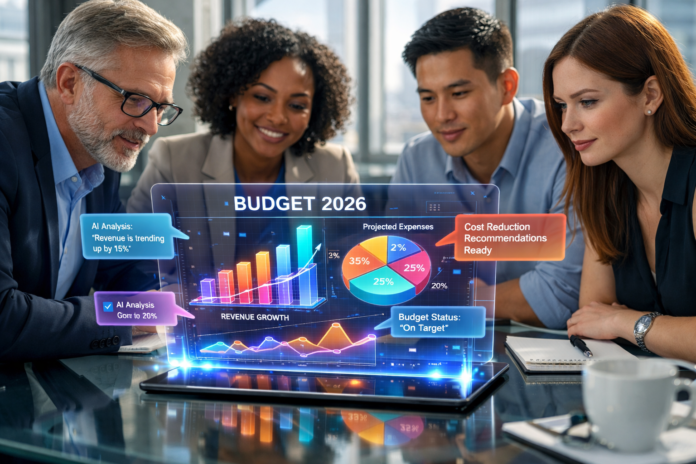
The era of the “digital checkbook” is officially over. In 2026, a budgeting app that simply records where your money went is already obsolete. We have entered the age of Agentic Finance—where your financial tools don’t just track your wealth, they actively help you manage and grow it using autonomous AI agents.
As inflation stabilizes but the cost of living remains high, the margin for error in personal finance has narrowed. You need more than a retrospective pie chart; you need a proactive co-pilot. The best budgeting apps of 2026 have evolved into comprehensive wealth management platforms, blurring the lines between budgeting, investing, and financial planning.
Definition: What is a “Modern” Budgeting App in 2026? A modern budgeting app is a centralized financial operating system. It connects to every financial institution via stable Open Banking APIs, uses Generative AI to predict future cash flow, and automates tedious tasks like subscription cancellation and fund transfers. It is privacy-first, collaborative, and designed to reduce financial anxiety, not induce it.
Key Takeaways:
- AI is Active, Not Passive: Look for “Agents” that negotiate bills, not just bots that answer FAQs.
- Connectivity is King: If an app cannot sync with your specific local bank or crypto wallet instantly, it’s useless.
- Holistic Wealth: Budgeting is now inseparable from net worth tracking and debt management.
Who This Is For: This guide is for anyone feeling overwhelmed by the multitude of fintech options in 2026. Whether you are a Gen Z gig worker managing irregular income, a couple merging finances, or a high-earner optimizing net worth, these are the non-negotiable features you must demand from your financial software.
1. Hyper-Personalized “Agentic” AI Insights
In 2024, AI in fintech meant simple transaction categorization. In 2026, it means Agentic AI. The top apps now feature AI assistants that act as personalized financial planners. These agents don’t just report data; they interpret it and suggest specific actions based on your unique psychological profile.
Why It Matters
Generic advice like “stop buying coffee” doesn’t work. The new wave of AI analyzes your specific spending triggers. If you tend to overspend on weekends, the AI might prompt you on Friday afternoon with a “Safe-to-Spend” balance for the night. Apps like Cleo and the evolved versions of YNAB now offer “roast” modes or “hype” modes to match your motivation style.
Look for:
- Predictive Nudges: “You usually spend $200 on groceries this week, but prices are up. I’ve adjusted your budget.”
- Conversational Querying: The ability to ask, “Can I afford a trip to Japan in November?” and get an answer based on real-time cash flow projections.
2. Real-Time Open Banking & API Stability
The days of constantly re-entering your bank password because the connection “broke” are largely behind us, thanks to mature Open Banking standards. In 2026, screen-scraping (an old, insecure method of reading bank data) is replaced by direct, secure API connections.
The Connectivity Standard
The best apps now aggregate data from everywhere: traditional banks, neobanks, credit unions, investment brokerages, and even Buy Now, Pay Later (BNPL) services. This 360-degree view is critical because if even one account is missing, your budget is a lie.
Common Mistakes:
- Choosing apps with limited integrations: Avoid apps that don’t support “Account-to-Account” (A2A) payments, which allow you to move money between banks instantly without leaving the app.
3. Automated Subscription Management & Negotiation
The “subscription economy” has only expanded. The average household in 2026 manages dozens of recurring payments, from streaming services to software and delivery passes. Top-tier budgeting apps now act as a gatekeeper for these charges.
Beyond Tracking
It is no longer enough to just list your subscriptions. Leading apps use AI to identify price hikes and usage patterns.
- Auto-Cancellation: Features that allow you to cancel a service directly through the budgeting app with one click.
- Bill Negotiation: AI agents that automatically contact service providers (internet, insurance) to negotiate lower rates on your behalf, taking a small success fee from the savings.
4. Zero-Based Budgeting (ZBB) with Automation
Zero-Based Budgeting—giving every dollar a job—remains the gold standard for debt reduction and wealth building. However, the manual labor required was always a barrier. In 2026, automation has solved this.
The “Auto-Assign” Revolution
Apps like YNAB and its competitors now offer “Auto-Assign” features that intelligently distribute your paycheck into your envelopes based on your past behavior and upcoming due dates. You get the discipline of ZBB without the spreadsheet fatigue.
Key Feature: Look for “Rule-Based Funding,” where you set a rule (e.g., “Always fund Rent first, then Groceries”) and the app handles the rest the second your direct deposit hits.
5. Family & Multi-User “Spaces”
Finance is rarely a solo sport. Managing money with a partner, aging parents, or roommates requires robust collaboration tools. The single-user login is a relic of the past.
Collaborative Architecture
Modern apps allow for “Shared Spaces” alongside “Personal Spaces.”
- For Couples: You can see a joint view for shared bills while keeping personal discretionary spending private.
- For Families: Parents can create view-only budgets for teenagers to teach financial literacy, or manage the finances of elderly parents with “Caregiver” permissions.
6. Holistic Net Worth & Asset Tracking
Budgeting is about cash flow (in/out), but wealth is about Net Worth (Assets – Liabilities). In 2026, the separation between “budgeting apps” and “wealth trackers” has vanished.
Tracking the “Un-trackable”
Top apps now integrate with Zillow or Redfin APIs to update your home equity in real-time. They track the value of your used car, your 401(k), and your alternative assets.
- Crypto & Digital Assets: Native integration with wallets to track Bitcoin or stablecoin balances alongside your checking account is now standard for premium apps.
7. Predictive Cash Flow Modeling
Most people don’t go broke because they lack assets; they go broke because of liquidity issues (timing). Predictive cash flow is the “weather forecast” for your money.
Avoiding the Overdraft
Instead of just showing your current balance, 2026 apps project your balance 30 days into the future.
- Scenario Planning: The app visualizes: “If you pay this credit card bill today, you will be negative $50 when the mortgage hits on the 1st.”
- Visual Warning: Look for a calendar view that highlights “Danger Days” where outflows exceed inflows.
8. Gamified Debt Payoff Strategies
With interest rates remaining a crucial factor in 2026, managing debt is a priority. The best apps visualize your journey out of debt using proven psychological methods.
Snowball vs. Avalanche
Apps now instantly simulate the difference between the Debt Snowball (paying smallest balance first) and Debt Avalanche (paying highest interest first).
- Visual Progress: Charts that fill up as you pay down debt trigger dopamine responses similar to video games.
- Interest Saved Calculator: A real-time counter showing exactly how much interest you’ve saved by making an extra payment today.
9. Bank-Level Biometric Security & Privacy
As financial data becomes more centralized, security is paramount. In 2026, “bank-level security” is the minimum entry requirement, not a feature.
Behavioral Biometrics
Beyond FaceID and Two-Factor Authentication (2FA), top apps utilize behavioral biometrics—analyzing how you hold your phone and type—to detect fraud. If an app detects an anomaly, it locks down immediately.
- Privacy Mode: A feature that blurs balances when you are in public or sharing your screen.
- Data Sovereignty: The ability to permanently delete your data and disconnect all accounts instantly is a legal right you should exercise if you switch apps.
10. Seamless Tax Optimization Features
In 2026, tax prep doesn’t start in April; it happens all year long. Budgeting apps have begun to bridge the gap between daily spending and annual filing.
Real-Time Tagging
- Deduction Tracking: Freelancers and gig workers should look for apps that auto-tag expenses as “Business” or “Personal.”
- Estimated Tax Calculations: AI that sets aside a percentage of every freelance deposit into a “Tax Hold” bucket automatically, ensuring you aren’t surprised by a tax bill.
Conclusion
The budgeting apps of 2026 have transformed from simple expense trackers into sophisticated, AI-driven financial partners. By choosing an app that features Agentic AI, real-time open banking, and predictive modeling, you are not just organizing your money; you are optimizing your future.
Your Next Step: Don’t settle for the default app from your bank. Download the free trial of a top-rated premium app (like YNAB, Monarch, or PocketGuard) today. Connect all your accounts—checking, credit, and savings—and let the AI run a 30-day analysis. You will likely find “money leaks” (subscriptions or fees) that cover the cost of the annual subscription in the first week.
FAQs
What is the difference between a budgeting app and a wealth tracker?
A budgeting app focuses on cash flow—your income and expenses on a monthly basis. A wealth tracker focuses on net worth—your total assets (house, investments) minus liabilities (loans). In 2026, the best apps combine both features into a single dashboard.
Are AI budgeting apps safe to use?
Yes, provided they use Read-Only access (meaning they can see data but cannot withdraw money) and employ 256-bit encryption. Look for apps that are SOC2 compliant and support biometric authentication.
Can budgeting apps really cancel subscriptions for me?
Yes. Apps with negotiation features (like Rocket Money or similar services integrated into banking apps) can legally act as your agent to cancel services or negotiate lower rates on bills like cable and internet.
Is it worth paying for a budgeting app in 2026?
Absolutely. Free apps often sell your data to advertisers or credit card companies. Paid apps ($5–$15/month) keep your data private and offer advanced automation features (like bank syncing and AI planning) that save you more money than they cost.
What is Zero-Based Budgeting (ZBB)?
Zero-Based Budgeting is a method where you assign every single dollar of your income a specific job (e.g., Rent, Groceries, Savings) until you have $0 left to assign. It forces you to be intentional with your money and is highly effective for paying off debt.
References
- Accenture. (2026). Top Banking Trends for 2026. Retrieved from Accenture Insights.
- Deloitte. (2025). 2026 Banking & Capital Markets Outlook. Retrieved from Deloitte Center for Financial Services.
- NerdWallet. (2026). The Best Budget Apps for 2026: Pros, Cons and What Users Say. Retrieved from NerdWallet.
- Experian. (2026). Best Budgeting Apps of 2026. Retrieved from Experian Blog.
- Bankrate. (2025). 9 AI-Powered Apps That Help You Save Money. Retrieved from Bankrate.
- TechCrunch. (2025). The Rise of Agentic AI in Fintech. Retrieved from TechCrunch.
- Consumer Financial Protection Bureau (CFPB). (2025). Open Banking and Consumer Data Rights. Retrieved from consumerfinance.gov.