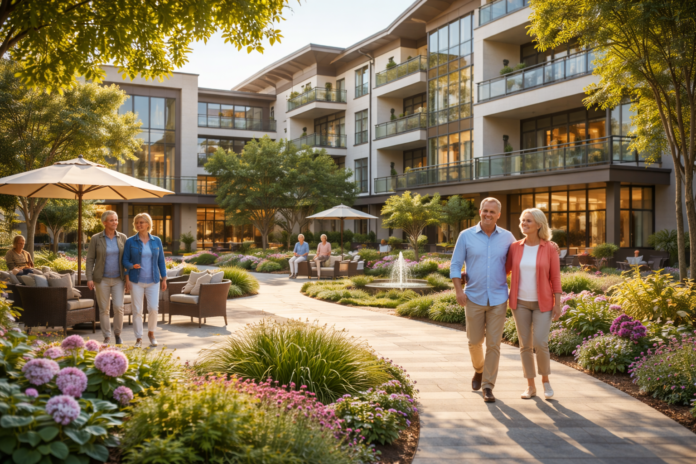
As of March 2026, the global real estate landscape is undergoing a seismic shift. The “Silver Tsunami”—a term once used to describe a distant demographic forecast—has officially arrived. For decades, the real estate market focused heavily on the needs of Millennials and Gen Z, but today, the most potent economic driver in the housing sector is the aging population. This transition isn’t just about building more nursing homes; it’s about a fundamental reimagining of what “home” looks like for the over-65 cohort.
Definition and Current Landscape
Senior housing encompasses a wide spectrum of residential options tailored to the needs of older adults. This ranges from Active Adult (55+) communities and Independent Living to higher-acuity settings like Assisted Living and Memory Care. Unlike traditional residential real estate, senior housing is a “needs-based” asset class. While a luxury condo purchase might be deferred during an economic downturn, the transition to assisted living is often a medical or safety necessity, making this sector uniquely resilient to market volatility.
Key Takeaways
- The 2030 Inflection Point: By 2030, every Baby Boomer will be over age 65, representing 1 in 5 Americans.
- Inventory Gap: Current construction rates are failing to keep pace with the projected demand for specialized senior beds.
- Lifestyle over Care: The new generation of seniors prioritizes wellness, community, and technology over traditional institutional care.
- Resilience: Senior housing has historically outperformed other commercial real estate sectors during recessions due to its essential nature.
Who This Is For
This guide is designed for real estate investors looking for stable, long-term yields; urban planners tasked with creating age-friendly cities; developers seeking to understand the “Missing Middle” of senior housing; and families trying to navigate the complex financial and logistical landscape of aging.
1. The Demographic Engine: Why Demand is Exploding
The primary driver of senior housing demand is simple biology. However, the nuances of this demographic shift are what define the investment opportunity.
The Baby Boomer Influence
As of March 2026, the youngest Baby Boomers are entering their early 60s, while the oldest are entering their 80s. Historically, the “average” age of entry into assisted living is approximately 82 to 85. We are currently in the “sweet spot” where the massive influx of retirees is first fueling demand for active adult and independent living, with a massive wave of higher-acuity demand projected to peak in the early 2030s.
Increased Longevity and Chronic Conditions
Medical advancements mean people are living longer, but not necessarily without health challenges. The prevalence of Alzheimer’s and other dementias is rising in lockstep with life expectancy. This creates an urgent, specialized demand for Memory Care facilities, which require specific architectural designs and higher staffing ratios than standard apartments.
The “Loneliness Epidemic”
Post-pandemic social shifts have highlighted the dangers of isolation for seniors. Many aging adults are opting for senior housing not because they cannot live alone, but because they choose not to. The demand for “social infrastructure”—communal dining, hobby clubs, and organized travel—is now as high as the demand for medical care.
2. The Spectrum of Senior Housing Products
To understand the real estate demand, one must distinguish between the various product types currently dominating the market.
Active Adult (55+) Communities
These are often rental or for-sale multifamily units that do not provide meals or medical care. The draw here is the peer group and maintenance-free living. Investors see these as “multifamily-plus” because they offer higher retention rates; seniors move less frequently than younger renters.
Independent Living (IL)
Independent living offers a “resort-style” atmosphere. Residents typically have their own apartments but benefit from communal dining, housekeeping, and transportation services. As of 2026, IL is evolving to include more “wellness-centric” programming, such as on-site physical therapy and organic dining options.
Assisted Living (AL)
AL is for residents who need help with “Activities of Daily Living” (ADLs), such as bathing, dressing, or medication management. This is a hybrid of real estate and operations. The success of an AL facility depends more on the quality of the care staff than the physical building itself.
Memory Care
This is the most specialized tier. These facilities are designed with “circular” hallways to prevent wandering, high-contrast colors to help with depth perception, and advanced security systems. Due to the high barriers to entry and specialized staff requirements, Memory Care commands the highest rents in the sector.
3. Financial Drivers and Investment Trends
The financial performance of senior housing remains a bright spot in the commercial real estate (CRE) world.
Institutional Capital Influx
REITs (Real Estate Investment Trusts) like Welltower and Ventas have consolidated significant portions of the market. However, 2025 and 2026 have seen a rise in private equity and “family office” investment. Investors are attracted to the low correlation between senior housing and the broader stock market.
The Wealth Transfer
The “Great Wealth Transfer” is seeing trillions of dollars move from the Silent Generation to Boomers. Much of this wealth is tied up in home equity. As seniors sell their traditional family homes, they enter the senior housing market with significant liquidity, allowing them to afford premium, private-pay options.
The “Missing Middle” Crisis
A significant challenge in 2026 is the lack of housing for the “middle-income” senior. Most new developments are either “luxury” (private pay) or “affordable” (subsidized). There is a massive, untapped demand for mid-tier housing that offers essential services without the five-star price tag. Developers who can solve the “middle-market” puzzle—perhaps through modular construction or reduced staffing models—stand to capture the largest market share.
4. Technological Innovation and “PropTech”
Modern senior housing is no longer just “bricks and mortar”; it is an integrated technology platform.
- Remote Monitoring: Wearables that track gait, heart rate, and sleep patterns allow staff to intervene before a fall occurs.
- Telehealth Suites: Integrated clinics within housing complexes reduce the need for stressful hospital visits.
- Smart Home Integration: Voice-controlled lights, thermostats, and shades are not just luxuries; they are essential for residents with limited mobility or arthritis.
- AI Staffing Solutions: To combat the chronic labor shortage, facilities are using AI to optimize shift scheduling and even utilizing “cobots” (collaborative robots) for food delivery and heavy lifting in laundry rooms.
5. Geographic Hotspots: Where is the Demand?
While the aging trend is global, real estate is inherently local.
The Sunbelt Strength
States like Florida, Arizona, and Texas continue to lead in volume. The combination of favorable tax climates and warmer weather remains a primary draw for retirees. However, these markets are also seeing the highest levels of “overbuilding,” which can lead to temporary occupancy dips.
The “Stay Put” Trend in the Northeast and Midwest
A counter-trend is emerging where seniors prefer to age near their children and grandchildren. This has led to a surge in demand in high-barrier-to-entry urban markets like New York, Chicago, and Boston. While land is more expensive here, the lack of competition and the high density of wealthy seniors make these projects highly lucrative.
6. Design and Architecture: Universal Design is the Standard
The “institutional” look of the past is dead. Modern senior housing looks like a boutique hotel or a contemporary apartment complex.
Biophilic Design
Incorporating natural light, indoor plants, and outdoor access is proven to reduce cortisol levels and improve cognitive function in seniors. Developers are now prioritizing “wellness walks” and community gardens in their site plans.
Intergenerational Living
One of the most exciting trends in 2026 is the rise of intergenerational housing. This involves building senior living units on or near college campuses or within larger “all-age” mixed-use developments. This prevents the “age-segregation” that many modern seniors find depressing and provides a sense of purpose through mentorship and community involvement.
7. Common Mistakes in Senior Housing Development
Despite the strong tailwinds, this sector is fraught with risks for the uninitiated.
Mistake 1: Treating it Like Traditional Multifamily
Senior housing is an operating business wrapped in a real estate shell. You aren’t just managing a building; you are managing a dining service, a healthcare provider, and an events company. If the operations fail, the real estate value craters.
Mistake 2: Underestimating Labor Costs
Labor is the single largest expense in senior housing (often 50–60% of operating expenses). As of March 2026, wage growth for nurses and caregivers remains high. Projects that don’t account for rising labor costs in their pro-formas often struggle to reach “stabilized” occupancy.
Mistake 3: Poor Site Selection (The “Isolated Island” Problem)
Seniors want to be near retail, restaurants, and, most importantly, their families. Building a beautiful facility 30 miles away from the nearest population center is a recipe for high vacancy rates. “Visibility” is also a marketing tool; if families drive past a facility every day, it remains top-of-mind when the need for care arises.
8. Safety and Regulatory Considerations
Disclaimer: The following information is for educational purposes and does not constitute financial or legal advice. Real estate investment involves significant risk. Always consult with a licensed financial advisor and legal counsel before making investment decisions.
The senior housing sector is heavily regulated at both the state and federal levels. Regulations cover everything from fire safety and staff-to-patient ratios to food handling and medication administration.
As of March 2026, many states are introducing stricter “transparency” laws, requiring facilities to publish real-time data on staffing levels and infection rates. While this increases compliance costs, it also builds trust with consumers, which is the ultimate currency in this industry.
Conclusion
The rise of senior housing is not a temporary bubble; it is a structural realignment of the global real estate market. Driven by the undeniable math of aging demographics, the demand for specialized, high-quality environments for older adults will only intensify over the next two decades.
For investors, the opportunity lies in diversification—moving beyond simple “beds” and toward “lifestyle platforms.” For developers, the challenge is to create housing that is both functional for the frail and aspirational for the active. The “Silver Tsunami” brings with it significant challenges, particularly regarding affordability and labor, but it also offers a chance to redefine the final chapters of human life.
As we move deeper into 2026, the winners in this space will be those who prioritize human-centric design, operational excellence, and technological integration. The goal is no longer just to provide a place for seniors to live, but a place for them to thrive.
Next Step: Would you like me to create a detailed market analysis template for evaluating a specific senior housing investment opportunity?
FAQs
What is the “Silver Tsunami”?
The Silver Tsunami refers to the rapid increase in the population of older adults, specifically the Baby Boomer generation, as they reach retirement age. In real estate, this translates to a massive shift in demand from traditional family homes to various forms of senior-specific housing.
Why is senior housing considered “recession-resilient”?
Because a large portion of senior housing (Assisted Living and Memory Care) is “needs-based.” When an elderly person can no longer safely live alone due to health or cognitive issues, the move to a care facility becomes a necessity rather than a discretionary choice, regardless of the economic climate.
How has COVID-19 changed senior housing design?
Modern facilities now prioritize “flex-spaces” that can be isolated during health crises, upgraded HVAC systems for better air filtration, and “touchless” technology. There is also a much greater emphasis on outdoor communal spaces and smaller “household” layouts rather than large, central dining halls.
What is “The Missing Middle” in senior housing?
The “Missing Middle” refers to the cohort of seniors who have too much income to qualify for government-subsidized housing but not enough wealth to afford high-end, private-pay assisted living. This represents a massive, underserved segment of the market.
Is senior housing a good investment in 2026?
While demand is at an all-time high, profitability depends heavily on operational expertise. It is generally considered a strong long-term play, but investors must be wary of rising labor costs and the high capital expenditures (CapEx) required to keep facilities modern.
References
- U.S. Census Bureau: “The Graying of America: 2030 Demographic Forecasts” (Official Govt. Data).
- National Investment Center for Senior Housing & Care (NIC): “2025-2026 Sector Performance Report” (Industry Benchmark).
- AARP Public Policy Institute: “Housing the Aging Population: Trends and Innovations” (Research Paper).
- Harvard Joint Center for Housing Studies: “The State of the Nation’s Housing 2025” (Academic Analysis).
- World Health Organization (WHO): “Global Age-Friendly Cities: A Guide” (International Standards).
- Journal of Real Estate Portfolio Management: “Risk-Adjusted Returns in Healthcare Real Estate” (Academic Peer-Reviewed).
- CBRE Research: “2026 Senior Housing Outlook” (Market Analysis).
- JLL Healthcare & Life Sciences: “The Evolution of Senior Living Operations” (Commercial Report).
- LeadingAge: “The Future of Long-Term Care Workforce” (Advocacy/Policy Research).
- Urban Land Institute (ULI): “Intergenerational Living: A New Frontier in Development” (Professional Practice).