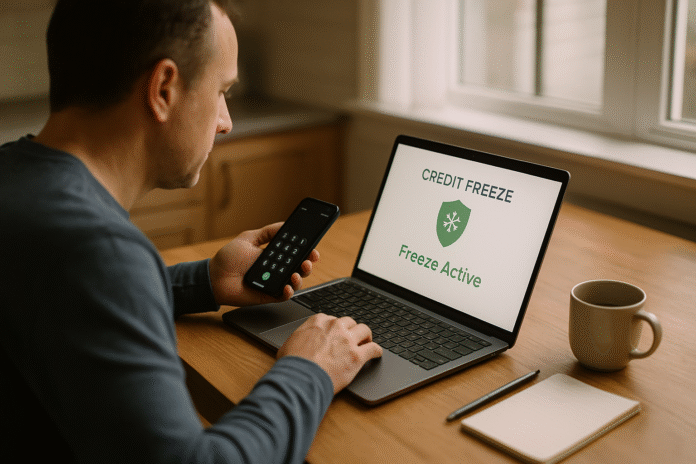
Protecting your identity starts with securing your credit report. This guide shows you, step by step, how to lock down access with a free credit freeze, layer on fraud alerts, set up monitoring, and fix errors so you stay in control. It’s written for anyone who wants practical, current, and U.S.-specific guidance (with notes for other regions where helpful). In one sentence: a credit freeze blocks new creditors from pulling your file without your say-so, while monitoring and alerts help you spot changes fast. As of now, you can also check each report weekly at no cost to catch issues early.
Quick view (the 10 steps you’ll take):
Freeze with the three major bureaus → freeze key specialty bureaus → decide when to use fraud alerts → monitor weekly and set account alerts → dispute any errors → plan freezes lifts for applications → protect your tax refund with an IRS IP PIN → opt out of prescreened offers → safeguard minors and dependents → keep an incident playbook ready.
Important note: This article offers general education—not legal, tax, or financial advice. Confirm details with official sources and your providers.
1. Decide Your Baseline: Freeze First, Monitor Second
The direct answer: start with a credit freeze as your default protection, then add monitoring for visibility. A freeze is the strongest, no-cost way to stop new accounts in your name because lenders usually won’t grant credit if they can’t access your file. Monitoring is helpful, but it only alerts you after something changes; it can’t block a bad application by itself. As of now, federal rules guarantee free freezes and quick lift times, making “freeze-first” a practical baseline for most people. If you’re actively rate-shopping or changing jobs/apartments and expect legitimate pulls soon, you can time a temporary lift to keep things moving.
1.1 Why it matters
A freeze reduces the risk of fraudulent new credit lines. Monitoring catches what slips through and helps with existing-account fraud (which a freeze doesn’t prevent). Together, they reduce both the probability of identity theft succeeding and the detection time if something happens.
1.2 How to decide your mix
- Baseline: Freeze at the three nationwide bureaus; add free alerts/monitoring from banks and card issuers.
- If you’ve had a breach or lost wallet: Freeze plus an initial or extended fraud alert (see Step 4).
- If you’re military on deployment: Use an active duty alert alongside your freeze.
- If you apply for credit often: Keep the freeze, but plan timed lifts (Step 7).
Mini-checklist: Freeze now; turn on notifications in your banking apps; plan how you’ll lift a freeze for legitimate pulls. Close the loop by reviewing reports weekly (Step 5).
2. Place Free Security Freezes with Equifax, Experian, and TransUnion
A security freeze (credit freeze) at each nationwide bureau blocks creditors from pulling your file until you lift it, and it doesn’t harm your credit score. You must contact all three bureaus to be fully protected. Under federal rules, freezes are free, can be placed online/phone/mail, and can be lifted temporarily or removed. If requested electronically or by phone, they must be placed within one business day; a temporary lift must take effect within one hour (mail requests: up to three business days). These timing guardrails make freezes usable even when you need rapid approvals.
2.1 How to do it
- Equifax: Use myEquifax to place/lift a freeze; PINs have been replaced with account authentication. Equifax
- Experian: Place/lift via your Experian account (process similar to Equifax).
- TransUnion: Place/lift via your TransUnion account.
- What to expect: Written confirmation within five business days after placement.
2.2 Numbers & guardrails
- Placement: ≤1 business day (online/phone).
- Lift: ≤1 hour (online/phone).
- Score impact: None.
- Access exceptions: Existing creditors, certain government entities, and monitoring companies may still access your file.
Synthesis: Freezes are fast to set up, reversible on short notice, and the best “always-on” defense against new-account fraud.
3. Freeze the “Specialty” Bureaus Used for Banking, Utilities, and Insurance
Even with the big three frozen, fraudsters may try bank accounts, mobile lines, or utilities. That’s where specialty reporting agencies come in. Add freezes at ChexSystems (bank account screenings), the National Consumer Telecom & Utilities Exchange (NCTUE), LexisNexis Risk Solutions (risk/public records used by insurers and others), and Innovis (a fourth consumer reporting company). Freezing these files helps block fraudulent checking accounts, mobile lines, and some insurance-related pulls.
3.1 Where to freeze
- ChexSystems: Place/manage a security freeze for deposit account screenings.
- NCTUE: Freeze/lift/remove via the NCTUE consumer portal or phone.
- LexisNexis Risk Solutions: Freeze prevents LN and SageStream consumer reports from being released without authorization.
- Innovis: Add/manage a Security Freeze online or by mail (form available).
3.2 Tips & examples
- Shopping for insurance or opening a bank account? Temporarily lift the relevant specialty freeze for smoother underwriting.
- Case example: A scammer tries to open a checking account. With ChexSystems frozen, the bank can’t verify via your file, blocking the attempt.
Synthesis: Freezing key specialty files closes common side doors used for deposit accounts, cell plans, and some insurance products.
4. Use Fraud Alerts Strategically (Initial, Extended, Active Duty)
A fraud alert tells lenders to take extra steps to verify your identity before issuing new credit. It doesn’t block access like a freeze but adds friction when you’re at risk or already a victim. An initial fraud alert lasts one year and is free; an extended fraud alert lasts seven years if you have an identity theft report; and an active duty alert (for servicemembers) lasts one year and also suppresses prescreened offers for two years unless you opt back in. Place a fraud alert with any one of the three bureaus and it must notify the other two—one call covers all.
4.1 When to use which
- Initial (1 year): You suspect risk (breach, lost wallet). Renewable.
- Extended (7 years): You have an FTC identity theft report/police report.
- Active duty (1 year): You’re deployed; adds extra marketing suppression.
4.2 Mini-checklist
- File at IdentityTheft.gov if you’re a victim; then request the extended alert.
- Keep your contact number current so lenders reach you, not a bad actor.
Synthesis: Pair alerts with freezes during high-risk periods or after verified identity theft for layered protection. Consumer Advice
5. Monitor Weekly and Turn On Real-Time Account Alerts
Monitoring won’t stop a fraudulent application, but it helps you see issues fast so you can respond. As of January 2024, the three nationwide bureaus made free weekly credit reports permanent via AnnualCreditReport.com—use them. Combine those reviews with bank/card transaction alerts, suspicious sign-in warnings, and “new account” or “hard inquiry” alerts where available. Also consider identity monitoring that scans for your SSN/PII in applications and the dark web; paid plans sometimes include restoration help and limited insurance.
5.1 What to check weekly
- New accounts or inquiries you don’t recognize.
- Personal info changes (address/phone).
- Collections or late payments that aren’t yours.
- Public records entries that look wrong.
5.2 Tools
- AnnualCreditReport.com for the official reports.
- Bank/app alerts for transactions, foreign purchases, or new payees.
- Identity monitoring (understand what it scans and what it doesn’t).
Synthesis: Make weekly checks a habit; alerts shorten the time from incident to action, reducing damage.
6. Dispute Errors the Right Way (and Keep Paper Trails)
Spot an error? Dispute it with both the credit bureau and the furnisher (the company that reported the info). Use certified mail when possible and include copies of documentation (driver’s license, proof of address, statements). The CFPB provides sample dispute letters for bureaus and furnishers; investigations generally must be completed within about 30 days of receipt. Keep organized records—dates, addresses, copies—so you can escalate if needed.
6.1 Steps to dispute effectively
- Identify each incorrect item and explain why it’s wrong.
- Attach proof (police/FTC report, billing statements, correspondence).
- Send to both the bureau and the furnisher; track with certified mail.
- Calendar 35–45 days to follow up if you don’t receive a resolution.
6.2 Numbers & guardrails
- Response window: ~30 days for most disputes.
- Outcome: Correction, deletion, or “verified as accurate”; you can add a brief consumer statement if unresolved.
Synthesis: Strong documentation plus the right letters gets results faster and keeps your case escalation-ready. Consumer Financial Protection Bureau
7. Plan Your Temporary Lifts for Applications (Without Losing Control)
You can still apply for new credit with freezes in place—you’ll just lift the freeze temporarily. Lifts can be time-based (e.g., 72 hours) or issuer-specific if the bureau supports it. Under federal rules, if you request electronically or by phone, bureaus must lift within one hour, so you can schedule a same-day car loan or mortgage preapproval without guessing. Keep notes on which bureau a lender uses (many pull one bureau per application—ask which one) to minimize how many freezes you lift.
7.1 How to do it smoothly
- Ask the lender which bureau they’ll pull.
- Log in and request a temporary lift for that bureau only.
- Set a short window (24–72 hours).
- Re-lock as soon as you’re done.
7.2 Common mistakes
- Lifting all three when one would do.
- Forgetting to re-freeze after approvals.
- Mixing up “credit lock” (a paid product) with a freeze (free and legally enforced).
Synthesis: Treat lifts like a faucet: open just enough, just where needed, just long enough.
8. Protect Your Tax Refund and SSA Records: Get an IRS IP PIN
Tax refund fraud is lucrative for criminals, and it doesn’t show up on credit monitoring. The IRS Identity Protection PIN (IP PIN)—a six-digit code renewed annually—prevents someone from e-filing a return in your name. As of now, anyone with an SSN or ITIN who can verify identity can enroll; if you lose your PIN, the IRS provides a retrieval process. Enroll before filing season so your new PIN is active when you submit your return. IRS
8.1 How to use it
- Create/verify your IRS online account; enroll in IP PIN.
- Store the PIN securely; you’ll need it to e-file.
- Retrieve/renew each year as instructed. IRS
8.2 Bonus habits
- Turn on alerts for your tax and Social Security accounts where available.
- Beware “tax preparer” phishing that asks for prior-year PINs.
Synthesis: An IP PIN blocks a major fraud vector that credit freezes don’t cover.
9. Opt Out of Prescreened Credit & Insurance Offers
Prescreened “preapproved” offers rely on the bureaus to vet mailing lists. You can opt out for five years (or permanently) via the industry-run OptOutPrescreen system (phone or web). This reduces junk mail and lowers the surface area for mail theft and social engineering. It doesn’t affect offers from companies you already do business with, but it trims the rest. The CFPB and FTC both point to 1-888-5-OPT-OUT (1-888-567-8688) and OptOutPrescreen.com as the official channels.
9.1 Quick steps
- Call 1-888-5-OPT-OUT for a 5-year opt-out; submit the permanent form by mail if desired.
- Keep confirmation details for your records.
- Revisit your choice if you’re actively shopping and want targeted offers again.
9.2 Guardrails
- Opt-out doesn’t stop all marketing; it targets bureau-based prescreening.
- You can still compare offers directly when you’re ready.
Synthesis: Opting out reduces risk and clutter; combine with a freeze for a cleaner, safer credit life.
10. Safeguard Minors and Keep an Incident Playbook
Children usually don’t have credit files, which makes them tempting targets—fraud can go undetected for years. Parents and guardians can freeze a child’s credit (under age 16) for free; teens 16–17 can request their own freeze. Foster youth and protected consumers also have pathways with proper documentation. Keep a simple incident playbook: how to file an FTC identity theft report, where to place alerts, and which freezes to lift for college housing or a first cell plan.
10.1 How to protect minors
- Check whether your child has a file; if not, create and freeze it with each bureau.
- Maintain copies of birth certificates/SSNs and your proof of authority.
- For telecom/utilities, consider an NCTUE freeze as well.
10.2 Playbook essentials
- IdentityTheft.gov link and your case number placeholder.
- A list of each bureau’s freeze portal and your account usernames.
- A note on when to temporarily lift for legitimate needs (e.g., phone plan).
Synthesis: Freezing kids’ files now prevents bureaucratic headaches later and gives your family a repeatable crisis plan.
FAQs
1) Credit freeze vs. credit lock—what’s the difference?
A credit freeze is your legal right under federal law, free to place or lift, and honored across bureaus; a lock is a product offered by a bureau, often bundled with paid services. Locks can be convenient but aren’t stronger than a freeze, which provides comparable protection without ongoing fees. If you want “set-and-forget,” choose the freeze; you can still lift it in about an hour when you need to apply.
2) Does a freeze affect my credit score or existing cards?
No. A freeze doesn’t change your score and doesn’t block you from using current credit cards or loans. It only restricts new creditors from accessing your report. You can still get account alerts, request credit limit increases with your current issuer (they may use a soft pull), and manage your accounts normally. If a lender needs a new hard pull, plan a temporary lift. Consumer Advice
3) How fast can I lift a freeze for a mortgage or auto loan?
If you request by phone or a secure website, bureaus must lift within one hour; by mail, within three business days. Ask the lender which bureau they’ll pull so you can lift just that one. Set your lift window (e.g., 48 hours), then re-freeze afterwards.
4) Is monitoring necessary if I’ve frozen my credit?
Monitoring is still smart because a freeze doesn’t stop existing-account fraud or certain non-credit misuse (like tax or medical identity theft). Weekly free reports and real-time banking alerts shorten detection time so you can dispute faster, freeze specialty bureaus, and file reports if needed. Consider identity monitoring if you want restoration help or insurance. Consumer Financial Protection Bureau
5) I found an account I don’t recognize—what now?
Start by freezing if you haven’t already. Pull all three reports, file a report at IdentityTheft.gov to get a recovery plan, and place an extended fraud alert if you qualify. Then send disputes with documentation to both the bureau and the furnisher; keep certified-mail receipts and follow up in ~30 days. Consumer Advice
6) Should I freeze ChexSystems, LexisNexis, Innovis, and NCTUE too?
Yes, if you want to reduce risk from bank account, utility, telecom, and certain insurance pulls. Freezing these files is free and helps block non-credit-card fraud paths (like fraudulent checking accounts or mobile lines). Temporarily lift as needed when opening legitimate accounts.
7) How do fraud alerts work with freezes?
They’re complementary. A freeze blocks access; an alert tells lenders to verify identity before approving new credit. Initial alerts last one year and are renewable; extended alerts last seven years with an identity theft report; active duty alerts protect servicemembers for one year and suppress prescreened offers for two years unless you opt in.
8) Are free weekly credit reports really permanent?
Yes. The three nationwide bureaus made weekly reports via AnnualCreditReport.com a permanent benefit in 2023, reaffirmed by the FTC in January 2024. Use them to monitor regularly without paying.
9) I’m getting tons of preapproved offers—can I stop them?
You can opt out for five years by calling 1-888-5-OPT-OUT or visiting OptOutPrescreen.com; permanent opt-out is available by mail. This reduces mail-based exposure and clutter, but doesn’t stop marketing from companies you already use or non-bureau lists. Consumer Financial Protection Bureau
10) What about teens and foster youth?
Parents/guardians can freeze a child’s credit (under 16). Teens 16–17 can request their own freeze. The FTC highlights special steps for foster youth with authorized adults. Keep documentation (birth certificate, proof of guardianship) handy; each bureau has instructions. Consumer Advice
11) Is a credit freeze global?
No. This guide is U.S.-centric. Other countries use different credit systems and laws. If you live abroad, check your national data protection and credit reference agencies for freezes or similar tools; the general strategy—limit access and monitor—still applies.
12) What if a lender says they can’t find my file?
That can happen during a freeze or if your file is thin. Confirm which bureau they’re using, temporarily lift that bureau’s freeze, and retry. If your file is thin, consider building history with secured cards or authorized-user status while keeping freezes in place when not applying.
Conclusion
Securing your credit report isn’t about buying bells-and-whistles—it’s about controlling access and catching changes fast. A free, legally backed security freeze with Equifax, Experian, and TransUnion stops most new-account fraud in its tracks. Freezes at specialty bureaus—ChexSystems, NCTUE, LexisNexis, and Innovis—close common side doors for bank accounts, telecom, and insurance. Fraud alerts add a layer of verification when you’re at risk, while weekly reports and real-time account alerts help you spot problems quickly. When something’s wrong, document and dispute with clear letters and timelines. And don’t forget protection beyond credit: the IRS IP PIN helps guard your tax refund, and opting out of prescreened offers reduces exposure.
If you follow the 10 steps here—set baselines, freeze widely, monitor weekly, plan lifts, and maintain a ready playbook—you’ll turn identity theft from a lurking worry into a manageable task. Start with your big-three freezes today, then work down the list and set reminders for annual or seasonal checkups. Your one-line next step: Freeze your three credit bureaus now, then schedule your weekly report checks.
References
- What is a credit freeze or security freeze on my credit report? Consumer Financial Protection Bureau . https://www.consumerfinance.gov/ask-cfpb/what-is-a-credit-freeze-or-security-freeze-on-my-credit-report-en-1341/ Consumer Financial Protection Bureau
- You now have permanent access to free weekly credit reports. Federal Trade Commission . Consumer Advice
- Credit Freeze or Fraud Alert: What’s Right for Your Credit Report? Federal Trade Commission . Consumer Advice
- What is a credit monitoring service? Consumer Financial Protection Bureau. Consumer Financial Protection Bureau
- Get an Identity Protection PIN (IP PIN). Internal Revenue Service. IRS
- Security Freeze Information. ChexSystems. chexsystems.com
- Consumer: How can I place a security freeze on my NCTUE report? National Consumer Telecom & Utilities Exchange. NCTUE
- Security Freeze. LexisNexis Risk Solutions Consumer Center. consumer.risk.lexisnexis.com
- Add or Manage a Security Freeze. Innovis. innovis.com
- Sample letters to dispute information on a credit report. Consumer Financial Protection Bureau. Consumer Financial Protection Bureau
- Free credit freezes are here. Federal Trade Commission. Consumer Advice
- AnnualCreditReport.com – The only official site for free credit reports. Annual Credit Report