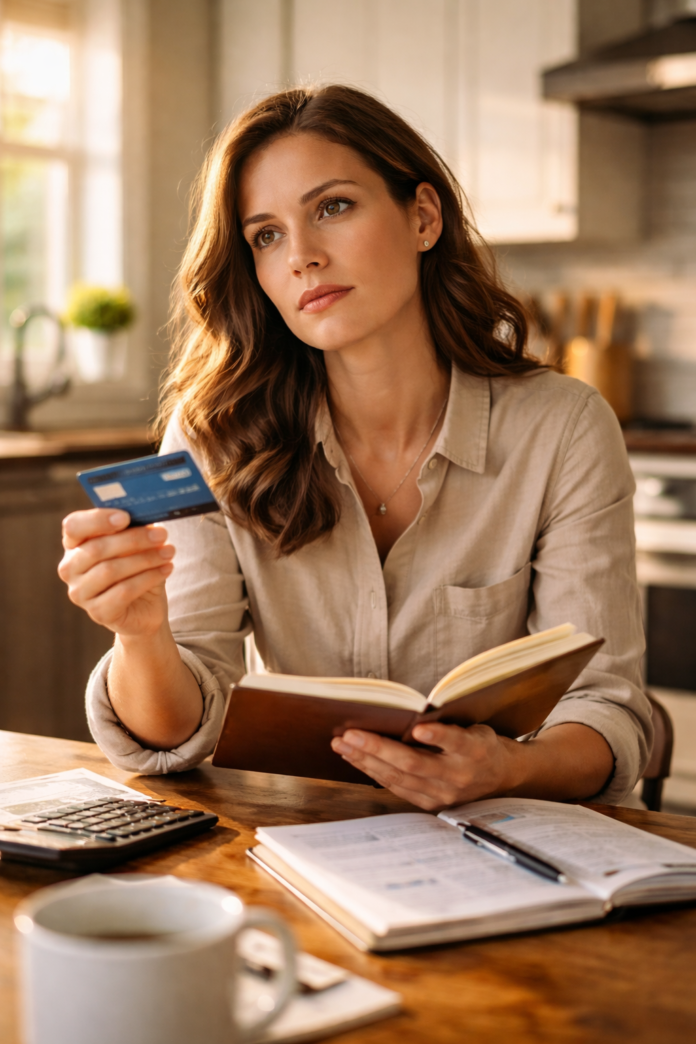
It happens to the best of us. You walk into a store (or open a browser tab) intending to buy one specific item—perhaps a tube of toothpaste or a replacement charger—and you walk out with a cart full of things you didn’t know you needed. Later, as the initial excitement fades, a familiar sinking feeling settles in: buyer’s remorse.
This cycle isn’t necessarily a sign of poor math skills or a lack of willpower. It is deeply rooted in behavioral psychology. The psychology of overspending explores the complex web of emotional triggers, cognitive biases, and neurochemical reactions that drive our financial decisions. Understanding why we buy is the first and most critical step to changing how we buy.
Key Takeaways
- It’s Biology, Not Just Behavior: Spending triggers the release of dopamine, the brain’s “feel-good” chemical, creating a temporary high that can become addictive.
- The “Pain of Paying” Matters: Digital transactions numb the psychological pain of parting with money, making it easier to overspend compared to using cash.
- Emotions Drive Wallets: Stress, sadness, and even excitement can bypass logical decision-making, leading to “retail therapy.”
- Marketing Weaponizes Psychology: Retailers use scarcity, social proof, and anchoring to manipulate your perception of value.
Who This Is For
This guide is designed for anyone who feels their spending habits are slightly out of control. Whether you are battling credit card debt, struggling to save for a major goal because of “nickel-and-dime” purchases, or simply want to understand the invisible forces shaping your financial life, this article provides the psychological insights and practical tools to help you regain agency.
Disclaimer: As of February 2026, the information provided here is for educational purposes and does not constitute professional financial or psychological advice. If you are struggling with compulsive buying disorder (oniomania) or severe debt, please consult a licensed therapist or a certified financial planner.
The Neuroscience of the “Buy” Button
To curb overspending, we must first look under the hood of the human brain. We like to think of ourselves as rational economic actors—what economists call Homo economicus—who weigh costs and benefits perfectly. In reality, we are emotional creatures who often use logic only to justify decisions we’ve already made with our feelings.
The Dopamine Loop
When you see an item you want—a pair of shoes, the latest tech gadget, or a limited-edition collectible—your brain anticipates a reward. This anticipation triggers the release of dopamine. Interestingly, neuroscience suggests that the dopamine spike is often higher during the anticipation of the purchase than during the ownership of the item itself.
This creates a “seeking” loop. We become addicted to the hunt and the acquisition. Once the item is purchased, the dopamine levels drop, leading to that hollow feeling often described as buyer’s remorse. This drop drives us to seek the next purchase to replicate the high.
The Erosion of Delayed Gratification
In an era of same-day delivery and “Buy Now, Pay Later” (BNPL) schemes, the gap between desire and acquisition has vanished. Evolutionarily, humans are wired to prioritize immediate survival (and immediate rewards) over long-term benefits. This is known as hyperbolic discounting. We value the $100 worth of clothes we can have today significantly more than the $150 in savings we could have next month. Overspending is often just the brain prioritizing the “now” over the “later” because the “later” feels abstract and uncertain.
The “Pain of Paying”: Why Cash is King
One of the most fascinating concepts in behavioral economics is the “Pain of Paying.” This term, coined by Prelec and Loewenstein, refers to the negative emotion experienced when parting with money.
Frictionless Spending
Cash creates high friction. You have to physically count bills, hand them over, and watch your wallet get thinner. This visceral act triggers the insula, a part of the brain associated with pain and disgust. It acts as a natural brake on spending.
Credit cards, mobile wallets, and 1-click ordering remove this friction. They decouple the pleasure of buying from the pain of paying. When you swipe a card, you get the item now, but the “pain” (the bill) is pushed to a vague future date. The abstraction of digital currency makes money feel less “real,” leading to significantly higher average transaction values compared to cash users.
Psychological Triggers: The Emotional Spender
Beyond biology, our emotional state dictates our wallet’s fate. Identifying which emotional profile fits you is crucial for curbing the habit.
1. The “Retail Therapy” Spender
This is the classic emotional spender. When you are stressed, lonely, or sad, buying something provides a sense of control and a temporary mood lift. The act of choosing an item and purchasing it can feel like a small victory in a chaotic life.
- The Trap: The relief is fleeting, but the debt is permanent. You aren’t buying the item; you are buying a momentary escape from negative emotions.
2. The Status Seeker (Social Comparison)
We represent our identity through our possessions. This is often driven by the “Spotlight Effect”—the belief that others are paying more attention to us than they actually are.
- The Trap: “Keeping up with the Joneses” has evolved into “Keeping up with the Kardashians.” Social media creates an endless feed of curated perfection, triggering feelings of inadequacy that we try to soothe with purchases.
3. The Boredom Buster
For many, shopping is a hobby. It fills time. Browsing online stores or wandering through a mall provides sensory stimulation.
- The Trap: When shopping is your primary entertainment, you spend money simply to have something to do, not because you need anything.
Marketing Manipulation: How They Hack Your Brain
Retailers employ teams of data scientists and psychologists to exploit your cognitive biases. Awareness of these tactics is your best defense.
The Scarcity Principle (FOMO)
“Only 2 items left in stock!” “Sale ends in 3 hours!” Scarcity triggers a primal fear of missing out (FOMO). When resources seem limited, our brain switches from critical thinking to urgent action. We buy not because we want the item, but because we are afraid of losing the opportunity to have it.
Anchoring Bias
You see a coat marked “$200,” but it’s crossed out and priced at “$100.” You think you saved $100. In reality, you spent $100. The first number you see (the anchor) sets the context. Retailers artificially inflate the “original” price to make the selling price appear as a bargain. Our brains rely heavily on that initial piece of information to make judgments.
The Diderot Effect
Named after the philosopher Denis Diderot, this phenomenon occurs when buying a new possession leads to a spiral of consumption. For example, you buy a new couch. suddenly, your old rug looks dirty. You buy a new rug. Now the lamps look dated. You buy new lamps. One purchase creates dissatisfaction with your current status quo, triggering a chain reaction of spending.
Actionable Strategies to Curb Overspending
Now that we understand the why, let’s look at the how. These strategies are designed to introduce friction, mindfulness, and logic back into your financial life.
1. Implement the 72-Hour Rule
This is the antidote to the dopamine loop. When you see something you want to buy (that isn’t a necessity):
- Put it in your cart or take a picture of it.
- Walk away.
- Wait 72 hours.
Most of the time, the dopamine rush will fade, and you will realize you don’t actually need the item. If you still want it just as badly after three days, it may be a considered purchase rather than an impulse.
2. Unsubscribe and Unfollow (Digital Declutter)
Your environment shapes your behavior. If your inbox is full of “Flash Sale” emails and your Instagram feed is full of influencers pushing products, you are constantly fighting a battle of willpower.
- Action: Unsubscribe from all retail newsletters. Unfollow accounts that trigger envy or the urge to shop. Remove saved credit card details from your browser to add friction.
3. Calculate Cost in “Life Hours”
Money is abstract; time is tangible. Convert the price of an item into the number of hours you have to work to pay for it.
- Example: If you make $20 an hour and want a $200 gadget, ask yourself: “Is this gadget worth 10 hours of sitting in a meeting/dealing with customers/standing on my feet?” often, the answer is no.
4. The Cash Envelope System (Hybrid)
You don’t have to go purely analog, but using cash for “problem categories” is highly effective. If you tend to overspend on dining out or groceries:
- Withdraw a set amount of cash for that category at the start of the month.
- Put it in an envelope.
- When the cash is gone, spending in that category stops. This reintroduces the “Pain of Paying” and forces physical budgeting.
5. Identify Your “Money Scripts”
Psychologist Brad Klontz identified four “money scripts”—unconscious beliefs about money usually formed in childhood:
- Money Avoidance: Believing money is bad or you don’t deserve it.
- Money Worship: Believing more money will solve all problems.
- Money Status: Equating net worth with self-worth.
- Money Vigilance: Being anxious and secretive about finances. Journaling about your earliest memories of money can help you uncover which script is driving your behavior.
Common Mistakes When Trying to Change
Changing ingrained habits is difficult. Avoid these common pitfalls to ensure long-term success.
The “All or Nothing” Trap
Many people react to overspending by going on a “No Spend” month where they cut all joy. This is similar to a crash diet. It works for a few weeks, but eventually, the deprivation becomes too much, and you “binge spend” to compensate.
- Better Approach: Create a realistic budget that includes “Fun Money.” Allow yourself small indulgences so you don’t feel restricted.
Focusing on Math Instead of Mindset
You can download every budgeting app in the world, but if you don’t address the emotional trigger (e.g., loneliness), you will find a way to overspend. You cannot spreadsheet your way out of an emotional problem.
- Better Approach: Pair your budgeting with mindfulness. When you feel the urge to buy, stop and ask: “What am I feeling right now?”
Ignoring Small Leaks
“It’s only $5.” This phrase is the enemy of wealth. The “Latte Factor” is a cliché, but it holds truth. Small, frequent purchases often add up to more than one large, memorable purchase.
- Better Approach: Review your bank statement line by line. Highlight every purchase under $10. The total might shock you.
Conclusion
Overspending is rarely about greed; it is about being human in a world designed to make you consume. The psychology behind overspending reveals that we are up against powerful neurochemistry and sophisticated marketing machinery. However, biology is not destiny.
By recognizing the triggers—whether it’s the dopamine hit of a sale, the emotional crutch of retail therapy, or the social pressure to conform—you can begin to build defenses. Strategies like the 72-hour rule, calculating costs in life hours, and identifying your money scripts allow you to pause the automatic reaction and make a conscious choice.
Remember, the goal isn’t to never spend money again. It is to spend money in a way that aligns with your values and brings you genuine, lasting value, rather than a fleeting chemical high. Start small, be kind to yourself when you slip up, and keep your eyes on the long-term freedom that comes with financial control.
Next Steps
- Audit the last 3 months: Print your bank statements and use three highlighters: Green for necessities, Yellow for considered wants, and Pink for impulse buys.
- Calculate the “Pink” total: See exactly how much your impulses are costing you.
- Set one friction barrier today: Delete one shopping app from your phone or remove your saved credit card from your browser.
FAQs
Is overspending a mental disorder?
While occasional overspending is common, compulsive buying behavior (often called shopping addiction or Oniomania) is recognized by many mental health professionals as a disorder characterized by an obsession with shopping that causes distress or financial ruin. It is often comorbid with anxiety or depression.
How does social media affect overspending?
Social media fuels overspending through the “comparison trap” and targeted advertising. Algorithms show you products you are likely to want based on your data, while influencers create a normalized standard of excessive consumption, triggering FOMO and feelings of inadequacy.
Can budgeting apps help curb psychological overspending?
Yes, but they are tools, not cures. Apps that notify you of every transaction can increase mindfulness and reintroduce a digital version of the “pain of paying.” However, they must be paired with behavioral changes to be effective long-term.
What is the “Lipstick Effect”?
The Lipstick Effect is a psychological phenomenon where consumers still buy expensive goods during an economic downturn, but they switch to smaller, affordable luxuries (like premium lipstick) rather than big-ticket items (like fur coats) to get the emotional lift of spending without the massive price tag.
How do I stop “revenge spending”?
Revenge spending occurs after a period of restriction (like a lockdown or a tight budget). To stop it, avoid strict deprivation. Build a sustainable budget that allows for small treats so you don’t feel the need to “rebel” against your own financial rules.
References
- Kahneman, D. (2011). Thinking, Fast and Slow. Farrar, Straus and Giroux. (Explores System 1 vs. System 2 thinking in decision making).
- Ariely, D. (2008). Predictably Irrational: The Hidden Forces That Shape Our Decisions. HarperCollins. (Discusses the pain of paying and anchoring).
- Klontz, B., & Britt, S. L. (2012). How Clients’ Money Scripts Predict Their Financial Behaviors. Journal of Financial Planning.
- Zellermayer, O. (1996). The Pain of Paying. (Foundational research on the psychological impact of parting with money).
- Loewenstein, G. (1987). Anticipation and the Valuation of Delayed Consumption. The Economic Journal. (Research on anticipation and dopamine).
- Dunn, E., & Norton, M. (2013). Happy Money: The Science of Happier Spending. Simon & Schuster.
- American Psychological Association (APA). (2023). Stress and Money. (Resource on the link between financial stress and health).
- Thaler, R. H. (1999). Mental Accounting Matters. Journal of Behavioral Decision Making.