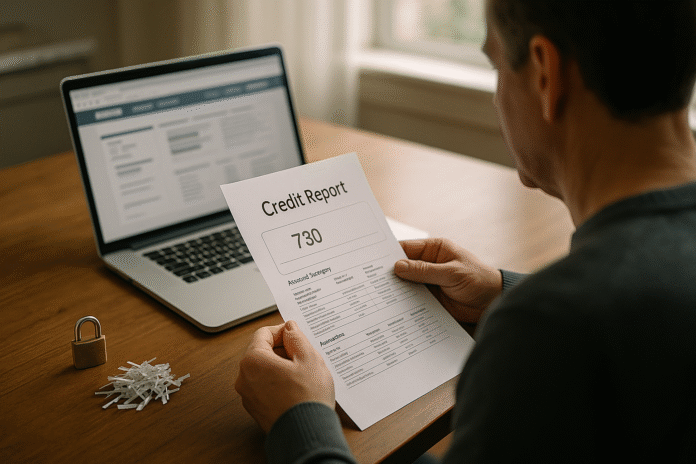
Credit report fraud happens when someone uses your personal information to open or manipulate credit in your name. The most reliable prevention is to block access to your credit reports, watch for red flags, and act quickly if anything looks off. In this guide, you’ll learn practical, step-by-step protections that work in the real world, including freezes, alerts, report checks, and rapid recovery. This article is for anyone who wants to stop stolen credit reports from turning into loans, cards, or accounts you never asked for. Quick definition: A credit freeze stops new lenders from viewing your credit file; a fraud alert tells lenders to verify your identity before approving credit.
Fast checklist (overview):
Freeze all three major credit reports ➜ Add a fraud alert if you’re at risk ➜ Check reports weekly at AnnualCreditReport.com ➜ Opt out of pre-screened credit mail ➜ Freeze specialty files (ChexSystems, LexisNexis, Innovis) ➜ Turn on multifactor authentication and strong passwords ➜ Protect mail/IDs and use USPS Informed Delivery ➜ Get an IRS IP PIN and secure government accounts ➜ Follow breach-response steps ➜ If fraud occurs, use IdentityTheft.gov and escalate disputes ➜ Build a recurring monitoring routine.
Brief disclaimer: This guide is educational and not legal, tax, or financial advice. For specific decisions, consult the relevant agency, your bank, or a qualified professional.
1. Freeze Your Credit Reports (Most Effective First Step)
A security freeze is the single strongest way to stop new-account fraud because most lenders won’t open an account if they can’t pull your report. Place a free freeze with Equifax, Experian, and TransUnion; you can lift it temporarily when you need credit and re-freeze afterward. Online or phone lifts typically take minutes; by mail, allow a few business days. Freezes don’t affect your credit score, your existing accounts, or your ability to use current cards. As of September 2025, free weekly credit reports remain available, which makes it easy to verify that nothing slipped through while your freeze was temporarily lifted.
1.1 How to do it (U.S.)
- Equifax, Experian, TransUnion: create accounts and request a security freeze; store your PINs/credentials securely.
- Plan a temporary lift for mortgage/auto/credit applications; online/phone requests are processed within about an hour; by mail, up to three business days. Kiplinger
- Consider freezing Innovis (a smaller bureau many telcos and lenders use).
1.2 Numbers & guardrails
- Freezes are free to place and lift; you can also freeze a child’s credit (under 16). Consumer Advice
- Keep a “thaw plan” (dates, lender name, bureau used) to minimize open windows.
Synthesis: A freeze is low effort and high impact—set it, keep your PINs safe, and you’ve shut the main door on new-account credit fraud.
2. Add a Fraud Alert (Initial, Extended, or Active Duty)
If your data has been exposed or you suspect risk, place a fraud alert so lenders must take extra steps to verify it’s really you. An initial fraud alert lasts one year and is free; an extended alert lasts seven years if you have an FTC Identity Theft Report or police report; active duty alerts (for servicemembers) last one year and suppress pre-screened offers for two years. You only need to contact one bureau; it will notify the others—useful if you can’t freeze immediately. Alerts don’t block access the way freezes do, but they add friction for impostors and create a paper trail for disputes.
2.1 How to choose
- Initial alert (1 year): You’re worried you might be targeted (e.g., data breach notice).
- Extended alert (7 years): You’ve confirmed identity theft; file at IdentityTheft.gov to generate the official report.
- Active duty alert: You’re deploying or recently deployed; it lasts a year and removes you from pre-screen lists for two years.
2.2 Mini-checklist
- Keep a record of when/where you placed the alert.
- Add a reachable phone number for lenders to call.
- Renew annual alerts if risk remains.
Synthesis: Alerts are the right tool when you can’t freeze immediately or when you want extra friction layered on top of a freeze.
3. Check and Dispute Your Reports Weekly (It’s Free, Permanently)
Catching fraud early limits damage and speeds clean-up. You can get free weekly reports from Equifax, Experian, and TransUnion at AnnualCreditReport.com (the only federally authorized site), then dispute errors and unknown accounts right away. Furnishers and bureaus generally must investigate disputes within 30 days of receipt, and you should include documentation and send by certified mail when possible. If unresolved, escalate to the CFPB. Frequent checks also surface benign mistakes—mixed files, wrong addresses—that can become future fraud vectors if left uncorrected.
3.1 What to look for
- New accounts you didn’t open, unfamiliar addresses/employers, or hard inquiries you don’t recognize.
- Balance spikes or delinquency on accounts you don’t own.
- Duplicate tradelines from the same lender (possible data error).
3.2 How to dispute (quick steps)
- Dispute with the bureau and the furnisher; enclose copies of evidence; keep a paper trail.
- Calendar the 30-day response window and follow up in writing.
- If the response is inadequate, escalate via consumerfinance.gov/complaint.
Synthesis: Weekly visibility + timely disputes keep small issues small—and create records that help you win later escalations.
4. Opt Out of Pre-Screened Credit Mail (Shut Down a Common Fraud Path)
Pre-screened offers can be stolen from your mailbox and used to open fraudulent accounts or redirect mail. Opting out reduces that exposure while cutting clutter. Use the industry’s official service—OptOutPrescreen.com or 1-888-5-OPT-OUT (567-8688)—to stop offers for five years or permanently (with a signed form). This opt-out doesn’t affect your credit score and is reversible anytime. Pair opt-outs with a credit freeze and USPS Informed Delivery to reduce both digital and physical avenues thieves exploit.
4.1 Steps (5 minutes)
- Visit optoutprescreen.com or call 1-888-5-OPT-OUT; choose five-year or permanent opt-out.
- Confirm via the mailed permanent form if you selected the lifetime option. Consumer Advice
- Re-opt-in later if you actively want offers.
4.2 Common mistakes
- Using non-official sites that try to sell subscriptions. Stick to the FTC-endorsed process.
Synthesis: Fewer unsolicited offers mean fewer opportunities for mailbox thieves—and less personal data leaking into the world.
5. Freeze Specialty and Background-Report Files (Bank Accounts, Phones & More)
Fraudsters don’t just target credit cards; they open bank accounts, mobile lines, and utilities. Many of those checks run through specialty consumer reporting agencies. Add freezes where it matters most: ChexSystems (bank account screening), LexisNexis Risk Solutions (widely used for identity and background checks), and Innovis (a smaller credit bureau sometimes used by telcos and retailers). Freezes at these agencies are free, and you can lift them temporarily for legitimate applications—just as with the big three.
5.1 Where to freeze
- ChexSystems: block fraudulent checking/savings account openings.
- LexisNexis Risk Solutions: restricts background-data reports many companies use.
- Innovis: an additional bureau used by some lenders/service providers. Consumer Financial Protection Bureau
5.2 Mini-checklist
- Keep a secure list of freeze PINs and phone numbers.
- Thaw only the specific agency your bank or carrier uses (ask them first).
- Re-freeze immediately after approval.
Synthesis: Extending freezes beyond the big three closes side doors thieves often use to create bank accounts or mobile lines in your name.
6. Lock Down Your Logins (MFA, Passwords, and Passkeys)
Most identity theft starts with a compromised account or reused password. Turn on multifactor authentication (MFA)—ideally phishing-resistant methods like device-bound passkeys or security keys—on email, banking, and your mobile carrier account. Use a password manager to create unique, long passphrases (16+ characters) for every site; never reuse bank or email passwords anywhere else. As of 2025, CISA and NIST continue to recommend MFA and modern authenticators to reduce account takeover risk. These steps don’t replace freezes, but they dramatically cut the odds of fraudsters getting the data they need to attempt credit abuse.
6.1 How to harden quickly
- Turn on MFA for email, financial accounts, password manager, and your mobile carrier portal.
- Prefer passwordless/passkeys or app prompts over SMS codes when possible (less phishable).
- Check saved passwords for breaches and change any reused ones.
6.2 Numbers & guardrails
- “Users who enable MFA are significantly less likely to get hacked,” per CISA guidance.
Synthesis: Strong authentication shrinks the attack surface—pair it with freezes to stop both account takeover and new-account fraud.
7. Protect Your Mail and Sensitive Documents
Mail theft is a persistent on-ramp to credit fraud: thieves grab pre-approved offers, checks, or bank mail to impersonate you. Sign up for USPS Informed Delivery to preview what should arrive and spot missing items. Retrieve mail promptly, use secure mailboxes, and shred sensitive documents. Don’t carry your Social Security card; store it safely. Avoid sending checks; if you must, deposit inside the post office or use electronic bill pay. The goal is to deny fraudsters the physical paperwork they need to pass lender identity checks or change your address.
7.1 Mini-checklist
- Enroll in Informed Delivery and monitor images of incoming mail.
- Collect mail daily; consider a locking mailbox; shred statements. USPS FAQs
- Never carry your SSN card; limit where your SSN is shared.
7.2 Region note (U.S.)
- USPIS and USPS recommend reporting suspicious mail activity; local post offices can guide next steps.
Synthesis: Tight mail hygiene shuts down a surprisingly common fraud starter—paper that proves “you.”
8. Shield Your Taxes and Benefits (IRS IP PIN + my Social Security)
Tax and benefits fraud can feed credit misuse by validating stolen identities. Get an IRS Identity Protection PIN (IP PIN)—a six-digit number that blocks criminals from filing tax returns in your name—and create a secure IRS Online Account. Also create (and secure) your my Social Security account via Login.gov or ID.me so no one else claims it first. Both steps reduce the risk of government-benefit identity hijacking that can cascade into credit report abuse. As of August–September 2025, the IRS encourages all taxpayers to get an IP PIN; SSA now uses Login.gov/ID.me for strong authentication.
8.1 How to do it
- Visit irs.gov/GetAnIPPIN and complete identity verification; renew each January.
- Create my Social Security through Login.gov or ID.me and enable MFA. Social Security
8.2 Guardrails
- Keep IP PIN and SSA credentials offline in a secure place; never share via email/text.
Synthesis: Lock your government identity early—IP PIN + my Social Security closes high-value targets criminals use to legitimize stolen profiles.
9. Respond Fast After a Data Breach (Even If You’re “Only” At Risk)
Breach notices mean your details may circulate on criminal markets, raising the odds of credit fraud. Follow the FTC’s breach guidance: freeze your credit, place a fraud alert if appropriate, change passwords, and enroll in any free monitoring offered. Use tools like Have I Been Pwned to see if your email appears in known breaches and set breach notifications. Breaches don’t always equal fraud, but fast action narrows the window thieves have to monetize your data. Consumer AdviceFederal Trade Commission
9.1 Mini-checklist (48-hour plan)
- Freeze all bureaus; consider specialty freezes. USAGov
- Change passwords for accounts tied to your breached email; enable MFA.
- Watch for phishing pretending to be the breached company; go direct to official sites.
9.2 Example
- If your SSN was exposed, order your credit reports, freeze, and scan for unknown accounts and inquiries immediately. Federal Trade Commission
Synthesis: Breach triage is about speed—lock it down, rotate credentials, and watch closely for the next 90 days.
10. If Fraud Happens: Recover with IdentityTheft.gov and Escalate Smartly
If you see accounts you didn’t open, act now: freeze your credit, go to IdentityTheft.gov for a personalized recovery plan, and generate an FTC Identity Theft Report you can use with lenders and the bureaus. Contact any affected creditor’s fraud department to close/reverse accounts and demand documentation. Dispute errors with the bureaus and the furnishers concurrently; keep copies. If a company stonewalls or re-inserts false data, file a complaint with the CFPB—many cases resolve within weeks after that escalation. Some victims also file a police report (especially if a collector demands it).
10.1 Recovery steps (condensed)
- Freeze credit ➜ IdentityTheft.gov plan ➜ Close fraudulent accounts ➜ Comprehensive disputes (bureau + furnisher) ➜ CFPB complaint if needed.
10.2 Guardrails
- Never pay a collector on a fraudulent account—dispute the debt in writing; keep proof.
Synthesis: A documented, stepwise response restores your file and creates leverage if a lender or bureau isn’t responsive.
11. Build a Standing Monitoring Routine (So You Don’t Miss a Beat)
Prevention isn’t “set and forget.” Build a lightweight routine: monthly report spot-checks, notification rules on your bank/credit cards, and a simple freeze-thaw playbook you can reuse. Keep a secure sheet with your bureau logins, freeze PINs, and the phone numbers you’ll call in an emergency. Use calendar reminders for annual fraud-alert renewals (if you use alerts) and for tax-season IP PIN renewal. Finally, keep realistic context: internet crime losses reported to the FBI reached $16+ billion in 2024—the threat is real, but disciplined habits keep your risk low. Federal Bureau of Investigation
11.1 Mini-checklist (recurring)
- Monthly: scan all three credit reports; dispute anything off.
- Always-on: transaction alerts for all cards and bank accounts.
- Annual: renew alerts if needed; update password manager and MFA recovery options.
11.2 Tools/Examples
- AnnualCreditReport.com reminders; bank real-time alerts; password manager health checks. Consumer Advice
Synthesis: A 15-minute monthly ritual plus always-on alerts catches issues early and keeps your identity “hardened” year-round.
FAQs
1) What’s the difference between a credit freeze and a fraud alert?
A freeze blocks access to your credit file, stopping most new-account fraud; you lift it when applying for credit. A fraud alert doesn’t block access but forces lenders to verify your identity first, which adds friction for thieves. Freezes and alerts are free in the U.S., and many people use both (freeze by default; alert when at higher risk).
2) Will a credit freeze hurt my credit score or affect my current cards?
No. Freezes don’t affect your credit score, your existing accounts, or your ability to use your credit cards. They only limit new creditors from viewing your file. You can temporarily lift a freeze online or by phone to apply for credit, then re-freeze after approval (online/phone lifts are usually processed quickly).
3) How often should I check my credit reports?
Weekly is ideal because it’s free and permanent at AnnualCreditReport.com. Frequent checks let you spot suspicious inquiries or accounts right away and start the dispute clock promptly (companies generally have 30 days to investigate).
4) I got a data-breach notice—do I need a freeze or is monitoring enough?
Monitoring is useful, but a freeze is stronger because it prevents new credit from being opened. After a breach, the FTC recommends freezing, changing passwords, and using MFA, plus taking advantage of any free monitoring offered. Consumer Advice
5) What if I’m in the military or deploying soon?
Place an active duty alert. It lasts one year (renewable for your deployment) and removes you from pre-screened credit/insurance offers for two years. You only need to contact one bureau; it will notify the others. Consumer Financial Protection Bureau
6) Do I need to freeze “other” files beyond the big three?
Often, yes. Bank account openings are screened via ChexSystems; many background checks use LexisNexis; some telcos check Innovis. Freezing these reduces non-credit avenues thieves use to impersonate you. Lifts are free and work like credit-bureau freezes.
7) Are credit locks the same as freezes?
No. A freeze is a legal right under federal law with clear protections and obligations for bureaus; “credit locks” are products from bureaus/apps that restrict access but aren’t the same legal mechanism. If you can choose only one, a freeze is the more robust baseline. (See FTC guidance on freezes vs. alerts for context.)
8) How do I stop pre-approved offers that keep showing up?
Use the official industry service: OptOutPrescreen.com or 1-888-5-OPT-OUT. Choose a five-year or permanent opt-out (the permanent option requires mailing back a signed form). This reduces a mailbox attack path without affecting your credit.
9) What is IdentityTheft.gov, and when should I use it?
It’s the federal one-stop portal for reporting identity theft and getting customized recovery plans and documents (like an FTC Identity Theft Report). Use it as soon as you confirm fraud (e.g., a new account you didn’t open), then share the report with lenders and bureaus.
10) My disputes aren’t getting fixed—what’s next?
Escalate by filing a complaint with the CFPB. The Bureau forwards your case to the company for response and tracks resolution; many consumers see faster action after filing. Provide documentation, timelines, and copies of dispute letters. Consumer Financial Protection Bureau
11) Is MFA really necessary if I’ve frozen my credit?
Yes. A freeze protects new credit, but account takeover can still drain existing accounts or expose data used for impersonation. MFA (prefer passkeys/security keys when available) and strong, unique passwords reduce takeover risk dramatically.
12) I’m outside the U.S.—what are equivalents?
In the U.K., consider CIFAS Protective Registration (currently advertised at about £30 for two years) and ask Equifax/Experian/TransUnion U.K. about alerts. In Canada, Equifax and TransUnion support freezes and fraud alerts; check each bureau’s site for current processes and fees. CifasTransUnion
Conclusion
Credit report fraud thrives on opportunity: open files, weak logins, and slow reactions. Your goal is to remove those opportunities by default and react quickly when signals pop. A freeze on each bureau is the anchor control that stops new-account fraud; fraud alerts add lender friction when you’re at risk; weekly report checks make sure you see problems early and have evidence to dispute them. From there, close side doors (ChexSystems/LexisNexis/Innovis), make account takeover harder with MFA and strong passwords, and lock down your government identity with an IRS IP PIN and my Social Security account. Keep a simple routine—monthly checks, always-on bank alerts, and a ready thaw plan—and you’ll stay ahead of most threats.
One-line CTA: Freeze today, set monthly report reminders, and bookmark IdentityTheft.gov—future-you will be glad you did.
References
- Credit Freeze or Fraud Alert: What’s Right for Your Credit Report — Federal Trade Commission (FTC), updated 2021–2022. Consumer Advice
- Starting Today, New Federal Law Allows Consumers to Place Free Credit Freezes and Year-Long Fraud Alerts — FTC Press Release, Sept 21, 2018. Federal Trade Commission
- You Now Have Permanent Access to Free Weekly Credit Reports — FTC Consumer Alert, Jan 4, 2024. Consumer Advice
- AnnualCreditReport.com — Home Page (Official Site) — Central Source, accessed Sept 2025. Annual Credit Report
- How Do I Dispute an Error on My Credit Report? — Consumer Financial Protection Bureau (CFPB), Dec 18, 2024. Consumer Financial Protection Bureau
- A Summary of Your Rights Under the Fair Credit Reporting Act — CFPB, 2018 (current). Consumer Financial Protection Bureau
- What Do I Do If I’ve Been a Victim of Identity Theft? — CFPB, Jan 29, 2025. Consumer Financial Protection Bureau
- IdentityTheft.gov — Report & Recovery Plan — FTC, accessed Sept 2025. IdentityTheft.gov
- Opting Out of Prescreened Offers — FTC Consumer Advice, 2023. Consumer Advice
- USPS Informed Delivery — Official Page — USPS, accessed Sept 2025. informeddelivery.usps.com
- How You Can Help Us Protect Your Social Security Number — Social Security Administration, Mar 2024. Social Security
- Get an Identity Protection PIN (IP PIN) — Internal Revenue Service (IRS), Aug 7, 2025. IRS
- More Than a Password (MFA) — Cybersecurity & Infrastructure Security Agency (CISA), accessed Sept 2025. CISA
- Implementing Phishing-Resistant MFA (Fact Sheet) — CISA, 2022. CISA
- Place a Security Freeze (ChexSystems) — ChexSystems, accessed Sept 2025. ChexSystems
- Security Freeze (LexisNexis Risk Solutions) — LexisNexis, accessed Sept 2025. LexisNexis Risk Solutions
- Security Freeze (Innovis) — Innovis, accessed Sept 2025. innovis.com