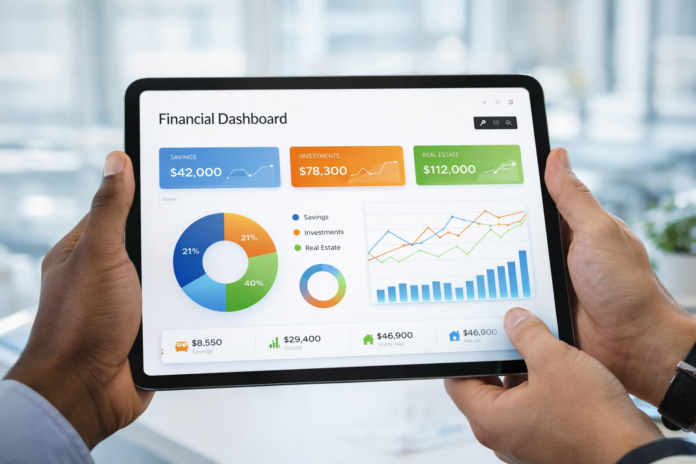
As of February 2026, the financial landscape has shifted from simple transactional viewing to a state of total digital integration. Open Banking, once a novel concept centered on sharing bank statement data, has matured into a sophisticated ecosystem of Open Finance. The pinnacle of this evolution is the “Whole-of-Life” dashboard—a single source of truth that aggregates a consumer’s entire financial existence, from their daily coffee habit to their long-term retirement projections and physical asset valuations.
Definition and Core Concept
A Whole-of-Life dashboard is a comprehensive financial interface that utilizes secure APIs to pull data from every corner of a user’s life. Unlike traditional banking apps that show only liquid cash, these dashboards integrate traditional bank accounts, credit cards, mortgages, pensions, insurance policies, stock portfolios, and even “soft assets” like jewelry or classic cars. The goal is to move beyond “What do I have?” to “What can I do?”
Key Takeaways
- Data Sovereignty: Consumers now have the legal framework to demand their data be portable across all financial institutions.
- Hyper-Personalization: Machine learning models now provide “nudges” based on holistic data rather than isolated transactions.
- Predictive Power: Modern dashboards use historical trends to forecast future cash flow, identifying potential shortfalls months in advance.
- Frictionless Integration: The shift from PSD2 to the global adoption of PSD3-style frameworks has standardized how non-banking data is ingested.
Who This Is For
This guide is designed for Fintech Product Managers, UX/UI Designers, and Financial Advisors looking to build or recommend next-generation wealth management tools. It is also a roadmap for forward-thinking consumers who want to understand how to leverage their data to achieve financial freedom.
Safety Disclaimer: The information provided here is for educational purposes regarding financial technology design. It does not constitute financial, legal, or investment advice. Always consult with a certified financial planner and ensure any platform you use is regulated by your local financial authority (e.g., the FCA in the UK or the CFPB in the USA).
The Shift from Open Banking to Open Finance
To design an effective whole-of-life dashboard, we must first understand the regulatory and technological shifts that occurred between 2018 and 2026. Open Banking was the “Introductory Phase,” focusing primarily on payment accounts. It allowed third-party providers (TPPs) to access transaction data with user consent.
However, Open Finance—the current standard—expands this to include everything. This means the “dashboard” is no longer just a list of transactions. It is a dynamic engine. The design challenge has moved from data fetching to data synthesis. Consumers no longer suffer from a lack of information; they suffer from “data fatigue.” A successful dashboard must filter the noise and present a narrative of the user’s financial health.
The 5 Functional Pillars of a Whole-of-Life Dashboard
1. Holistic Asset Aggregation
The first layer of any dashboard is the “Total Net Worth” view. This requires a robust backend capable of communicating with diverse API standards.
- Liquid Assets: Checking, savings, and high-yield cash accounts.
- Investments: Real-time feeds from brokerage accounts and crypto wallets.
- Fixed Assets: Integration with real estate valuation APIs (like Zillow or Rightmove) to track home equity.
- Legacy Assets: Manual entry or specialized tracking for collectibles, art, and jewelry.
2. Debt and Liability Tracking
A dashboard that only shows wealth is a “vanity metric” tool. True financial health requires a clear view of the “Red.”
- Dynamic Debt Snowballing: Tools that automatically suggest which high-interest debt to pay off first based on current account balances.
- Mortgage Refinancing Alerts: APIs that monitor current market rates and alert the user when a refinance could save them a specific monthly amount.
3. Protection and Insurance Gap Analysis
One of the most overlooked aspects of Open Finance is insurance. A whole-of-life dashboard should ingest policy documents to show:
- Coverage Overlap: Identifying where a user might be paying for the same coverage twice (e.g., travel insurance via a credit card and a standalone policy).
- The “Safety Net” Metric: Calculating how many months a user could survive based on their current insurance payouts and liquid cash.
4. Retirement and Long-Term Goal Forecasting
Using “Open Pension” data, dashboards can now simulate retirement age with high accuracy.
- Scenario Modeling: “If I increase my 401k/SIPP contribution by 2%, how many years earlier can I retire?”
- Tax Efficiency: Identifying if a user is maximizing their tax-advantaged accounts before contributing to taxable ones.
5. Cash Flow and Behavioral Analytics
This is the “daily” view. It uses AI to categorize spending and, more importantly, predict future spending.
- Subscription Management: Identifying “zombie” subscriptions that haven’t been used in 90 days.
- Burn Rate: A simple visual indicator of whether the user is currently “In the Green” or “In the Red” for the month.
Technical Architecture: Building the Engine
Designing the UI is the easy part; ensuring the data is accurate and secure is where the complexity lies.
API Normalization
Different banks and institutions use different data schemas. A “transaction” in one bank might be labeled as “DEB” while another calls it “Purchase.” Solution: Designers must work with engineers to create a middle-layer Data Normalization Engine. This ensures that when the user looks at their “Food & Drink” category, it includes every transaction across five different cards, regardless of how the bank labeled it.
Security and Consent Management
Trust is the currency of Open Finance. As of 2026, Consent Dashboards are a legal requirement in many jurisdictions.
- Granular Control: Users should be able to see exactly what data each “tile” on their dashboard is accessing.
- Periodic Re-authentication: To prevent “set it and forget it” security risks, the dashboard should prompt users to renew their consent every 90 days, as per PSD3 guidelines.
Designing for Different Life Stages
A “Whole-of-Life” dashboard cannot be one-size-fits-all. A 22-year-old graduate has different needs than a 55-year-old planning their exit from the workforce.
The “Early Career” View (Focus: Debt & Growth)
For younger users, the H1 (Primary Header) of the dashboard should focus on Student Loan repayment and Credit Score building. The UI should be gamified to encourage small, frequent contributions to an emergency fund.
The “Mid-Life” View (Focus: Management & Complexity)
This user likely has a mortgage, multiple investment accounts, and perhaps a 529 plan or Junior ISA for their children. The dashboard here needs to be a Command Center. It should emphasize “Net Worth” and “Liability reduction,” with clear views on tax-efficient investing.
The “Pre-Retirement” View (Focus: Preservation & De-cumulation)
For users over 50, the focus shifts. The dashboard should highlight Pension drawdown strategies and Estate planning. It should show exactly how much monthly income their current “pot” will generate in a 4% withdrawal scenario.
UX Principles for Financial Clarity
Financial data is inherently stressful. Good design should mitigate this anxiety.
- Progressive Disclosure: Don’t show all the data at once. Start with high-level totals (The “At a Glance” view) and allow users to “drill down” into specific accounts.
- Color Theory: Avoid excessive use of red. While red indicates debt or a market dip, overusing it can lead to “app avoidance.” Use neutral tones for data and reserve bright colors for “Action Items.”
- Human Language: Instead of saying “APR 19.9% Variable,” say “This credit card costs you $45 a month in interest.”
Common Mistakes in Dashboard Design
- Ignoring Manual Inputs: No matter how good APIs get, there will always be manual data (e.g., a loan to a family member). If a user can’t add this, the dashboard is “broken” in their eyes.
- Latency Issues: Nothing kills trust faster than a dashboard that shows an old balance. Ensure your Webhooks are optimized for real-time updates.
- The “Ghost” Account: When a bank connection fails (API timeout), many apps simply hide the account. This is a critical error. The UI must clearly show that a connection is “sleeping” so the user knows their Total Net Worth is currently an estimate.
- Over-Automation: While “auto-categorization” is great, it’s often wrong. Always give the user an easy way to override a category. If the AI thinks a “Tesla” payment is “Travel” but the user considers it “Luxury,” let them change it.
The Role of AI and Machine Learning
In 2026, a dashboard that only shows data is obsolete. It must interpret data.
Predictive Cash Flow
By analyzing the last 24 months of data, the dashboard can predict that a user will likely spend $400 on car repairs in the next quarter. It can then suggest moving $150 from a “Dining Out” budget into an “Emergency” bucket.
Autonomous Finance
We are moving toward the “self-driving” wallet. Imagine a dashboard that sees you have $2,000 sitting in a zero-interest checking account and knows you have a high-interest credit card balance. The dashboard should ask: “You could save $35 in interest this month by moving $1,500 to your Visa. Shall I do that for you?”
Challenges and Roadblocks
Data Silos
While banks are now largely open, some sectors remain resistant. Commercial real estate, private equity, and certain international pension funds still lack standardized APIs. Designing for these “black boxes” requires creative manual-entry UX.
The “Privacy Paradox”
Consumers want the benefits of a whole-of-life view but are increasingly wary of how their data is used for advertising. Developers must ensure a Firewall exists between the financial dashboard and any marketing engines.
Conclusion
The evolution of Open Banking into “Whole-of-Life” dashboards represents the most significant shift in consumer finance since the invention of the credit card. By aggregating every facet of a person’s financial life into a single, actionable interface, we are finally giving consumers the tools they need to achieve true financial literacy and sovereignty.
To succeed in this space, designers and developers must prioritize accuracy, empathy, and transparency. A dashboard is not just a collection of APIs; it is a digital companion that guides a user through the most stressful aspects of modern life. As we look toward the remainder of 2026 and beyond, the winners in the fintech space will be those who can turn “big data” into “small, meaningful actions.”
Next Steps for Implementation:
- Audit your current API integrations for “Data Gaps” (e.g., are you missing insurance or physical assets?).
- Implement a “Consent Health” screen to build user trust.
- Develop a “Scenario Modeling” tool to move your UI from static to predictive.
FAQs
Q1: Is my data safe in a “Whole-of-Life” dashboard? A1: Under PSD3 and similar global regulations, these dashboards use bank-level encryption (AES-256) and secure API tokens. This means they never actually “see” or “store” your login credentials; they only receive a digital “key” that allows them to read the data you’ve authorized.
Q2: Will using these dashboards hurt my credit score? A2: No. Connecting your accounts to a dashboard is considered a “soft pull” or a simple data share. It has no impact on your credit rating. In fact, many dashboards now help you improve your score by identifying bills that can be reported to credit bureaus.
Q3: Can I connect my physical assets like my house or car? A3: Yes. Modern dashboards use integrations with property valuation services and vehicle history databases. You simply enter your address or VIN, and the dashboard pulls the estimated market value, subtracting any linked mortgage or auto loan to show your actual equity.
Q4: Do I have to pay for these services? A4: Models vary. Some are “freemium,” where the basic dashboard is free but advanced “AI Coaching” costs a monthly fee. Others are provided for free by your primary bank or wealth manager as a value-add service to keep you within their ecosystem.
Q5: What happens if I want to delete my data? A5: Under GDPR and similar “Right to be Forgotten” laws, you can revoke consent at any time. A well-designed dashboard will have a “Kill Switch” that immediately disconnects all APIs and wipes your aggregated history from their servers.
References
- European Commission: Proposal for a Framework for Financial Data Access (FIDA), 2023.
- Financial Conduct Authority (UK): The Transition from PSD2 to Open Finance, 2024-2025.
- Consumer Financial Protection Bureau (USA): Rulemaking on Personal Financial Data Rights (Section 1033), 2024.
- Open Banking Implementation Entity (OBIE): Standardization of Wealth and Pension APIs, 2025 Annual Report.
- Journal of Financial Technology: UX Design Patterns in Holistic Wealth Management, Academic Press, 2025.
- World Bank: Financial Inclusion and the Role of Open Data Frameworks, 2024.
- OECD: Digital Transformation of Financial Services and Consumer Protection, 2025.