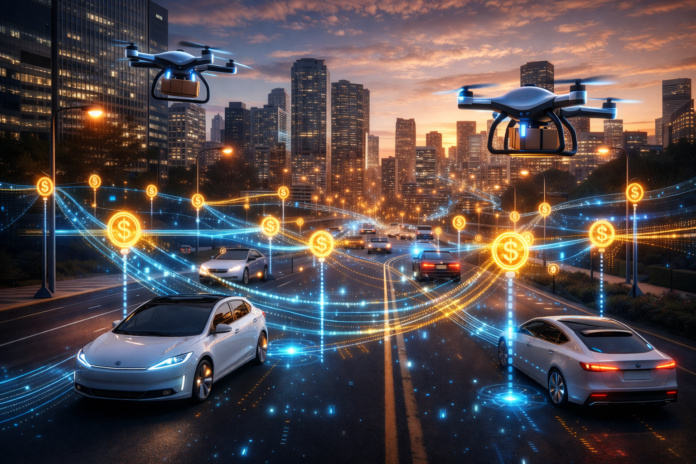
As of March 2026, the Internet of Things (IoT) has transitioned from a network of “smart” gadgets to a fully realized autonomous economy. At the heart of this transformation lies a critical financial mechanism: micropayments. These are small-value transactions—often fractions of a cent—that occur seamlessly between devices without human intervention. By enabling machine-to-machine (M2M) commerce, micropayments allow your electric vehicle to pay a charging station, your smart fridge to negotiate the best price for milk, and industrial sensors to sell data to weather stations in real-time.
Key Takeaways
- Definition: Micropayments in IoT are high-frequency, low-value transactions ($0.00001 to $1.00) executed between autonomous devices.
- The Tech Stack: Most systems leverage Distributed Ledger Technology (DLT) or blockchain “Layer 2” solutions to bypass the high fees of traditional banking.
- Scalability is King: For an ecosystem with billions of devices, the payment network must handle millions of transactions per second (TPS).
- Monetization: IoT micropayments unlock new business models like “Product-as-a-Service” (PaaS) and granular data marketplaces.
Who This Is For
This guide is designed for IoT developers, fintech strategists, supply chain managers, and hardware manufacturers looking to understand how to integrate financial capabilities into the next generation of connected devices. Whether you are building a smart city infrastructure or a consumer-grade wearable, understanding the friction-less flow of value is now as important as understanding the flow of data.
The Evolution of the Machine Economy
To understand where we are in 2026, we must look at the limitations of the early 2020s. Traditional payment systems—built on credit card rails like Visa and Mastercard—were never designed for the “Internet of Everything.” If a smart meter wanted to pay $0.05 for a burst of energy, the transaction fee alone might be $0.30. This “negative margin” effectively killed M2M commerce in its infancy.
From Subscriptions to Granular Consumption
The old model relied on subscriptions. You paid a monthly fee for a service regardless of how much you used it. In the IoT ecosystem, this is inefficient. Micropayments allow for granular consumption. Instead of paying $20 a month for a data plan for your connected car, the car pays $0.001 for every kilobyte it consumes or $0.05 for every minute of high-bandwidth streaming.
The Role of Decentralization
Centralized banks operate on “batch processing.” They wait for transactions to accumulate before settling them. Machines, however, operate in real-time. The shift toward decentralized networks (like IOTA’s Tangle or the Ethereum-based Lightning Network) has provided the “rails” for these instant, feeless, or near-feeless transfers.
Technical Foundations: How IoT Micropayments Work
Integrating a payment wallet into a lightbulb or a robotic arm requires a specific technical stack. It isn’t just about the software; it’s about the intersection of hardware security and network protocols.
1. Distributed Ledger Technology (DLT)
While “blockchain” is the household name, IoT often uses Directed Acyclic Graphs (DAGs). Unlike a traditional linear chain, a DAG allows for parallel processing of transactions. This is vital for the IoT ecosystem because:
- No Miners: In many DAG-based systems, there are no miners to pay, which eliminates the transaction fees that plague Bitcoin or Ethereum.
- Scalability: As more devices join the network and validate transactions, the network actually becomes faster, not slower.
2. Smart Contracts: The “Brain” of the Transaction
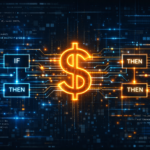
A smart contract is a self-executing piece of code that triggers a payment when specific conditions are met.
Example: A delivery drone carries a package. The smart contract states: “When the GPS coordinates match the delivery address AND the recipient’s smart lock confirms receipt, release $2.50 to the drone’s digital wallet.”
3. Hardware Security Modules (HSMs) and Secure Elements
For a machine to hold money, it must be secure. In 2026, most IoT devices come equipped with a Secure Element (SE)—a tamper-resistant chip that stores the device’s private keys. This ensures that even if a device is physically stolen, its “wallet” cannot be drained by hackers easily.
4. Edge Computing Integration
Processing payments in the “cloud” takes too long (latency). Edge computing allows the payment logic to sit closer to the device. A smart car communicates with a toll booth at the “edge” of the network, completing the transaction in milliseconds as the car passes through at 100 km/h.
Core Use Cases Reshaping Industries
Smart Utilities and Energy Trading (V2G)
One of the most prominent uses of IoT micropayments is Vehicle-to-Grid (V2G) communication. Your electric vehicle (EV) is essentially a giant mobile battery. During peak hours, the grid may need extra power. Your car can autonomously sell its stored electricity back to the grid in 5-minute increments, receiving thousands of tiny micropayments. By the time you wake up, your car may have earned enough to pay for its own charging during off-peak hours.
The Data Marketplace
Sensors are everywhere, collecting data on air quality, traffic flow, and weather patterns. Historically, this data was siloed. With micropayments, a third-party weather app can “query” a thousand private home weather stations. Each station receives $0.0001 for its data packet. This creates a decentralized, real-time map of the world that is far more accurate than centralized government sensors.
Industrial IoT (IIoT) and Consumables
In a factory setting, machines often require consumables (ink, lubricants, drill bits). An IoT-enabled machine can monitor its own wear and tear. When it predicts it will need a replacement part in 48 hours, it can:
- Check prices across three different suppliers.
- Negotiate the best shipping rate.
- Pay for the item using its own internal budget.
- Schedule the maintenance drone to install it.
Implementation Strategies for Businesses
Transitioning to a micropayment-enabled IoT model requires a shift in both engineering and accounting.
Step 1: Identity Management (DID)
Before a device can pay, it must have a Decentralized Identifier (DID). This is a digital passport for the machine. It proves to the network that “Sensor #542” is a legitimate device owned by “Company X.”
Step 2: Wallet Architecture
Decide between a Hot Wallet (connected to the internet for instant transactions) and a Cold Wallet (for storing larger accumulated balances). For IoT, most devices use a “Limited Hot Wallet” that only holds enough funds for a day’s worth of transactions, mitigating risk if the device is compromised.
Step 3: API Integration
Use standardized APIs to bridge the gap between the DLT and your existing ERP (Enterprise Resource Planning) software. Systems like SAP and Oracle now have native modules to “read” IoT payment streams, ensuring that your accounting department doesn’t have to manually track millions of tiny transactions.
Security, Privacy, and Regulatory Challenges
Safety Disclaimer: While IoT micropayments offer immense efficiency, they involve financial transactions and autonomous systems. Always consult with a cybersecurity expert and a legal advisor specializing in FinTech and “Machine Law” before deploying a live payment-enabled IoT network.
The “Sybil” Attack and Network Security
In a decentralized payment network, a “Sybil” attack occurs when an attacker creates thousands of fake devices to overwhelm the network. Preventing this requires robust “Proof of Stake” or “Proof of Work” (or specialized IoT equivalents like “Proof of Bandwidth”) to ensure that every device on the network is a physical entity with a “stake” in the system.
Privacy and Data Protection
If every transaction is recorded on a public ledger, does that mean your neighbors can see how much power your house is using? In 2026, Zero-Knowledge Proofs (ZKPs) are the standard solution. ZKPs allow a device to prove it has paid the required amount without revealing its identity or the specific details of the transaction to the public.
Regulation: Know Your Machine (KYM)
Global regulators have moved from “Know Your Customer” (KYC) to “Know Your Machine” (KYM). In the EU, the Data Act and the revised PSD3 (Payment Services Directive) require that every autonomous paying device is linked to a legally responsible human or corporate entity. You cannot have “stateless” machines roaming the economy without an owner.
Common Mistakes in IoT Micropayment Deployment
- Using High-Fee Networks: Attempting to run $0.01 transactions on a network with a $2.00 gas fee. This is the most common reason early IoT projects fail.
- Ignoring Latency: In M2M environments, a 10-second confirmation time is an eternity. If a car has to wait 10 seconds at every toll gate for a blockchain confirmation, the traffic jam will be miles long.
- Over-complicating the UI: Remember, the goal of IoT is to be invisible. If a user has to “approve” every $0.001 transaction on their phone, the system has failed. The “human-in-the-loop” should only be for high-value thresholds or monthly summaries.
- Neglecting Offline Capabilities: What happens when a delivery drone enters a tunnel or a remote area with no 5G? The payment protocol must support asynchronous settlement—the ability to verify a transaction offline and settle it once connectivity is restored.
The Economics of Scale: Why 2026 is the Turning Point
We have reached a “tipping point” because of three converging factors:
- 5G/6G Ubiquity: The low latency required for instant M2M negotiation is finally available globally.
- Hardware Standardization: Chips from NVIDIA, ARM, and Intel now include native crypto-acceleration, making it easy to sign transactions without draining the device’s battery.
- Standardized Protocols: Much like HTTP standardized the web, protocols like ISO 20022 and the W3C Web Payments standards have created a common language for machines to talk about money.
Cost-Benefit Analysis Table (Approximate 2026 Figures)
| Feature | Traditional Payment Rails | IoT Micropayment Rails (DLT/L2) |
| Min. Viable Transaction | $0.50 | $0.00001 |
| Transaction Fee | 2.9% + $0.30 | $0.00 (or <0.1%) |
| Settlement Time | 1–3 Days | < 2 Seconds |
| Autonomy Level | Requires Human Approval | 100% Autonomous |
| Scalability | Thousands of TPS | Millions of TPS |
Future Outlook: The Rise of Autonomous Corporations
By 2030, we expect to see Autonomous Corporations—entities that exist entirely as code and hardware. A fleet of self-driving taxis could, in theory, own themselves. They would use micropayments to pay for their own electricity, maintenance, and insurance. They would even “save” money to buy new vehicles to add to their fleet, all without a single human employee.
While this sounds like science fiction, the foundations are being laid today through the micropayment protocols we have discussed. The shift from “owning things” to “paying for the utility of things” is the defining economic trend of the late 2020s.
Conclusion
Micropayments are the “missing link” of the Internet of Things. For a decade, we have been able to move data with incredible efficiency, but moving value remained slow, expensive, and tethered to 20th-century banking systems. By integrating DLT, smart contracts, and secure hardware, we have finally given machines the ability to participate in the economy.
For businesses, this is an invitation to innovate. The “Product-as-a-Service” model is no longer limited to software; it now applies to air compressors, lightbulbs, and heavy machinery. For consumers, it means a world where we only pay for what we use, down to the last watt of energy or byte of data.
Next Steps for Implementation:
- Audit your data: Identify which data streams your devices produce that could be monetized.
- Prototype on a Layer 2: Don’t start on a mainnet. Use a testnet (like IOTA Shimmer or Ethereum Sepolia) to simulate M2M transactions.
- Assess Regulatory Compliance: Ensure your “Machine Identity” strategy aligns with local KYM (Know Your Machine) laws.
The machine economy is no longer a future prospect—it is a live, functioning market. The question is no longer whether your devices will pay each other, but how efficiently they will do it.
FAQs
1. What is the difference between a micropayment and a regular digital payment?
A micropayment is characterized by its extremely low value (often less than a cent) and high frequency. Regular digital payments (like buying a coffee with a phone) involve higher fees and slower settlement times that make them unsustainable for the thousands of tiny transactions an IoT device performs daily.
2. Is blockchain the only way to handle IoT micropayments?
No, but it is the most prevalent. Other options include “state channels” or centralized “ledger-as-a-service” providers. However, centralized providers often re-introduce the same fee and “single point of failure” issues that decentralized ledgers aim to solve.
3. How do IoT micropayments affect battery life?
Early blockchain protocols were power-hungry, but modern IoT-specific protocols (like those using PoS or DAGs) are designed to be extremely “lightweight.” Signing a transaction in 2026 consumes roughly the same amount of energy as sending a single MQTT data packet.
4. Can micropayments work without a constant internet connection?
Yes, through a process called “Off-chain Settlement.” Two devices can exchange “promises of payment” locally (via Bluetooth or NFC). Once one of the devices regains internet connectivity, it “broadcasts” the final state to the main ledger to settle the balance.
5. What happens if a machine makes a mistake and overpays?
Smart contracts are immutable, meaning once a payment is sent, it’s gone. To prevent mistakes, developers implement “Guardrail Logic”—pre-set limits on how much a machine can spend per hour or per transaction. There is also an emerging field of “Arbitration DAOs” where machines can contest a transaction to a decentralized jury.
References
- IOTA Foundation. (2025). The Tangle 2.0: Standardizing M2M Communications. Official Documentation.
- IEEE Xplore. (2024). Performance Analysis of Directed Acyclic Graph (DAG) Ledgers in High-Density IoT Environments.
- European Commission. (2023). The EU Data Act: Facilitating Machine-to-Machine Data Sharing and Monetization.
- Gartner Research. (2025). Top Strategic Technology Trends for 2026: The Rise of the Machine Economy.
- World Wide Web Consortium (W3C). (2024). Web Payments Working Group: Standards for Autonomous Agent Transactions.
- NIST. (2024). Security Considerations for the Internet of Things (IoT): Identity and Payment Integrity.
- GSMA. (2025). The State of Mobile IoT and Financial Integration in 5G-Advanced Networks.
- Harvard Business Review. (2025). How Micropayments are Transforming the Product-as-a-Service Business Model.
- Journal of Network and Computer Applications. (2026). Smart Contracts for Autonomous EV Charging: A Case Study.
- ISO. (2022). ISO 20022: Financial Services — Universal Financial Industry Message Scheme.