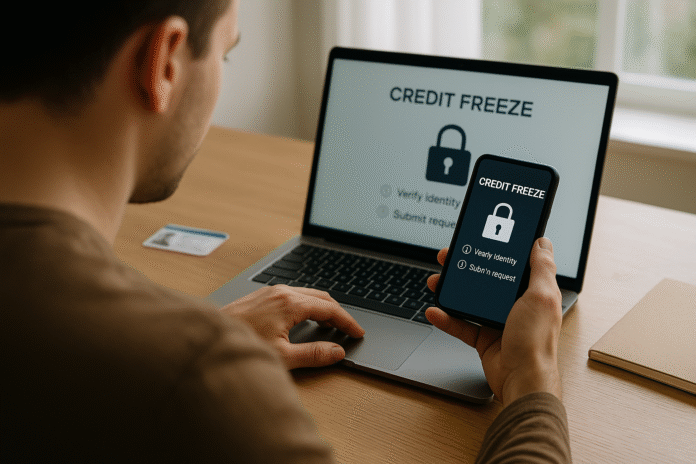
If your personal data may be at risk—or you simply want stronger protection—two of the most effective tools are fraud alerts and credit freezes. A fraud alert tells lenders to verify your identity before opening new credit; a credit freeze blocks access to your credit files altogether until you lift it. In short: alerts add friction, freezes stop new accounts cold (and both are free in the U.S., as of now).
Quick start (the 60-second version):
1) Decide whether you need an alert, a freeze, or both. 2) Gather ID documents. 3) Place an initial fraud alert with any one bureau (it propagates to the others). 4) Freeze your credit at all three bureaus (and for your kids). 5) Learn how to thaw a freeze quickly when you apply for credit.
Brief, important note: This guide is informational, not legal or financial advice. Always follow the instructions and timelines provided by the credit bureaus and relevant regulators in your country.
1. Decide Between a Fraud Alert, a Credit Freeze, or Both
A fraud alert is best when you’re actively applying for credit soon but still want extra scrutiny; a credit freeze is best when you want the strongest “default-deny” protection for new accounts. Alerts require lenders to take “reasonable steps” to verify it’s you (often a phone call or two-factor challenge). Freezes prevent most new credit from being opened because lenders can’t access your report at all unless you lift the freeze. Many people use both: start with an alert for immediate protection, then add a freeze for long-term security. As of now in the U.S., placing either is free.
1.1 Why this choice matters
- Speed vs. strength: Alerts are lightweight and don’t block you from applying; freezes are stronger but must be lifted before applying for new credit.
- Risk profile: If your wallet or SSN was exposed, freeze right away; if you merely got a suspicious email, an alert may suffice while you investigate.
- Household coverage: Freezes can—and should—cover children under 16 and dependents you legally manage.
1.2 Numbers & guardrails
- Initial fraud alert: 1 year; renewable.
- Extended fraud alert (for confirmed identity theft): 7 years.
- Active duty alert (for servicemembers): 12 months, renewable for deployment length.
- Credit freezes: last until you lift them; free to place and lift. Consumer AdviceConsumer Financial Protection BureauConsumer Advice
Bottom line: If you want the safest default, freeze your credit and layer an alert when needed.
2. Collect the Documents You’ll Need
You can save yourself time by assembling your identity documents and facts before you start. For most alert or freeze requests, you’ll need your full name, date of birth, Social Security number (or national equivalent), current and past addresses, plus a government-issued ID and proof of address. If you’re requesting an extended fraud alert, have an FTC Identity Theft Report (via IdentityTheft.gov) or a police report ready; this is what unlocks the seven-year alert. Keep a digital and paper copy of everything you submit, and note any confirmation numbers or PINs issued during the process.
2.1 Prep checklist
- Government ID (driver’s license or passport) and recent utility bill or bank statement.
- Your bureau account credentials (or the ability to create accounts securely).
- FTC Identity Theft Report or police report (extended alerts only).
- Notepad to record confirmation numbers, dates, and any freeze PINs or passcodes. IdentityTheft.gov
2.2 Security tips
- Use a password manager to create unique, strong logins for each bureau.
- Enable multi-factor authentication (MFA) on bureau accounts and your email.
- Don’t email ID documents unless the recipient’s secure upload portal is provided.
Synthesis: A 15-minute document round-up reduces errors and prevents back-and-forth with bureaus later.
3. Place an Initial Fraud Alert (Free, 1 Year)
To place an initial fraud alert in the U.S., contact any one of the three nationwide bureaus (Equifax, Experian, TransUnion); that bureau must notify the other two on your behalf. Initial alerts last one year and are free; you can renew for another year if risk persists. Alerts don’t block new credit outright, but they tell lenders to verify your identity first, which significantly reduces “instant-approval” fraud. If you’re already dealing with identity theft, this is your same-day move while you gather evidence for an extended alert.
3.1 How to do it
- Online (fastest): Start at any bureau’s fraud center (e.g., Experian Help → “Place a Fraud Alert”).
- By phone: Equifax 1-888-766-0008, Experian 1-888-397-3742, TransUnion 1-800-680-7289.
- Keep proof: Save your confirmation and calendar a reminder 11 months out to reassess. Consumer Advice
3.2 Common mistakes
- Assuming the alert blocks all new accounts (it doesn’t; lenders still can open after verification).
- Forgetting to update your phone number; lenders will call the number on file.
- Confusing alert vs. freeze; they do different jobs.
Synthesis: The alert buys you time and adds friction; combine it with monitoring and, often, a freeze.
4. Upgrade to an Extended Fraud Alert (7 Years) If You’re a Victim
If you have an Identity Theft Report from IdentityTheft.gov or a police report, you can place an extended fraud alert for seven years. This elevates lender scrutiny and can qualify you for extra protections (like removal from prescreened offer lists in some cases). You’ll need to contact each bureau, provide your report, and complete their extended-alert process. Extended alerts are especially helpful after documented account takeovers or new-account fraud. Consumer Advice
4.1 Steps
- File at IdentityTheft.gov to create your personalized recovery plan and get your report.
- Contact Equifax, Experian, TransUnion to request an extended alert; upload documents through their secure portals.
- Confirm mail and phone contact points so lenders can reach you reliably.
4.2 Mini case
After a phone-porting scam, Maya documented the theft at IdentityTheft.gov, sent her report to all three bureaus, and placed a seven-year alert. A few weeks later, a lender phoned to verify a suspicious auto loan application—then declined it when Maya confirmed she hadn’t applied.
Synthesis: If you can document identity theft, the seven-year alert is the highest-friction alert available—and worth the paperwork.
5. Use an Active Duty Alert if You’re a Servicemember
If you’re on active duty and away from your usual duty station, an active duty alert provides year-long protection (renewable for your deployment). It works like an initial fraud alert—lenders must take extra steps to verify your identity—and it includes a powerful bonus: the credit bureaus must remove you from prescreened credit and insurance offer lists for two years, reducing junk mail and attack surface while you’re deployed. The alert is free and can be placed with one bureau (which notifies the others).
5.1 How to place it
- Contact any one bureau’s fraud center and choose Active Duty Alert; confirm deployment status if asked.
- Set a renewal reminder aligned with your deployment end date.
- Consider freezing as well if you won’t need new credit during deployment.
5.2 Why it matters
- Fewer prescreened mailers mean fewer opportunities for intercepted offers and social engineering.
- Lenders are prompted to verify identity, a key layer if you’re hard to reach overseas.
Synthesis: Servicemembers should default to an active duty alert, then add a freeze if new credit isn’t on the horizon.
6. Freeze Your Credit at All Three Bureaus (and for Kids)
A credit freeze (also called a security freeze) restricts access to your credit file so new accounts can’t be opened in your name unless you lift the freeze. In the U.S., freezes are free to place and lift, available to anyone, and they last until you remove them. You must place a freeze separately at each bureau (Equifax, Experian, TransUnion). Parents and legal guardians can also freeze credit files for children under 16, which helps prevent child identity theft.
6.1 Where to freeze
- Equifax: equifax.com/personal/credit-report-services/credit-freeze/ or 1-888-298-0045
- Experian: experian.com/freeze/center.html or 1-888-397-3742
- TransUnion: transunion.com/credit-freeze or 1-800-916-8800
Expect to verify identity and, in some cases, receive a PIN or passcode to manage your freeze.
6.2 Region notes
- Canada: TransUnion Canada offers online freezes; Equifax Canada provides a “credit lock” in Quebec and consumer controls elsewhere. Check each bureau’s site for your province.
- UK: No statutory “freeze,” but Cifas Protective Registration adds extra verification across many lenders (about £30 for two years).
- Australia: You can request a credit report ban (freeze) with Equifax, Experian, and illion; initial bans typically last 21 days and can be extended. OAICtransunion.caequifax.ca
Synthesis: A freeze is the strongest, set-and-forget barrier against new-account fraud—apply it at all three bureaus and for your kids.
7. Lift or Thaw Your Freeze When You Apply for Credit
You’ll need to lift (thaw) your freeze before applying for a credit card, loan, utilities, mobile plan, or sometimes insurance. The good news: electronic or phone requests must be processed within one hour by the bureaus (mailed requests can take up to three business days). When shopping around, ask which bureau a lender uses; you might only need to lift at one bureau. You can set a temporary lift (e.g., 48–72 hours) and let the freeze re-activate automatically.
7.1 How to thaw smartly
- Targeted lift: Call or online-lift only at the bureau the lender uses (ask the lender).
- Time-boxed window: Lift for a short window (e.g., 72 hours) to cover underwriting delays.
- Calendar it: Add a reminder for the lift start/end so you’re not left exposed longer than necessary.
7.2 Mini example
If a mortgage broker pulls TransUnion, lift your TransUnion freeze for 96 hours. Keep Equifax and Experian frozen. If the lender switches bureaus, you can add a second lift.
Synthesis: Lifting a freeze is quick and reversible. Plan the lift window and minimize how many bureaus you open.
8. Freeze Key “Specialty” Reports (ChexSystems, Innovis, LexisNexis)
Fraudsters don’t just target credit cards—they also open bank accounts, cell phone lines, and services that pull from specialty consumer reporting agencies. To close those loopholes, consider freezing at:
- ChexSystems (bank account screening)
- Innovis (an alternative credit bureau)
- LexisNexis Risk Solutions (identity and risk data used by many industries)
Each offers a security freeze you can request online, by phone, or by mail. This added layer stops many deposit-account and telecom fraud attempts that wouldn’t be caught by the “big three” alone.
8.1 Where to start
- ChexSystems: chexsystems.com → Security Freeze → Place Freeze; manage via consumer portal.
- Innovis: innovis.com → Security Freeze (online form or phone 1-866-712-4546).
- LexisNexis: consumer.risk.lexisnexis.com → Freeze forms and PIN help.
8.2 What to expect
- Identity verification similar to credit bureaus.
- Exceptions for existing creditors, law enforcement, and certain permitted uses still apply.
- Freezes apply only to the data each company maintains (a LexisNexis freeze doesn’t freeze your Equifax file). innovis.com
Synthesis: Attackers pivot; freeze the specialty files they target for bank accounts, utilities, and phone lines.
9. Monitor, Audit, and Dispute Errors on Your Credit Files
Even with alerts and freezes, you should review your credit reports regularly and dispute errors. In the U.S., the three bureaus have permanently extended free weekly online credit reports via AnnualCreditReport.com—use them. If you find inaccuracies, dispute with both the bureau(s) and the furnisher (bank, lender, collector). They generally must investigate within 30 days (up to 45 days in some circumstances) and notify you of results within five business days of completion. Keep a paper trail: letters, certified mail receipts, and screenshots.
9.1 How to review efficiently
- Pull one report from each bureau every month (e.g., EFX in Week 1, EXP Week 2, TU Week 3).
- Scan for new accounts, wrong addresses, or inquiries you don’t recognize.
- Use the bureau’s online dispute process—but also send a detailed letter with attachments.
9.2 Tools & templates
- AnnualCreditReport.com (official portal) and CFPB dispute letter template.
- IdentityTheft.gov sample letters and recovery checklists for fraud cases. Annual Credit ReportConsumer Financial Protection Bureau
Synthesis: Monitoring catches issues early; a documented dispute file keeps investigations on track and enforceable.
10. Add Smart Extras: Opt-Outs, IP PINs, and Account Alerts
Round out your protection by reducing your exposure and tightening logins. Opt out of prescreened credit and insurance offers to shrink your mailbox attack surface; you can do this at OptOutPrescreen.com or via 1-888-5-OPTOUT (U.S.). Consider an IRS IP PIN to prevent fraudulent tax returns in your name. Finally, turn on transaction alerts and login notifications at your bank, card, and carrier accounts. These quick wins don’t replace a freeze or alert, but together they create a multi-layered defense that frustrates scammers. Consumer Adviceask.fdic.gov
10.1 Mini-checklist
- Opt out of prescreened offers (5-year online; permanent by mail).
- Enable MFA and account alerts on financial, email, and mobile accounts.
- Add/renew fraud alerts as needed, and keep your freezes in place.
- Record PINs/passcodes for bureau and specialty freezes in a password manager.
Synthesis: Shrink your attack surface and harden your accounts, and your freezes and alerts will work even better.
FAQs
1) Do fraud alerts and credit freezes hurt my credit score?
No. Neither tool affects your credit score. A fraud alert simply adds verification steps for lenders; a freeze restricts access to your report until you lift it. When you lift a freeze electronically or by phone, bureaus must process it within about an hour; mailed requests take longer. Consumer Financial Protection Bureau
2) Is a freeze better than a fraud alert?
They solve different problems. A freeze is the stronger barrier (default-deny), while an alert is lighter and easier if you expect to apply for credit soon. Many people use both: an alert for immediate friction and a freeze for ongoing protection.
3) How do I get my free weekly credit reports?
Visit AnnualCreditReport.com. The three bureaus have permanently extended free weekly reports online. This lets you monitor more frequently and catch issues fast. When disputing errors, expect most investigations to complete in about 30 days (sometimes up to 45).
4) What if I need to apply for a mortgage or auto loan while frozen?
Ask the lender which bureau they use, then lift the freeze only at that bureau for a short window (e.g., 72–96 hours). Electronic or phone lifts must be processed within one hour under federal law changes adopted in 2018.
5) Can I place freezes for my children?
Yes. In the U.S., you can place a free freeze for children under 16 (and for those you legally manage). This is a powerful step against child identity theft, especially after data breaches. Consumer Advice
6) I’m deployed—what should I do?
Place an active duty alert (free). It lasts 12 months, is renewable for the deployment length, and removes you from prescreened offer lists for two years, cutting down on junk mail and risk. Consider adding a freeze if you won’t need new credit.
7) How do I stop credit card mailers if I’m not deployed?
Use OptOutPrescreen.com (or call 1-888-5-OPTOUT) to opt out of prescreened offers for five years online or permanently by mail. It can take a few weeks for mail to slow down, since lists are prepared in advance. TransUnion
8) Are “credit locks” the same as freezes?
Not exactly. A credit freeze is a right under law and is free; a credit lock is often a paid feature or app-based control from a bureau. Both restrict access, but freezes are the legally defined standard with statutory timelines for lifts. Check your bureau’s terms if you consider a lock. Equifax
9) I found an account I don’t recognize—what now?
Act fast: contact the lender’s fraud department, place or renew a fraud alert, consider freezing, and file at IdentityTheft.gov to generate a recovery plan and personalized letters. Dispute the account with the bureaus and the furnisher; investigations typically complete in ~30 days.
10) Do I need to freeze “specialty” reports too?
If you’ve experienced bank account or mobile-phone fraud (or want belt-and-suspenders protection), yes—freeze ChexSystems, Innovis, and LexisNexis as well. These freezes close common side doors criminals use. chexsystems.cominnovis.com
Conclusion
Fraud alerts and credit freezes give you direct control over how new credit can be opened in your name. Alerts add a verification step—useful when you still need to apply soon—while freezes create a robust lock that stays in place until you lift it. As of now, both are free in the U.S., and the bureaus must lift a freeze within about an hour of your electronic or phone request. Pair these tools with weekly credit checks, careful dispute follow-through, and smart extras like OptOutPrescreen, MFA, and an IRS IP PIN, and you’ve drastically reduced your risk profile.
Next steps: choose your path (alert, freeze, or both), gather your docs, place them today, and set calendar reminders to review. Take 20 minutes now to lock down your identity—future-you will thank you.
Call to action: Set your fraud alert and freeze today, then schedule a monthly check at AnnualCreditReport.com.
References
- Fraud alerts & credit freezes: What’s the difference? Federal Trade Commission (FTC), Feb 13, 2020. Consumer Advice
- What is a credit freeze or security freeze on my credit report? Consumer Financial Protection Bureau (CFPB), updated Sep 2025. Consumer Financial Protection Bureau
- Is a credit freeze or fraud alert right for you? FTC, 2022. Consumer Advice
- Starting Today, New Federal Law Allows Consumers to Place Free Credit Freezes and Yearlong Fraud Alerts. FTC Press Release, Sep 21, 2018. Federal Trade Commission
- You now have permanent access to free weekly credit reports. FTC Consumer Alerts, Jan 4, 2024. Consumer Advice
- Free Credit Reports. FTC Consumer Advice, 2024. Consumer Advice
- IdentityTheft.gov—Report and Recovery Steps. FTC, 2025. IdentityTheft.gov
- What do I do if I’ve been a victim of identity theft? CFPB, Jan 29, 2025. https://www.consumerfinance.gov/ask-cfpb/what-do-i-think-i-have-been-a-victim-of-identity-theft-en-31/ Consumer Financial Protection Bureau
- Servicemember reports about identity theft are increasing. CFPB, Jan 12, 2023. Consumer Financial Protection Bureau
- Get a credit freeze to stop identity thieves. FTC Consumer Alerts, Sep 10, 2025. Consumer Advice
- How to place or lift a security freeze on your credit report. USA.gov, Aug 13, 2025. USAGov