In the history of economic development, progress usually follows a linear path: you build a post office before a telephone exchange, and you build a brick-and-mortar bank branch before you issue a credit card. However, in many parts of the world today, this sequence is being completely rewritten. This phenomenon is known as the Leapfrog Effect.
The Leapfrog Effect occurs when an emerging economy bypasses traditional stages of infrastructure—like landlines or physical bank branches—and jumps straight to the latest technology, such as 4G/5G mobile networks and digital wallets. In 2026, this is no longer just a theoretical concept; it is the primary engine of growth for billions of people in the Global South.
Key Takeaways
- Infrastructure as a Catalyst: The lack of legacy systems (like old mainframe banking) allows emerging markets to build modern, cloud-native financial systems from scratch.
- Mobile-First Inclusion: Over 70% of the world’s population now has access to a mobile device, making the phone the “bank branch” for the unbanked.
- Digital Public Infrastructure (DPI): Systems like India’s UPI and Brazil’s Pix have proven that government-led, open-source platforms can drive massive private-sector innovation.
- Beyond Payments: The 2026 landscape has shifted from simple money transfers to complex ecosystems including micro-insurance, AI-driven lending, and fractional investments.
Who This Is For
This guide is designed for investors looking for high-growth opportunities, policymakers aiming to increase financial inclusion, and entrepreneurs building the next generation of financial services. Whether you are a tech enthusiast or a financial professional, understanding the leapfrog effect is essential to grasping the future of global finance.
Safety Disclaimer: The information provided in this article is for educational and informational purposes only and does not constitute financial, investment, or legal advice. Emerging markets involve higher risks, including currency volatility and regulatory shifts. Always consult with a qualified professional before making significant financial decisions.
1. The Anatomy of the Leapfrog Effect: Why Emerging Markets Lead
To understand why Kenya, India, and Brazil are outperforming many Western nations in payment speed and accessibility, we have to look at the “burden of legacy.”
In developed economies, the financial system is built on decades-old foundations: physical checks, ACH transfers that take days to clear, and expensive credit card rails. Changing these systems is like trying to change the engine of a plane while it’s flying.
In contrast, emerging markets often had no “engine” to begin with. In the early 2000s, millions of people had no bank account and no way to send money home safely. This vacuum created an urgent need for innovation. When mobile technology arrived, these regions didn’t just adopt it; they built their entire economy on top of it.
The “Cost of Small”
Traditional banks are expensive to run. Building a branch, hiring security, and managing cash logistics requires a high “minimum viable customer” value. In emerging markets, where the average daily transaction might be less than $5, traditional banking simply doesn’t work. Fintech leapfrogging succeeds because it lowers the marginal cost of a transaction to nearly zero, making it profitable to serve the “bottom of the pyramid.”
2. Regional Powerhouses: Africa and the Mobile Money Revolution
Africa is the undisputed birthplace of the leapfrog effect in finance. As of March 2026, the continent continues to set the global standard for mobile-integrated life.
The M-Pesa Legacy and Beyond
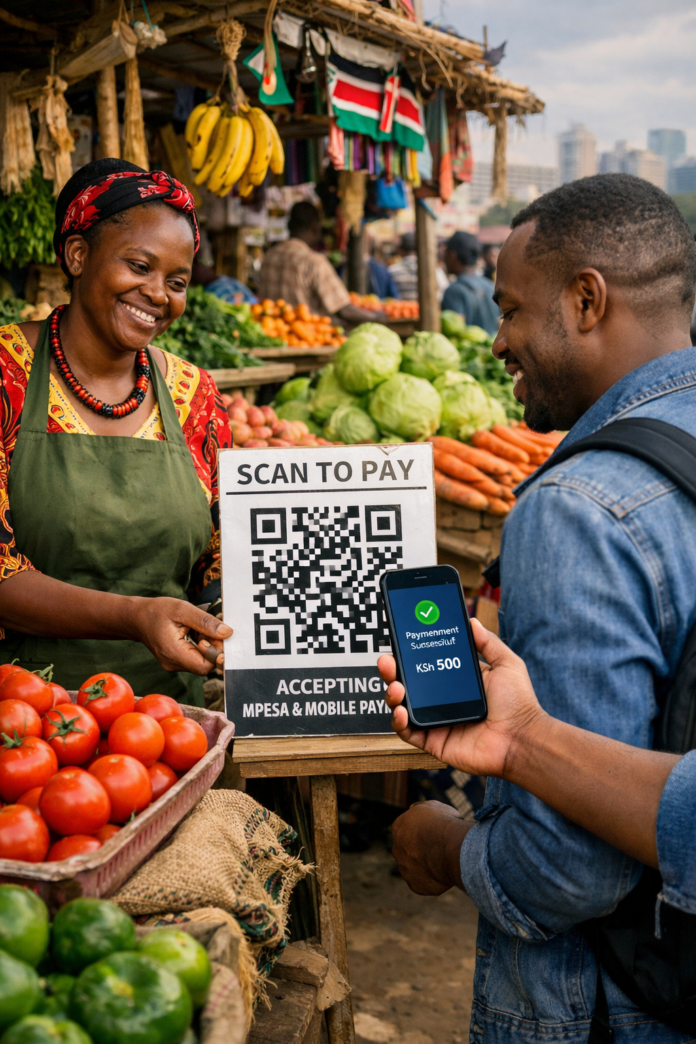
It started in Kenya with M-Pesa in 2007. What began as a simple way to repay microloans via SMS evolved into a system that handles a significant portion of Kenya’s GDP. Today, “mobile money” is a full-stack financial service. Users can pay for solar power, buy insurance, and even invest in government bonds—all through a basic feature phone or a smartphone app.
West Africa’s Tech Explosion
Nigeria has emerged as a global fintech hub, home to “unicorns” like Flutterwave and OPay. The focus here has shifted to Embedded Finance. Instead of going to a bank app, a Nigerian merchant might get a loan directly through the app they use to buy wholesale inventory. This integration reduces friction and allows for “contextual lending” based on real-time business data rather than a stale credit score.
3. India’s UPI and the Digital Public Infrastructure (DPI) Model
If Africa proved the power of the private sector (telcos), India proved the power of the public sector. The Unified Payments Interface (UPI) is perhaps the most successful fintech project in human history.
The Hourglass Model
India utilizes what experts call the “Hourglass Model” of Digital Public Infrastructure.
- The Bottom: Secure, government-backed identity (Aadhaar).
- The Middle (The Narrow Waist): A common, interoperable payment rail (UPI).
- The Top: A massive variety of private-sector apps (Google Pay, PhonePe, Paytm) that compete to offer the best user experience.
By making the “middle” free and public, the Indian government removed the biggest barrier to entry: the cost of the network. In 2026, even the smallest street vendor in rural Rajasthan accepts payments via a QR code, which settles instantly into their bank account with zero merchant fees.
4. Latin America: Bypassing the Credit Card Era
In Latin America, the leapfrog effect has taken a different shape. While the US is still heavily reliant on physical credit cards, Brazil has moved toward Pix, an instant payment system created by its Central Bank.
The Success of Pix
Launched in 2020, Pix has reached over 90% of the adult population in Brazil as of early 2026. It has effectively killed the “boleto” (paper invoice) and is rapidly replacing cash. The brilliance of Pix is its interoperability. Whether you bank with a traditional giant or a digital startup like Nubank, you can send money to anyone else instantly using just a phone number or an email address.
Neobanking the Unbanked
Latin America is also home to the world’s most successful neobanks. Nubank, for instance, proved that you could provide high-quality credit cards and savings accounts to people who were previously ignored by “big banks” due to a lack of formal income documentation. They did this by using alternative data—like mobile phone usage and utility bill payments—to assess creditworthiness.
5. Southeast Asia: The Rise of the Super App
In markets like Indonesia, Vietnam, and the Philippines, the leapfrog effect is driven by the Super App model. Companies like Grab and GoTo (Gojek) didn’t start as banks; they started as ride-hailing or delivery services.
Financial Services as a Feature
Because these apps were already used daily for transport and food, they became the perfect Trojan horse for financial services.
- Phase 1: Create a digital wallet to pay for rides.
- Phase 2: Allow users to pay for groceries and utilities with that wallet.
- Phase 3: Offer “Buy Now, Pay Later” (BNPL) and micro-insurance based on the user’s travel and spending history.
This creates a “walled garden” that is often more convenient and trustworthy to the average user than a traditional bank.
6. Core Technologies Powering the 2026 Leapfrog
The current wave of innovation is supported by four pillars of technology that have matured significantly in the last few years.
Artificial Intelligence and Alternative Credit Scoring
In 2026, AI is the “secret sauce” for financial inclusion. For someone with no traditional credit history, an AI model can analyze:
- Airtime top-up patterns.
- Social media activity (with consent).
- Psychometric testing (assessing a borrower’s honesty and risk profile through a digital quiz).
- Transaction consistency in a digital wallet.
This allows lenders to provide small, short-term loans with high accuracy, drastically reducing the “unbanked” population.
Blockchain and Remittances
Cross-border payments have traditionally been slow and expensive, with fees often reaching 7–10%. Blockchain technology, specifically stablecoins (digital assets pegged to the dollar), has revolutionized this. In 2026, a worker in Dubai can send money to their family in Pakistan via a stablecoin corridor, where the funds arrive in seconds for a fraction of the cost of a traditional wire transfer.
Biometrics and Digital Identity
The leapfrog effect requires trust. Without a physical branch to visit, how does a bank know you are who you say you are? Advanced biometrics—facial recognition and fingerprint scanning—integrated into cheap smartphones have replaced the need for physical IDs and signatures in many emerging markets.
7. Socio-Economic Impacts: Beyond the Wallet
Fintech is not just about moving money; it’s about changing lives. The leapfrog effect has profound secondary impacts.
SME Growth and the “Formalization” of the Economy
Small and Medium Enterprises (SMEs) are the backbone of emerging markets, but they often operate in the “informal” cash economy. When an SME starts using digital payments, they create a digital footprint. This footprint is their ticket to formal credit, allowing them to expand, hire more people, and contribute to the national tax base.
Closing the Gender Gap
In many traditional societies, women have less access to physical bank branches due to travel constraints or social norms. Mobile fintech brings the bank to them. Studies have shown that when women gain access to digital savings accounts, household spending on health and education increases significantly.
8. Regulatory Hurdles and Ethical Dilemmas in 2026
Progress is never without its challenges. As fintech matures, new risks have emerged that regulators are scrambling to address.
The Rise of Predatory Lending
Because AI can make lending so easy, some companies have used it to trap vulnerable people in debt cycles. “Instant loans” with astronomical interest rates (often hidden in the fine print) became a crisis in several markets. In 2026, we are seeing a massive push for “Consumer Protection 2.0,” where regulators mandate transparency and cap interest rates on digital products.
Cybersecurity and the Fraud Arms Race
As more money moves digitally, the targets for hackers have grown. Social engineering—where scammers trick people into giving up their PINs—is the most common form of theft in emerging markets. Improving digital literacy is now seen as just as important as building the apps themselves.
Data Privacy
Who owns the data generated by a farmer’s digital wallet? Is it the farmer, the app developer, or the government? Many emerging markets are currently passing their first comprehensive data protection laws (similar to the EU’s GDPR) to prevent the exploitation of user data by big tech companies.
9. Common Mistakes in Fintech Implementation
Whether you are a startup founder or a government official, avoid these common pitfalls when trying to replicate the leapfrog effect.
Mistake 1: Ignoring the “Last Mile” (The Agent Network)
Many fintechs fail because they assume everyone is 100% digital. In reality, people still need to turn cash into digital money and vice versa. The most successful systems, like M-Pesa, rely on a massive network of physical “agents” (corner shops) where people can deposit and withdraw cash. Digital cannot fully replace physical yet.
Mistake 2: Copy-Pasting Western Models
A banking app designed for a high-speed iPhone on a 5G network in New York will likely fail in a rural village with spotty 3G and a $50 Android phone. Fintechs must design for “low-bandwidth, high-impact” environments.
Mistake 3: Lack of Interoperability
If your app only allows users to send money to other users of the same app, you are creating a “silo,” not an ecosystem. The biggest growth happens when systems talk to each other (like Pix or UPI).
10. Future Horizons: What’s Next?
As we look toward the end of 2026 and into 2027, two major trends are set to define the next leap.
Central Bank Digital Currencies (CBDCs)
Following the success of China’s digital yuan, many emerging markets (like Nigeria and India) are refining their own CBDCs. Unlike private stablecoins, these are official government-issued digital currency. They promise to make government-to-person (G2P) payments—like welfare or disaster relief—instant and fraud-proof.
Open Finance 2.0
We are moving from “Open Banking” (sharing bank data) to “Open Finance” (sharing data across insurance, pensions, and utilities). This will allow for hyper-personalized financial products. Imagine an insurance policy that automatically adjusts its premium based on the weather data from your farm or your driving habits tracked via your smartphone.
Conclusion
The Leapfrog Effect is more than just a tech trend; it is a fundamental shift in how humanity manages value. By skipping the inefficient, expensive legacy systems of the 20th century, emerging markets have built a financial architecture that is more inclusive, faster, and more resilient than many of its Western counterparts.
However, the journey is not over. The focus in 2026 has shifted from access to outcomes. It is no longer enough for someone to have a digital wallet; the goal is now to ensure that the wallet helps them build wealth, survive economic shocks, and participate fully in the global economy.
Next Steps for You:
- For Entrepreneurs: Focus on Interoperability. Build tools that connect to existing DPI (like UPI or Pix) rather than trying to build a standalone silo.
- For Investors: Look beyond the “payment” layer. The real growth in 2026 is in the “value-added services” like micro-wealth management and cross-border B2B trade.
- For Everyone: Stay informed about Digital Literacy. The tech is only as good as the person using it. Supporting initiatives that teach digital safety is the best way to protect the gains of the leapfrog effect.
FAQs (Schema Style)
What exactly is the “Leapfrog Effect” in fintech?
The leapfrog effect is when a developing nation skips over traditional technologies (like landline phones or physical bank branches) and goes directly to the most advanced available technology (like mobile internet and digital-only banking).
Why is fintech more successful in emerging markets than in some developed ones?
Because emerging markets didn’t have to deal with “legacy infrastructure.” It’s easier to build a modern, digital system from scratch than it is to replace an existing, deeply-rooted system of physical banks and old computer networks.
Is mobile money safe?
Yes, mobile money is generally secure, using encryption and PIN-based authentication. However, the biggest risk is “social engineering” (scams), which is why digital literacy and education are crucial.
What is the difference between a digital wallet and a neobank?
A digital wallet (like M-Pesa or Venmo) is primarily for payments and transfers. A neobank (like Nubank) is a digital-first institution that offers a full range of banking services, including savings accounts, credit cards, and loans, usually without any physical branches.
How do fintechs lend to people without credit scores?
They use “alternative data.” This includes analyzing mobile phone usage, utility bill payments, and even behavioral data from super apps to determine a person’s reliability and ability to repay a loan.
References
- The World Bank. (2025). Global Findex Database 2024: Financial Inclusion, Digital Payments, and Resilience. [Official Site].
- IMF. (2025). Fintech in the Global South: Opportunities and Regulatory Challenges. IMF Departmental Papers.
- GSMA. (2026). The State of the Industry Report on Mobile Money. [GSMA Resources].
- Reserve Bank of India (RBI). (2026). UPI: The Global Standard for Real-Time Payments. [RBI Publications].
- Central Bank of Brazil. (2026). Pix: Five Years of Transforming the Brazilian Financial Landscape. [BCB.gov.br].
- McKinsey & Company. (2025). The New Frontier: Fintech and SME Growth in Africa. [McKinsey Insights].
- S&P Global. (2026). Economic Outlook for Emerging Markets: The AI and Tech Supercycle. [SPGlobal.com].
- Asian Development Bank. (2025). Digital Public Infrastructure: Lessons from South Asia. [ADB.org].