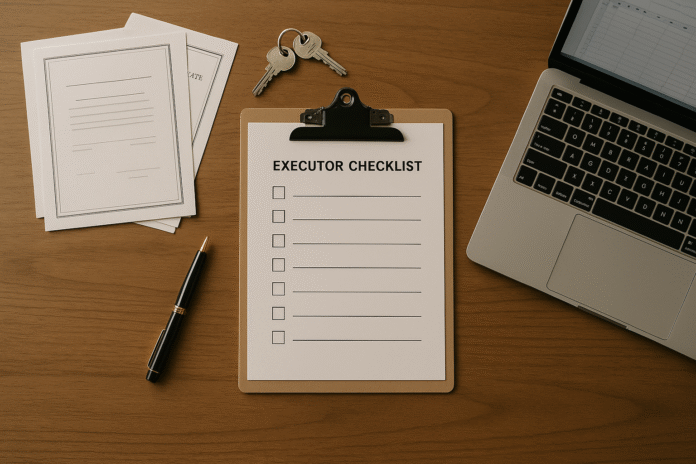
Choosing an executor means selecting the person (or institution) who will carry out your will, settle debts and taxes, and distribute what you own to the right people. In plain terms, an executor is a fiduciary—a trusted agent who must act in the best interests of your estate and beneficiaries within the law. If you die without a will, a court can appoint an administrator to handle many of the same tasks. Either way, this role is crucial: it converts your wishes into reality and shields your loved ones from a lot of avoidable stress. For legal or tax-sensitive decisions, work with a qualified attorney or tax professional; this guide is educational, not individual legal advice.
In one sentence: an executor (often called a personal representative) gathers your assets, pays what’s owed, and transfers the remainder to your beneficiaries according to your will and the law.
Skimmable steps (high level):
1) Confirm eligibility and fit; 2) Secure the will and critical documents; 3) Apply for authority (e.g., letters testamentary); 4) Inventory and safeguard assets; 5) Notify agencies/creditors; 6) Open an estate account and manage cash; 7) File required tax returns; 8) Pay valid debts/expenses; 9) Distribute assets; 10) Prepare a final accounting; 11) Close the estate.
What you’ll get: clear criteria to choose the right executor, realistic workloads and pitfalls, region-specific notes, and a practical checklist you can use immediately.
1. Understand the Fiduciary Role and Core Duty of Loyalty
An executor’s north star is fiduciary duty: act prudently, loyally, and transparently for the benefit of the estate and its beneficiaries. That means keeping estate property separate, documenting every transaction, and avoiding self-dealing. The executor’s legal authority typically begins when a court confirms the appointment and issues documents such as letters testamentary. From that point, third parties—banks, brokers, insurers—recognize the executor’s power to transact for the estate. Knowing this baseline helps you choose someone who understands responsibility, recordkeeping, and fairness, not just someone you trust personally. It also sets expectations for beneficiaries: the executor isn’t “playing favorites,” they’re following law and the will.
Why it matters
- Personal liability risk: Mismanaging assets, mingling funds, or distributing too soon can expose the executor to claims.
- Trust building: A duty-bound executor reduces conflict by following a clear paper trail.
- Gatekeeping authority: Formal court authority (e.g., letters testamentary) is often required to act.
Mini-checklist
- Keep estate money in a separate estate account.
- Retain receipts, bank statements, appraisals, and correspondence.
- Document decisions in writing and share regular updates with beneficiaries.
- When unsure, seek professional advice and court guidance.
Synthesis: Pick someone who can treat your estate like a serious business assignment—because it is. The law expects prudence and loyalty, not improvisation. Legal Information Institute
2. Check Eligibility and Practical Fit (Individual vs. Corporate)
Legally, many jurisdictions allow a broad range of executors, but there can be restrictions (age, legal capacity, criminal history, residency, or bond requirements). Practical fit matters just as much: proximity to your assets, willingness to serve, organizational skill, and time availability. Some estates benefit from naming a corporate executor (a trust company) for neutrality and continuity; others do well with a meticulous family member guided by professionals. If you die without a will, courts typically appoint an administrator (via letters of administration) using statutory priority rules. Legal Information Institute
Numbers & guardrails
- Bond: Courts may require a probate bond to protect beneficiaries from mismanagement; this is often waivable if the will says so, or unnecessary with a corporate executor.
- Residency & presence: A local executor can save travel costs and expedite tasks like property access and mail retrieval.
- Backups: Always name at least one alternate in case your first choice can’t serve.
Region notes
- U.S.: The court issues letters testamentary to confirm the executor’s authority; some states have additional eligibility screens.
- UK: Only named executors or certain relatives can apply for probate; a value estimate is required before applying.
Synthesis: Verify that your nominee is both eligible and practically equipped. When in doubt—complex assets, blended families, or likely disputes—consider a professional or corporate executor for neutrality.
3. Prioritize Qualities That Prevent Conflict
The best executor is organized, calm under pressure, responsive, and impartial. They communicate early and often, keep meticulous records, and resist being drawn into family politics. Conflicts of interest aren’t automatic disqualifiers (a child-beneficiary can serve), but clarity helps: co-executors can balance perspectives, yet too many cooks can stall decisions. Establish expectations in your will: whether independent administration is allowed, whether a bond is waived, how disputes among co-executors should be resolved, and whether majority decisions are permitted.
How to evaluate
- Temperament: Will this person respond to emails, track deadlines, and withstand difficult conversations?
- Neutrality: Are they perceived as fair by other beneficiaries?
- Complexity match: Do they understand business interests, rentals, or international accounts if you have them?
Mini case
Three siblings are beneficiaries. You’re leaning toward one as sole executor because they live nearby and manage finances well. You add a clause authorizing independent administration and require monthly status updates to all beneficiaries. Result: one decision-maker, enhanced communication, lower friction—and a clearer paper trail for the court if questions arise.
Synthesis: Choose for competence and composure first. Authority plus good process beats shared titles with unclear leadership.
4. Secure the Will, Documents, and Immediate Affairs
Right after death, the executor’s first practical job is to secure key documents and stabilize the situation. That includes the original will, certified death certificates, identity documents, house keys, and access to digital accounts. Executors should safeguard real property (change locks if needed), forward mail, and locate policies (life insurance, pensions). Funeral arrangements are often handled by family or according to instructions; keep receipts because certain expenses are estate obligations. Obtain multiple certified death certificates because nearly every institution will ask for one.
Quick-start checklist
- Locate the original will and any codicils; note the nominated executor.
- Order multiple certified death certificates (often 5–15 depending on asset locations).
- Secure property: locks, vehicles, valuables, pets, and critical documents.
- Redirect mail and freeze or monitor digital accounts.
- Notify key agencies and institutions as appropriate (e.g., Social Security in the U.S.).
Tools/Examples
- Many court self-help sites offer executor duty summaries and forms that outline immediate steps. Bringing the will and a death certificate to the court or registry is typically required to open the estate.
Synthesis: Early control of documents and property prevents loss, fraud, and confusion—setting up a smoother administration for everyone.
5. Get Legal Authority: Probate Application, Letters, and Bonds
Even if the will names an executor, financial institutions usually require court proof before releasing funds. That proof is the court’s appointment—letters testamentary (will) or letters of administration (no will). Many jurisdictions also require a bond unless waived. Expect to file the will, a petition, basic estate details, and sometimes an estimated value. In the UK, executors or certain relatives apply for probate online or via paper, after estimating the estate’s value and addressing any inheritance tax forms. In the U.S., the process is usually handled through the local probate court; once the court issues letters, you can open an estate bank account and formally act.
How to do it
- File the probate petition with required attachments (will, death certificate).
- Provide a preliminary value estimate if required by your jurisdiction. GOV.UK
- Arrange any probate bond if not waived.
- Once appointed, obtain multiple certified copies of the letters for banks and custodians.
Numbers & guardrails
- Plan on several letters for different institutions.
- Keep a calendar for statutory notice periods and response windows in your jurisdiction.
Synthesis: Court appointment converts your nomination into enforceable authority—without it, most institutions simply won’t act.
6. Inventory, Value, and Safeguard Estate Assets
After appointment, executors must identify, list, and value estate property: bank and brokerage accounts, retirement assets payable to the estate, real estate, vehicles, business interests, collectibles, and personal items. Keep estate property insured and secure; maintain utilities for occupied or valuable properties; and track income (rent, dividends) and expenses. Where allowed, use summary or small-estate procedures to transfer low-value assets more quickly, but confirm thresholds and exclusions in your jurisdiction.
Mini case (numbers)
Suppose the probate estate comprises: a home (appraised value $600,000), checking ($45,000), brokerage ($220,000), car ($12,000), personal property ($8,000). You document each value, update the insurance on the home, and move $45,000 into an estate account. You log monthly expenses (utilities $350, insurance $100) and note rental income of $1,800 on a short-term lease pending sale. This inventory becomes the backbone for court reporting and eventual distribution.
Common mistakes
- Missing nonprobate transfers (beneficiary-designated accounts) vs. probate assets.
- Delaying appraisals, which complicates tax reporting.
- Leaving properties uninsured or unsecured while the estate is open.
Synthesis: Treat inventory like a balance sheet in motion. Accurate, current figures protect you and speed the close.
7. Notify Creditors, Manage Debts, and Handle Taxes
Executors typically must publish or send notice to creditors, evaluate claims, and pay valid debts in the order the law requires. Taxes often include the decedent’s final income tax return and, if there’s ongoing income to the estate, an estate income tax return. In the U.S., executors also notify the IRS of their fiduciary role (Form 56) and consult Publication 559 for filing obligations. Identity theft precautions for a deceased person can include notifying credit bureaus and monitoring reports. In the UK, the personal representative must address any inheritance tax obligations before probate in many cases.
Numbers & guardrails
- Keep an estate cash reserve for taxes and expenses before making distributions.
- Log every creditor notice and response window; pay only allowed claims in statutory order.
- Use a separate estate bank account; never co-mingled funds.
Mini-checklist
- File Form 56 to notify the IRS of your fiduciary role (U.S.).
- Review Publication 559 for return types and who signs which return.
- Consider placing a deceased alert with credit bureaus to limit fraud risk (where applicable).
Synthesis: Taxes and claims are where executors earn their keep. Careful sequencing—notice first, pay next—prevents personal liability and protects beneficiaries.
8. Communicate, Account, and Distribute with Documentation
Courts and beneficiaries expect transparency. Many jurisdictions require formal accountings; even when not required, a clear spreadsheet of receipts, disbursements, fees, and proposed distributions reduces friction. Provide status updates at key milestones (appointment, inventory complete, claims paid, proposed distribution). When all valid debts and taxes are satisfied, you can distribute according to the will or intestacy rules, obtaining receipts and releases as allowed.
How to do it
- Accounting: Track starting balances, income, expenses, fees, and ending balances by asset.
- Proposed distribution: Show who gets what and why (cite will clauses).
- Receipts & releases: When legally permissible, obtain written acknowledgments from beneficiaries.
Numeric mini case
Estate cash after debts/taxes is $300,000. The will gives 40% to A and 30% each to B and C. Proposed distribution: A $120,000; B $90,000; C $90,000. You also allocate personal items per a memorandum and record transfers with photos and signed receipts. Everyone gets a copy of the closing accounting.
Synthesis: Documentation is your shield. Clear math, clear records, and clear explanations save months of back-and-forth and ease court approval.
9. Understand and Plan Executor Compensation (and When to Hire Pros)
Executors are often entitled to reasonable compensation or a statutory fee. In some U.S. states, fees follow a percentage schedule based on the value of the probate estate. For example, California’s statute sets a tiered commission for “ordinary services.” This is separate from attorney fees, which may be set similarly. Even when family waives compensation, the estate can pay necessary expenses. For complicated estates, hiring professionals—probate counsel, tax preparers, appraisers, real estate agents—can ultimately reduce risk and total cost.
Numbers & guardrails (California example)
- Statutory tiers: 4% of the first $100,000; 3% of the next $100,000; 2% of the next $800,000; 1% of the next $9,000,000; 0.5% of the next $15,000,000; above that, a reasonable amount set by the court.
- Illustration: On $300,000, the statutory executor fee equals $9,000 under those tiers. Simon Law
- Fees vary widely by jurisdiction; confirm local rules.
Mini-checklist
- Decide in your will whether your executor may claim a fee or should serve without one.
- Budget for professional help where complexity or distance makes DIY risky.
- Keep time logs and invoices to support any fee request.
Synthesis: Fair compensation recognizes real work. When rules are clear and records are strong, fees become an accepted cost of orderly administration.
10. Reduce Disputes with Proactive Communication and Process
Most executor headaches stem from silence or surprises. Establish a communication rhythm: early notice of appointment, a target timeline, and updates tied to milestones (inventory, creditor period, tax filings, proposed distributions). Share what you can—summaries, not every email—and set expectations for response times. Where permitted, consider interim distributions after reserving sufficient cash for taxes and claims. If friction escalates, use neutral professionals (mediators, accountants) and keep the court informed when necessary.
Practical tips
- Monthly update email covering progress, next steps, and open questions.
- Shared folder with nonconfidential documents (inventory, accounting snapshots).
- Decision log capturing key choices and legal advice milestones.
Mini case
An estate has five beneficiaries who don’t get along. The executor sends a concise monthly update and a quarterly accounting snapshot. She offers a modest interim distribution after claims resolve, and explains the reserve rationale. Tension still exists, but there’s no vacuum—so there’s less rumor, more patience, and fewer lawyer letters.
Synthesis: Good process is a dispute-diffuser. When people know what’s happening and see the math, they’re less likely to suspect the worst.
11. Build Your Plan: Successors, Digital Assets, and Cross-Border Wrinkles
Future-proof your choice. Name at least one successor executor in case your first choice declines or becomes unable to serve. Provide a secure, updated inventory of assets—including digital assets such as cloud storage, social media, email, and crypto—and instructions for accessing them consistent with the law and your providers’ terms. If you own property in multiple jurisdictions, anticipate ancillary probate (a secondary process in another place where you own assets). For small or straightforward estates, some regions offer simplified procedures or small-estate affidavits that can bypass full probate—useful to know when choosing an executor, because it can change the workload. New York State Unified Court System
Mini-checklist
- Name successor executors and specify if co-executors may act independently or must act together.
- Maintain a digital asset inventory and secure credentials process.
- If you hold assets in another state or country, plan for ancillary probate and local advisors.
- Note if your estate could use summary or small-estate options for certain assets.
Numbers & guardrails
- Keep a short master list of institutions (banks, brokers, insurers) with account identifiers.
- Store 5–15 certified death certificates for institutional requests; return unused originals once institutions no longer require them.
Synthesis: A well-structured will plus organized asset information makes your executor’s job doable—turning a heavy lift into a defined checklist.
FAQs
Do I need to ask someone before naming them as executor?
Yes. Get explicit permission and confirm they understand the workload. Share where you keep the original will and a summary of assets. If they’re hesitant, consider a successor or a corporate executor to avoid a last-minute scramble in court filings.
Can a beneficiary also serve as executor?
Often yes. Many estates name a spouse or adult child who is also a beneficiary. The key is fiduciary behavior: keep records, avoid conflicts, and communicate. If tensions run high, a neutral professional might be a better fit.
What if my chosen executor lives in a different state or country?
It’s usually possible, but it can add steps such as appointing a local agent or securing a bond. A distant executor can be effective with professional support, but a local person may handle property tasks (keys, maintenance) more efficiently.
How many death certificates should we order?
Executors frequently use multiple originals across banks, brokers, insurers, and government agencies. Ordering several—commonly in the 5–15 range—avoids delays when institutions require originals. Return policies vary; check with each institution.
What is the difference between letters testamentary and letters of administration?
Letters testamentary authorize the executor named in a will. Letters of administration authorize an administrator when there’s no will or no executor able to serve. Both are court documents that grant legal authority to act for the estate.
When do I open an estate bank account?
After you’re appointed and have your letters. Move estate funds into that account, pay expenses from it, and keep meticulous records to simplify accounting and protect yourself from claims.
Do all estates go through full probate?
No. Some assets pass outside probate (e.g., joint accounts with survivorship, beneficiary-designated accounts), and some jurisdictions allow simplified procedures for small estates. Verify local thresholds and requirements before assuming you can skip court entirely.
What taxes might an executor handle?
At minimum, expect the decedent’s final income tax return and possibly an estate income tax return if the estate earns income. Some estates also face transfer or inheritance taxes depending on jurisdiction. U.S. executors should review IRS guidance and consider filing Form 56 to notify the IRS of the fiduciary role. IRS
How are executor fees determined?
Rules vary. Some places use “reasonable compensation,” others use statutory schedules. For instance, California has a tiered percentage schedule set by statute for ordinary services. Always confirm your local rules and keep a time log.
What should I do about identity theft risks for a deceased person?
Executors can limit risk by notifying key agencies and, in some regions, asking credit bureaus to put a deceased alert on the credit file. The IRS and consumer regulators publish step-by-step guidance and sample letters for preventing and responding to identity theft. IRS
Conclusion
Picking the right executor is about choosing a steady fiduciary, not just your closest relative. You want someone who can follow the law, keep clean books, communicate well, and make timely, defensible decisions. The role is a project with a beginning and an end: gather and safeguard assets, notify and pay valid claims, fulfill tax obligations, and distribute what remains according to the will. When you pair a well-written will with a capable executor—plus successor backups and organized asset information—you lower the odds of disputes, delays, and unnecessary costs. If your situation involves business interests, cross-border property, or strained family dynamics, layer in professional help early.
Next step: update your will to name an executor and a successor, attach a one-page asset map, and store everything where your executor can find it.
References
- About Publication 559, Survivors, Executors, and Administrators — Internal Revenue Service. Publication date provided by IRS page. IRS
- Publication 559 (PDF): Survivors, Executors, and Administrators — Internal Revenue Service. Publication date provided by IRS document. IRS
- About Form 56, Notice Concerning Fiduciary Relationship — Internal Revenue Service. Publication date provided by IRS page. IRS
- Instructions for Form 56 (PDF) — Internal Revenue Service. Publication date provided by IRS document. IRS
- What to Do When Someone Dies — Social Security Administration. Publication date provided by SSA page. Social Security
- Duties and Liabilities of Personal Representative (DE-147) — California Courts Self-Help. Publication date provided by site. Self-Help Guide to the California Courts
- Applying for Probate — GOV.UK (HM Courts & Tribunals Service). Publication date provided by page. GOV.UK
- Dealing with the Estate of Someone Who’s Died (Overview) — GOV.UK. Publication date provided by page. GOV.UK
- Letters Testamentary (Wex) — Legal Information Institute, Cornell Law School. Publication date provided by page. Legal Information Institute
- California Probate Code §10800 (Executor Compensation) — Justia (statutory text excerpt). Publication date provided by page. https://law.justia.com/codes/california/prob/10800-10805.html Justia Law
- Identity Theft: Report Identity Theft — Federal Trade Commission. Publication date provided by page. Federal Trade Commission
- Small Estate Affidavit (California) — California Courts Self-Help. Publication date provided by site. Self-Help Guide to the California Courts