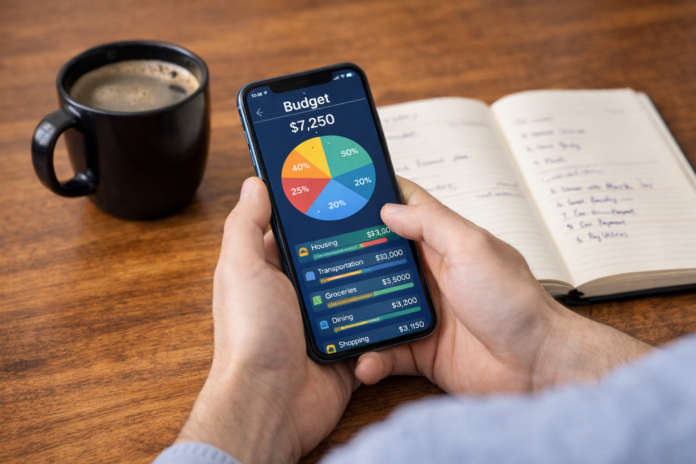
Building a budgeting habit is not about the math; it is about the behavior. At its core, a budgeting habit is the practice of consistently reconciling your financial goals with your actual spending. It is the bridge between wanting financial freedom and actually achieving it. Unlike a one-time financial plan, a habit is an automated response to receiving and spending money that reduces the cognitive load of making “good” decisions. As of February 2026, with the integration of AI-driven financial tools and the shifting landscape of digital micro-transactions, the need for a grounded, human-centric approach to money management has never been higher.
Key Takeaways
- Consistency over Complexity: The best frequency is the one you can stick to for more than three months.
- Behavioral Triggers: Daily tracking is best for impulse control, while monthly is better for long-term strategy.
- Hybrid Approaches: Most successful budgeters use a “macro-monthly, micro-daily” strategy.
- Tool Alignment: Your tool (app, paper, or spreadsheet) must match your chosen frequency.
Who This Is For
This guide is designed for anyone feeling the “leak” in their bank account—that mysterious disappearance of funds by the 20th of the month. Whether you are a student managing a small stipend, a professional trying to maximize a high income, or someone navigating debt reduction, this deep dive into budgeting frequencies will help you find your rhythm.
The Psychology of the Budgeting Habit
To build a habit, we must understand how they are formed. According to behavioral science, a habit consists of a cue, a routine, and a reward.
- The Cue: Seeing a receipt, opening your banking app, or getting a “low balance” notification.
- The Routine: Recording the transaction and Categorizing it.
- The Reward: The “dopamine hit” of staying under budget or the peace of mind knowing exactly where your money went.
Most people fail at budgeting because they make the “Routine” too difficult. They try to track every cent to the decimal point on a complex spreadsheet from day one. In personal finance, “perfection is the enemy of the good.” To build a lasting habit, you need to choose a frequency that fits your current lifestyle and psychological profile.
Daily Budgeting: The Micro-Management Masterclass
Daily budgeting involves recording or reviewing your transactions every single day—usually in the evening or immediately after a purchase.
Why Daily Works
For those struggling with impulse spending, daily budgeting acts as a constant “reality check.” When you have to face your spending every 24 hours, you become acutely aware of the $7 lattes, the $15 “convenience” lunches, and the $2 digital subscriptions. This frequency shortens the feedback loop between the action (spending) and the consequence (seeing the budget drop).
Practical Application: The 2-Minute Rule
The key to a daily habit is brevity. Use a mobile app that syncs with your bank or a simple “Notes” app on your phone. Spend exactly two minutes before bed reviewing what went out.
- Common Mistake: Trying to reconcile every penny daily. Focus on the categories that give you trouble (e.g., dining out, entertainment).
Who Should Choose Daily?
- People living paycheck to paycheck.
- Those with significant credit card debt.
- Individuals who struggle with “mindless” spending.
Weekly Budgeting: The “Sweet Spot” of Personal Finance
For many, weekly budgeting is the most sustainable frequency. It provides enough data to see trends but doesn’t feel like a daily chore.
The Friday or Sunday Check-in
A weekly habit usually involves a 15–30 minute session.
- Review: Look at the past seven days. Did you overspend on groceries?
- Adjust: If you overspent, where can you cut back in the next seven days?
- Plan: Look at the upcoming week’s calendar. Do you have a birthday dinner or a car registration due?
Behavioral Benefits
Weekly budgeting aligns well with the “envelope system” (digital or physical). By breaking your monthly income into four weekly “allowances,” you prevent the common “first-of-the-month” splurge that leaves you broke by week three.
Common Mistakes
- Ignoring the Weekend: Many people budget on Friday but then forget to track the heavy spending that happens on Saturday and Sunday. Always include a “Weekend Buffer” in your weekly plan.
Monthly Budgeting: The Strategic Macro-View
Monthly budgeting is the “CEO view” of your finances. It is less about tracking every cup of coffee and more about managing big-picture cash flow.
The Zero-Based Budgeting Method
In a monthly habit, you likely use zero-based budgeting, where every dollar is assigned a job before the month begins.
- Income: $5,000
- Rent/Utilities: $2,000
- Savings/Investment: $1,000
- Discretionary: $2,000
- Total: $0 remaining.
The Role of Sinking Funds
Monthly budgeting is where sinking funds shine. Sinking funds are small amounts of money set aside monthly for non-monthly expenses (e.g., Christmas gifts, annual insurance, car repairs). If your car insurance is $1,200 a year, a monthly habit ensures you are setting aside $100 every month so the expense isn’t a “surprise.”
Who Should Choose Monthly?
- Those with stable, predictable incomes.
- People who have already mastered basic spending control.
- Individuals focused on long-term wealth building and FIRE (Financial Independence, Retire Early) goals.
Comparing Frequencies: Which One Is For You?
| Feature | Daily | Weekly | Monthly |
| Effort Level | High (frequent) | Moderate | Low (infrequent) |
| Awareness | Maximum | High | General |
| Best For | Curbing Impulses | Maintaining Balance | Strategic Growth |
| Tool Type | Mobile Apps | Spreadsheets/Apps | Desktop Software/Spreadsheets |
| Time Commitment | 2 mins/day | 20 mins/week | 1 hour/month |
The Hybrid Approach: The Gold Standard
While the title asks “Daily, Weekly, or Monthly?”, the most successful “human-first” budgeters actually use a blend. Here is how that looks in practice:
- Monthly Strategy: On the 25th of the month, plan the next month. Set your big goals (savings, debt payments).
- Weekly Triage: Every Sunday, look at your bank account. Ensure no fraudulent charges appeared and check if you have enough “gas in the tank” for the coming week.
- Daily Awareness: Use notifications on your phone. Every time you tap your card, your phone buzzes. This keeps the spending “top of mind” without requiring a spreadsheet entry every time.
Essential Tools for 2026
As of 2026, the landscape of tools has evolved. We now have:
- AI-Aggregators: Tools that automatically categorize your spending and predict when you’ll run out of money based on historical trends.
- Privacy-First Spreadsheets: For those who don’t want to link their bank accounts, manual entry templates have become much more user-friendly.
- The Envelope System 2.0: Digital “pockets” or “vaults” within traditional banking apps that allow you to segregate money for specific purposes.
Choosing Your Tool
- For the Tech-Savvy: Look for apps with high automation and “clean” interfaces.
- For the Tactile Learner: A physical “Kakeibo” (Japanese budgeting journal) can be incredibly grounding.
- For the Data Nerd: A customized Google Sheet or Excel file provides the ultimate flexibility.
Common Mistakes in Building a Budgeting Habit
- Being Too Restrictive: If you allow $0 for “fun,” you will eventually “binge spend,” much like a crash diet leads to a binge eat.
- Forgetting Irregular Expenses: Amazon Prime renewals, quarterly taxes, and vet visits are not “surprises”—they are predictable expenses that must be budgeted for.
- Not Having an Emergency Fund: Without at least $1,000 in a “starter” emergency fund, a single flat tire will break your budgeting habit and your spirit.
- Tracking for the Sake of Tracking: Data is useless if you don’t use it to change behavior. If you see you spend $400 on takeout but do nothing to lower it, you aren’t budgeting; you’re just journaling your financial demise.
Overcoming “Budgeting Fatigue”
Building a habit is hard. After the initial excitement of “getting organized” wears off, fatigue sets in. To combat this:
- Automate what you can: Set up automatic transfers to savings.
- Use the 50/30/20 Rule: Keep it simple. 50% Needs, 30% Wants, 20% Savings/Debt. If you hit these percentages, don’t sweat the small stuff.
- Forgive yourself: If you miss a week or blow your budget on a concert, don’t quit. Just start again the next day. A budget is a tool for you, not a master over you.
Safety and Financial Disclaimer
Disclaimer: This article is for informational and educational purposes only and does not constitute professional financial, legal, or tax advice. Personal finance is “personal”—what works for one person may not work for another. Before making significant financial decisions or investments, consult with a certified financial planner (CFP) or a qualified tax professional.
Conclusion
Building a budgeting habit is the single most important step you can take toward financial literacy and long-term security. Whether you choose to track your spending daily, weekly, or monthly, the “secret sauce” is not the frequency itself, but the commitment to returning to the numbers, time and time again.
As we have explored, daily tracking is your best friend if you need to gain control over a runaway spending habit. Weekly check-ins offer the perfect balance for the busy modern life, allowing for course correction without the burnout of daily micro-management. Monthly planning provides the bird’s-eye view necessary for building wealth and planning for the future.
The most important next step you can take is to remove the friction. Don’t wait for the “perfect” Monday or the first of the month. Start today. Pick one category—perhaps just your “dining out” or “online shopping”—and commit to tracking just that one thing for the next seven days. Once that feels easy, expand.
Your future self is waiting for the financial freedom that your current habits are building. By taking the time to understand your relationship with money today, you are ensuring a more stable, stress-free tomorrow.
Would you like me to create a customized weekly budgeting template or a 30-day “habit tracker” checklist to help you get started?
FAQs
1. Which frequency is best for getting out of debt?
Daily or weekly tracking is generally best for debt reduction. High-frequency tracking keeps your goals top-of-mind and prevents “lifestyle creep,” allowing you to funnel every extra dollar toward your debt repayments.
2. Can I budget effectively without using an app?
Absolutely. Many people find that manual entry into a notebook or a simple spreadsheet creates a stronger psychological connection to their money. The “act” of writing down a purchase can often be a stronger deterrent to overspending than an automated app notification.
3. What is the “50/30/20 rule” I keep hearing about?
It is a simplified budgeting framework: 50% of your after-tax income goes to “Needs” (housing, food, utilities), 30% to “Wants” (hobbies, dining out, Netflix), and 20% to “Financial Goals” (savings, debt, investments). It’s an excellent starting point for monthly budgeting.
4. How do I handle “cash” in my budget?
Treat cash as a “category” or an “envelope.” When you withdraw $100 in cash, you can either track every dollar spent from that $100, or (the easier way) record the $100 as “Spent” in a “Cash/Miscellaneous” category the moment it leaves the ATM.
5. What should I do if my income is irregular (freelance/commission)?
Use a “Monthly” view based on your lowest expected income month. Anything earned above that base amount should be treated as a “bonus” and directed straight to your emergency fund or long-term savings until you have a 3-6 month buffer.
References
- Consumer Financial Protection Bureau (CFPB):
- Harvard Business Review:
- Investopedia:
- National Endowment for Financial Education (NEFE):
- MIT OpenCourseWare: Personal Finance and Economics
- Journal of Behavioral Finance: The Impact of Frequency of Monitoring on Financial Success
- Khan Academy:
- Federal Trade Commission (FTC): Making a Budget – Consumer Advice