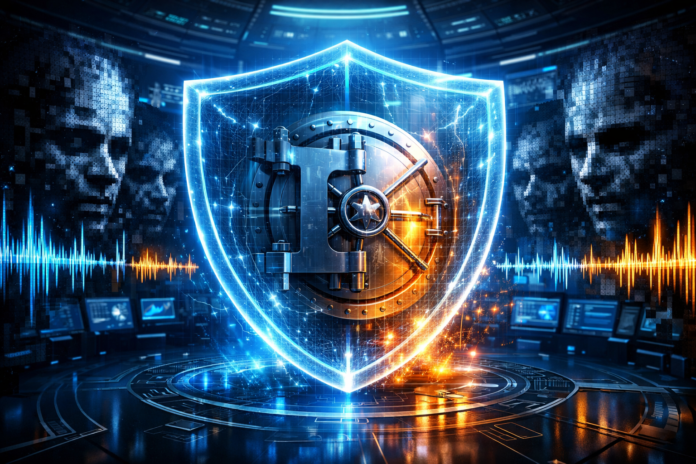
The financial landscape has reached a critical “tipping point” in early 2026. As generative artificial intelligence has moved from a novelty to an industrialized tool for cybercriminals, the traditional security measures that once protected our bank accounts and corporate treasuries are no longer sufficient. We have entered the era of the “Deepfake Surge,” where synthetic media can bypass human intuition and legacy software alike.
Autonomous Financial Intelligence (AFI) represents the next generation of defense. Unlike traditional fraud detection—which relies on static rules and reactive flagging—AFI utilizes self-learning, agentic AI systems to monitor transactions, verify identities, and neutralize threats in real-time. It is the only defense capable of matching the speed and sophistication of AI-driven attacks.
Key Takeaways
- Real-Time Forensic Analysis: AFI detects microscopic pixel inconsistencies and audio artifacts that the human eye and ear cannot perceive.
- Beyond Biometrics: Liveness detection and behavioral biometrics (tracking how a user interacts with a device) are now the primary barriers against synthetic identities.
- Agentic Defense: Modern AFI systems act as “autonomous sentinels,” making sub-100ms decisions to block suspicious transfers without human intervention.
- Regulatory Shift: As of February 2026, compliance with frameworks like the EU AI Act and DORA is mandatory for institutions deploying these high-risk AI systems.
Who This Article Is For
This guide is designed for Chief Information Security Officers (CISOs), Financial Operations Managers, Fintech Founders, and high-net-worth individual investors who need to understand the mechanics of deepfake fraud and the deployment of autonomous defenses to safeguard their capital in an AI-saturated world.
The Industrialization of Deception: Why Deepfakes are Winning
As of February 2026, deepfake-enabled fraud has evolved from a rare, headline-grabbing event into a daily operational reality for global finance. In 2025 alone, financial losses from deepfake fraud neared $1 billion globally, representing a 400% increase from the previous year.
The problem lies in the democratization of generative AI tools. A bad actor no longer needs a PhD in machine learning to create a convincing video of a CEO or a perfect clone of a customer’s voice. With as little as 20 seconds of audio from a public social media post, “Fraud-as-a-Service” (FaaS) syndicates can generate realistic voice commands that bypass phone-based verification systems.
Traditional “Red Flag” training—teaching employees to look for blurry borders or robotic speech—has failed because AI models now produce high-fidelity content that exceeds the human sensory threshold for detection.
Defining Autonomous Financial Intelligence
Autonomous Financial Intelligence is a subfield of cybersecurity that combines Large Language Models (LLMs), Computer Vision, and Graph Analytics to create a proactive security perimeter. Unlike standard “AI-assisted” tools, AFI is autonomous; it doesn’t just alert a human analyst—it intercepts the threat.
The Three Pillars of AFI
- Identity Longevity Analysis: Investigating the “digital footprint” of a user. Synthetic identities created by AI often lack a history of consistent interactions across different platforms over time.
- Multi-Modal Liveness Detection: During a video call or onboarding process, AFI systems require users to perform random actions (like turning their head or saying a specific phrase) while analyzing skin-texture light refraction and micro-expressions to ensure the person is “live” and not a digital projection.
- Cross-Channel Behavioral Signals: AFI monitors the rhythm of interaction. If a “customer” is authorized but shows unusual hesitation or follows a pattern associated with social engineering (common in Authorized Push Payment fraud), the system triggers a step-up authentication.
How to Deploy AI to Combat Voice and Video Spoofing
Deploying AFI requires a layered approach. You cannot rely on a single “Deepfake Scanner.” Instead, you must integrate specialized agents into your existing tech stack.
1. Visual Forensics at Onboarding
When a new user uploads a government ID or performs a “selfie” check, the AFI intake agent performs pixel-level analysis. It looks for “GAN signatures”—statistical patterns left behind by Generative Adversarial Networks. Even the most realistic deepfake often has inconsistencies in the way light interacts with hair or the transition between the neck and clothing.
2. Audio Fingerprinting in Voice Banking
Voice cloning is the most prevalent threat in corporate finance (Business Email Compromise). AFI systems now use Synthetic Speech Detection (SSD). These models analyze the frequency spectrum of the audio. Human vocal cords produce organic fluctuations that AI-generated speech often lacks, appearing “too perfect” or having microscopic rhythmic glitches that SSD agents can flag within the first three seconds of a call.
3. Behavioral Biometrics (The “Human” Signature)
Identity is no longer just about what you know (passwords) or what you have (phone tokens); it is about how you behave. AFI tracks:
- Keystroke Dynamics: The timing between specific key presses.
- Mouse Fluency: The specific curves and speeds of your cursor movement.
- Device Handling: The angle and tremor of a mobile device as detected by its accelerometer.AI-generated bots or remote fraudsters attempting to mimic a user almost never match these unique behavioral signatures.
Common Mistakes in Deepfake Defense
Despite the availability of AFI, many organizations remain vulnerable due to outdated assumptions.
- Relying on “Video Proof”: In 2026, a video call is no longer proof of life. Many executives have been tricked into transferring millions by “Live” Zoom meetings where the participant was a real-time AI overlay.
- Ignoring the “Mule” Networks: Fraudsters often use AI to create thousands of “synthetic” accounts to move money. If your AFI doesn’t look at the Graph Analysis (how accounts are connected), you will only catch the individual actor, not the network.
- Latency Over Security: Some institutions dial down their detection sensitivity to avoid “friction” for the customer. This is a fatal mistake in the era of sub-second AI attacks. Modern AFI must operate with a latency discipline of under 100 milliseconds to be effective without ruining the user experience.
The Regulatory Landscape of 2026
Deploying AFI isn’t just a security choice; it’s a legal requirement. As of February 2026, several key laws dictate how AI can be used in finance:
| Regulation | Scope | Key Mandate for AFI |
| EU AI Act | All firms operating in Europe | High-risk AI systems (like credit scoring or fraud detection) must have human-in-the-loop oversight and detailed logging. |
| Texas TRAIGA | Businesses in Texas | Bans AI systems that unlawfully discriminate and requires disclosure of deepfake content. |
| Nacha Rules (2026) | ACH Payment Network | Mandates real-time detection across the entire payment chain, from origination to receipt. |
Financial institutions must ensure their AFI providers offer Explainable AI (XAI). If an autonomous agent blocks a $50 million transfer, the system must be able to provide a forensic “audit trail” explaining exactly why the transaction was flagged as a deepfake.
Conclusion: Securing the Future of Finance
The battle against deepfake fraud is an escalating arms race. As of February 2026, we have moved beyond the point where human vigilance is enough. Fraudsters are now using Agentic AI—autonomous software that can research a target, clone their voice, and execute a multi-step scam in seconds.
To survive, financial entities must fight fire with fire. Autonomous Financial Intelligence provides the only viable defense by operating at the same speed and scale as the attackers. By integrating multi-modal liveness detection, behavioral biometrics, and real-time graph analytics, you can move from a reactive “detect and respond” posture to a proactive “prevent and protect” strategy.
Your Next Steps:
- Audit your “Shadow AI”: Identify where your employees might be using unsecured AI tools that could leak sensitive data.
- Upgrade to Passkeys: Move away from SMS-based MFA and voice-verification, which are now easily spoofed.
- Implement a “Know Your Agent” (KYA) Protocol: Ensure that any autonomous system transacting on your behalf is authenticated and monitored for behavioral shifts.
FAQs
What exactly is a “deepfake” in the context of financial fraud?
In finance, a deepfake is an AI-generated piece of media—audio, video, or an image—designed to impersonate a legitimate person. This is often used to bypass “know your customer” (KYC) checks, authorize fraudulent bank transfers, or trick employees into sharing sensitive credentials via a fake video call from a CEO.
How does AI detect another AI’s deepfake?
AFI systems look for “digital artifacts” that are invisible to humans. For example, a visual detection agent might look for inconsistent light reflections in a person’s eyes or “ringing” artifacts around the edges of a face. An audio agent analyzes the frequency spectrum to find telltale signs of synthetic speech synthesis, such as lack of natural breath sounds or robotic rhythmic patterns.
Is biometric authentication still safe in 2026?
Standard biometrics (like a static fingerprint or a simple face scan) are increasingly vulnerable to high-quality synthetic spoofs. However, Behavioral Biometrics—which analyze the movement and rhythm of a user—and Liveness Detection remain highly secure. The key is to use “multi-modal” authentication that combines multiple signals at once.
Can Autonomous Financial Intelligence be “tricked” or poisoned?
Yes. Like any software, AI models can be subject to “adversarial attacks” or “model poisoning,” where a fraudster tries to feed the AI bad data to make it ignore certain types of fraud. This is why human oversight and regular “Red Team” auditing of your AFI systems are critical for maintaining security.
Does AFI comply with data privacy laws like GDPR?
Top-tier AFI providers are designed with “Privacy by Design.” They often use Federated Learning (training on data without moving it) or Edge Computing (processing biometrics locally on the user’s device) to ensure that sensitive personal data is never stored in a central, hackable database, thereby maintaining compliance with GDPR and the EU AI Act.
References
- European Commission. (2026). The EU Artificial Intelligence Act: Implementation and High-Risk Compliance. [Official Document].
- FICO. (2026). Annual Fraud and Digital Identity Report: The Rise of Agentic AI.
- Deloitte Center for Financial Services. (2025). GenAI-Driven Scams: Projecting $40 Billion in Losses by 2027.
- Surfshark Research. (2025). Global Deepfake Loss Index: 2019-2025 Analysis.
- Financial Services Information Sharing and Analysis Center (FS-ISAC). (2026). Threat Intelligence Bulletin: Deepfake Voice Cloning in BEC.
- Pindrop Security. (2025). Voice Intelligence and Security Report: The Synthetic Media Surge.
- Gartner. (2025). Predicts 2026: Why Standalone IDV is No Longer Reliable.
- Nacha. (2026). New Rules for ACH Payment Security and APP Fraud Detection.
- Fourthline. (2026). The Evolution of Synthetic Identity in Global Banking.
- State of Texas. (2026). The Texas Responsible Artificial Intelligence Governance Act (TRAIGA) Compliance Guide.
- Citizens Bank. (2026). AI Trends in Financial Management and Corporate Treasury.
- Feedzai. (2025). AI Trends in Fraud and Financial Crime Prevention Report.