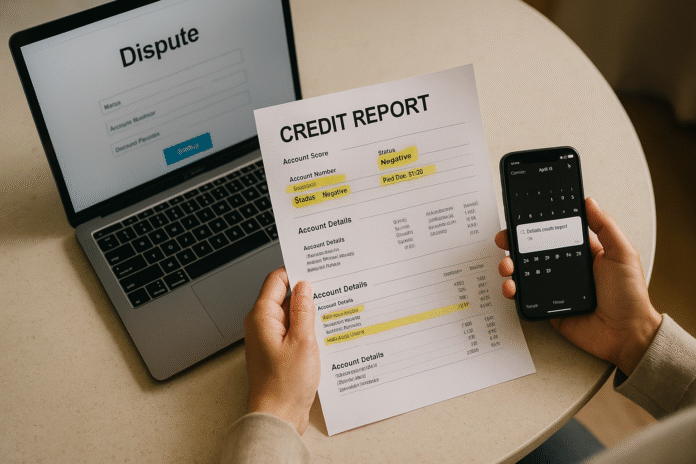
Finding errors on a credit report is stressful, but it’s fixable with a clear plan. This guide walks you through exactly how to address discrepancies on credit report entries—what to gather, where to file disputes, how long responses should take, and when to escalate. It’s written for anyone who’s spotted wrong personal information, unfamiliar accounts, incorrect balances, or signs of identity theft and needs a reliable, step-by-step path to resolution. Brief disclaimer: this article is educational, not legal advice; if your situation involves litigation or complex identity theft, consider consulting a qualified attorney or certified counselor.
Quick answer: To fix credit report errors, pull all three reports, document what’s wrong, dispute with the credit bureaus and (when appropriate) the furnisher, track the FCRA timelines (generally 30 days, sometimes 45), and escalate to the CFPB if unresolved.
Skimmable steps:
1) Download all three reports; 2) Triage discrepancies; 3) Gather proof; 4) File CRA disputes; 5) File direct disputes with furnishers (when eligible); 6) Use fraud alerts/freezes for suspected identity theft; 7) Track results and reinsertion rules; 8) Handle medical-debt items correctly; 9) Correct personal data; 10) Validate collector debts; 11) Escalate via complaints/rights; 12) Prevent future errors.
1. Pull All Three Credit Reports and Create a Discrepancy Log
Start by downloading complete reports from all three nationwide credit bureaus—Equifax, Experian, and TransUnion—because data can differ across them. Use the official portal (AnnualCreditReport.com) where, as of January 2024, you can access free weekly reports permanently. This lets you monitor progress during disputes without paying for interim copies. Immediately save PDFs, then make a working list of each discrepancy (report date, bureau, account name/number’s last four, what’s wrong, and your hypothesis). This log becomes your single source of truth as you move through the process. Keep file names consistent (e.g., 2025-09-20-Experian-report.pdf) to simplify follow-ups and evidence tracking.
1.1 How to do it
- Go to AnnualCreditReport.com; request each bureau’s report (repeat weekly if needed).
- Save each report and create a spreadsheet “Discrepancy Log” with columns for bureau, tradeline, error type, notes, documents needed, dispute sent, due date, outcome.
- Mark identity-related items (names/addresses/SSN/DOB) separately from tradelines (loans, cards, collections) to route them correctly later.
- Highlight potential fraud (unknown accounts or addresses).
1.2 Numbers & guardrails
- Access frequency: weekly free reports are permanent.
- Evidence baseline: capture screenshots/PDFs before you dispute, so you preserve the original state.
Synthesis: One organized master log will cut your time in half and help you hit regulatory deadlines cleanly.
2. Classify the Error Type and Triage What to Fix First
Address the most harmful items first—those affecting payment history, credit utilization, or suspected fraud. Group discrepancies into: (a) identity/personal info (name, addresses, DOB, SSN), (b) account/tradeline data (balances, limits, dates, statuses), (c) public records/inquiries, and (d) medical-debt entries (special rules). This classification determines where to send disputes and which laws apply; for example, some personal-identifier disputes cannot be sent directly to furnishers under Regulation V, while tradeline disputes can. Prioritize high-impact errors (e.g., a 90-day late that never happened) over minor address formatting issues.
2.1 Why it matters
- Different rules apply: Direct disputes to furnishers cover liability, terms, and performance on an account—but exclude certain identity details (e.g., name/address) from direct dispute eligibility.
- Some categories (e.g., small-balance medical collections) may already be excluded from reports under bureau policy or federal rulemaking, changing your strategy.
2.2 Mini-checklist
- Mark “Furnisher-eligible?” for each tradeline.
- Flag “Identity-only” corrections to route to the credit bureaus (CRAs).
- Tag medical-debt items for special handling (see Step 8).
Synthesis: Correct routing equals faster fixes and fewer back-and-forths.
3. Gather Evidence: Build a Clean “Dispute Packet” for Each Item
Effective disputes are evidence-driven. Collect documents that prove the error (e.g., payment confirmations, closed-account letters, identity documents for misspellings or wrong addresses, court records, police/FTC identity-theft reports). Annotate copies of your credit reports by circling/highlighting disputed entries. For identity theft, create an FTC IdentityTheft.gov report to unlock extended protections and cleaner workflows. Keep each dispute packet to 2–6 concise exhibits labeled “Exhibit A, B, C,” etc. This structure helps automated systems and reviewers understand your claim at a glance.
3.1 Tools & examples
- IdentityTheft.gov generates a personalized recovery plan and formal identity theft report you can reuse across bureaus and furnishers.
- Include a cover page briefly stating: “I dispute the accuracy of the attached item; please correct/delete under FCRA §611.”
3.2 Mini-checklist
- Government ID + proof of address (utility bill/bank statement).
- Account statements showing correct balances or closure.
- Annotated report pages with items circled.
- FTC identity theft report (if applicable).
Synthesis: A tight, labeled packet shortens investigation time and reduces “frivolous/insufficient info” rejections. Consumer Financial Protection Bureau
4. File Disputes with the Credit Bureaus (CRAs) and Track FCRA Timelines
Dispute inaccurate items with each CRA reporting them. You can file online, by mail, or by phone, but mail (certified) creates the strongest paper trail. CRAs generally must investigate within 30 days of receiving your dispute; this can extend to 45 days if you provide additional relevant information during the investigation or if the dispute follows your free annual report. CRAs then have five business days after completion to notify you of results. Use your discrepancy log to set due-date reminders (Day 30 and Day 45).
4.1 How to do it
- Submit one dispute per item per bureau; include your annotated report, clear explanation, and requested correction.
- Reference the report confirmation number and last four of the account.
- Prefer certified mail with return receipt; upload scans of receipts to your log.
- Repeat for each bureau that shows the same error (they don’t always sync automatically).
4.2 Numbers & guardrails
- 30 days standard; +15 days possible extension; 5 business days to send results once done.
- If the CRA deletes an item within 3 business days, it can use expedited resolution with different notice mechanics; watch for follow-up confirmation.
Synthesis: Precise, well-documented CRA disputes plus timeline tracking are the backbone of faster corrections.
5. File Direct Disputes with Furnishers (When Eligible) for Faster, Deeper Corrections
If an account’s lender/collector (the furnisher) reported the error, send a direct dispute to them in addition to your CRA dispute. Furnishers must conduct a reasonable investigation on eligible disputes (liability, terms, payment performance) and report results—generally in 30 days (extendable to 45 in some conditions). They must also notify all CRAs they report to if the data was inaccurate. Note: identity-only issues (e.g., misspelled name, wrong address) are excluded from direct disputes; route those to CRAs.
5.1 How to do it
- Send a certified letter to the furnisher’s designated “direct dispute” address (often listed on your report).
- Include your exhibits and a concise explanation of what’s wrong and how it should read.
- Ask the furnisher to update all CRAs and send you written verification of corrections.
5.2 Common mistakes
- Sending identity-only corrections (e.g., past addresses) to a furnisher—these may be rejected as not eligible.
- Omitting proof (e.g., paid-in-full letter), leading to “frivolous/irrelevant” determinations; if that happens, furnishers must notify you within 5 business days with the reason and what’s needed.
Synthesis: Parallel CRA + furnisher disputes close data loops and reduce the chance of the error reappearing.
6. Suspect Fraud? Use a Fraud Alert, Freeze, and an FTC Identity Theft Report
If you see unfamiliar accounts, addresses, or inquiries, assume potential identity theft and act. Place a fraud alert (free) with one bureau; it must notify the others. An initial fraud alert lasts one year, and an extended fraud alert lasts seven years if you have an FTC identity theft report. Consider a credit freeze (also free) to block new credit unless you lift it (you can temporarily “thaw” it for applications). IdentityTheft.gov will generate the report and recovery plan you’ll need.
6.1 Mini-checklist
- Place fraud alert or freeze immediately; keep confirmation numbers.
- File an FTC identity theft report; save the recovery plan PDF.
- Dispute fraudulent tradelines with CRAs and notify furnishers that the items result from identity theft (furnishers must stop furnishing identity-theft information until verified). consumerbankers.com
6.2 Numbers & guardrails
- Fraud alert: 1 year initial; 7 years extended.
- Freezes are free; you can lift them temporarily to apply for credit.
Synthesis: Cutting off new fraud while you dispute prevents fresh damage and strengthens your case timeline.
7. Read Results Carefully, Verify Fixes, and Watch for Reinsertion
When the CRA finishes, you should get results within five business days of completion and a free updated report if changes were made. If an item is deleted and later reinserted, the CRA must give you a specific reinsertion notice within five business days and meet certification requirements before putting it back. Calendar these dates in your log and re-pull reports weekly to confirm changes. If a result misses timelines or reinserts without notice, escalate.
7.1 How to do it
- Compare the updated report line-by-line to your log; mark “Resolved,” “Partially Resolved,” or “Unchanged.”
- If partially resolved/unchanged, resubmit with new evidence; or send a direct furnisher dispute if you haven’t.
- Keep all notices; they’re evidence if you need to complain or sue.
7.2 Mini-checklist
- Look for “Account in Dispute” labels during investigations.
- Confirm deletions across all three bureaus; CRAs must implement systems to share corrections, but cross-checking protects you. Federal Trade Commission
Synthesis: The finish line isn’t the email—it’s the correction appearing (and staying corrected) on all reports.
8. Handle Medical-Debt Entries Under Current Rules
Medical-debt reporting rules have evolved. Since 2022–2023, the bureaus removed paid medical debts, those less than one year old, and collections under $500. In January 2025, the CFPB finalized a federal rule to remove medical bills from credit reports used by lenders and to prohibit lenders from using medical information in decisions, aiming to eliminate remaining medical-debt reporting; follow litigation/enforcement status in your state and with your lender class. If a small or paid medical item still appears, dispute it referencing these policies and the rule.
8.1 How to do it
- For paid medical or balances under $500 appearing post-April 11, 2023, cite the joint bureau policy and request deletion.
- If your dispute involves older/larger medical collections, attach EOBs, billing corrections, or charity-care documentation.
- If a lender still uses medical debt in underwriting, reference the 2025 CFPB final rule and ask how they comply.
8.2 Numbers & guardrails
- Under bureau policy: no paid medical debt; no medical debt under $500; one-year waiting period before unpaid medical debt can appear.
- Under CFPB final rule (2025): medical bills should not appear on reports used by creditors; confirm current enforcement where you live/apply. Consumer Financial Protection Bureau
Synthesis: Medical-debt items are now special cases; many should already vanish with a properly framed dispute.
9. Fix Personal Information: Names, Addresses, DOB, and SSN
Wrong names or addresses can cause mismatched accounts and fraud red flags. Correct personal identifying information directly with the CRAs—these issues typically are not eligible for direct disputes to furnishers under Regulation V’s exceptions. Send copies of your government ID and proof of current address; ask the CRA to remove obsolete addresses (e.g., an ex-roommate’s) and correct spellings, DOB, and SSN digits. Updating personal data first can make later tradeline disputes cleaner because it reduces record-matching noise.
9.1 Mini-checklist
- Include driver’s license or passport + recent utility/bank statement with your current address.
- List every incorrect personal item to update/delete.
- Keep one consistent address across banks and utilities to prevent future mismatches.
9.2 Why it matters
- Identity mismatches can propagate to new creditors and background checks.
- Direct-to-furnisher disputes on identity-only issues may be rejected as out of scope—save time by going straight to CRAs.
Synthesis: Clean personal data is the foundation; fix it early so other corrections stick.
10. For Collection Accounts, Use Your FDCPA Validation Rights
If a debt collector is reporting the error or contacting you, leverage your rights under the FDCPA (Regulation F). After you receive the collector’s validation notice, you have 30 days to dispute in writing and request verification; collection efforts must pause until verification is provided. Ask for itemization, the original creditor’s name/address, and documents proving you owe the amount. Send your letter by certified mail and save copies for CRA/furnisher disputes.
10.1 How to do it
- Use the CFPB’s sample “more information” letter as a template; send within 30 days of the validation notice.
- If they verify incorrectly or don’t respond but continue reporting, dispute with CRAs and consider a complaint.
- If a debt is not yours/identity theft, include your FTC identity theft report. Consumer Financial Protection Bureau
10.2 Numbers & guardrails
- The 30-day window is your deadline to trigger protections; collectors are not required to verify within 30 days, but they must cease collection until they do.
- Keep communication in writing to preserve your record.
Synthesis: FDCPA validation dovetails with FCRA disputes and can stop bad data at the source.
11. Escalate Smartly: Complaint, Re-Dispute, or Legal Help
If your dispute stalls or the CRA/furnisher mishandles it, escalate. The CFPB complaint portal forwards your case to the company and generally seeks a response (often within about two weeks). Re-dispute with new evidence if you have it; include a timeline of missed obligations (e.g., no notice within five business days after reinvestigation, or reinsertion without notice). For persistent harm—denied credit or employment after clear errors—consult consumer-law counsel to discuss FCRA remedies.
11.1 Mini-checklist
- File a CFPB complaint with your documents attached.
- Consider a state AG or regulator complaint if local laws apply.
- If suing, collect your certified mail receipts, timelines, and all notices; these often make or break a claim.
11.2 Numbers & guardrails
- Highlight specific statutory timelines in your escalation (30/45-day investigations; 5-day notices).
- Ask furnishers to notify all CRAs when they correct data. Consumer Compliance Outlook
Synthesis: Escalation is about precision—quote the missed requirement and present a clean evidence trail.
12. Prevent Recurrence: Monitoring, Opt-Outs, and Good Data Hygiene
After fixes land, prevent future headaches. Keep a freeze in place unless you’re actively shopping for credit; set calendar reminders to lift and re-freeze as needed. Review your reports monthly or at least quarterly (free weekly access makes this easy). Opt out of pre-screened credit offers to reduce data sharing. Keep your addresses and contact info identical across banks, utilities, and the DMV to minimize mismatches. For major life changes—moves, name changes, divorces—proactively update creditors and re-check reports.
12.1 Mini-checklist
- Leave credit freezes on by default; thaw temporarily for applications.
- Pull reports regularly and compare to your log.
- Use alerts from your banks/credit monitoring to catch surprises early.
12.2 Why it matters
- Accurate, consistent personal data helps CRAs match files and reduces “mixed file” risk.
- Regular monitoring spots reinsertions or new fraud quickly.
Synthesis: A light maintenance routine keeps your reports accurate and your score protected.
FAQs
1) How long should a dispute take—and when do I follow up?
Generally, a CRA must investigate within 30 days, extendable to 45 days if you add relevant info or if you disputed after getting a free annual report. They must notify you of results within five business days after finishing. If you don’t hear back by Day 45 (plus mailing time), follow up and consider escalating to the CFPB with your timeline and copies.
2) Should I dispute with the CRA, the lender, or both?
Usually both: dispute with the CRA(s) reporting the error and, if the issue involves account liability/terms/performance, send a direct dispute to the furnisher. Identity-only issues (like addresses) belong with the CRAs. Furnishers must conduct a reasonable investigation and notify all CRAs if data was wrong.
3) What if a deleted error pops back up later?
That’s “reinsertion.” The CRA can only reinsert after the furnisher certifies accuracy, and the CRA must notify you within five business days of reinserting. If you weren’t notified, or the data is still wrong, dispute again and mention the reinsertion notice requirement in your letter.
4) Do “609 letters” fix everything?
Section 609 primarily covers your right to information and file disclosure; the dispute process lives in §611 and the furnisher obligations in §623/Reg V. There’s no magic template that forces deletions unless an item is inaccurate, incomplete, or unverifiable. Focus on evidence-based disputes. Federal Register
5) Does disputing hurt my credit score?
No—filing a dispute isn’t negative by itself. During investigations, some scoring models may temporarily treat accounts differently, but the long-term goal is accuracy. Accurate corrections (e.g., removing an erroneous late payment) generally help. Use weekly free reports to monitor changes.
6) What are my options if the furnisher calls my dispute “frivolous”?
A furnisher can deem a direct dispute “frivolous or irrelevant” if you don’t provide enough info or it’s outside scope. They must notify you within five business days with reasons and what’s needed. Provide the requested documents and re-submit, or dispute via the CRAs with the same evidence. Consumer Compliance Outlook
7) How should I handle medical-debt entries?
As of 2022–2023, the bureaus removed paid medical collections, those under $500, and imposed a one-year waiting period before reporting new medical debt. In 2025, the CFPB finalized a rule to remove medical bills from credit reports used by lenders. If a small or paid medical item appears, cite these changes in your dispute.
8) What documents should I include with my dispute?
Submit only what’s needed to prove the error: annotated report page, statements or letters showing correct info, ID + proof of address, and any police/FTC identity-theft report for fraud cases. Label exhibits and keep copies. The CFPB provides sample dispute letters you can adapt. Consumer Financial Protection Bureau
9) I don’t recognize a creditor—should I dispute right away?
Contact the company first; sometimes a lender appears under a parent/affiliate name. If it’s still unfamiliar or looks fraudulent, dispute with the CRAs and consider FDCPA validation if a collector is involved. Err on the side of early action to preserve rights. Consumer Financial Protection Bureau
10) What if a collector is reporting a debt I don’t owe?
Use your 30-day FDCPA window after the validation notice to dispute in writing; collectors must pause collection until they verify. Then dispute the tradeline with the CRAs and consider a furnisher direct dispute if the collector is the furnisher. Consumer Financial Protection Bureau
11) Can I add a statement to explain an unresolved dispute?
Yes. If a dispute isn’t resolved, you can ask CRAs to include a brief statement in your file that’s provided to report users. It doesn’t change your score, but it gives context. Some bureaus cap these at ~100 words (Equifax allows about 475 characters). Consumer Financial Protection Bureau
12) Where do I complain if nothing works?
Use the CFPB complaint portal; it forwards your case to the company and tracks responses. Include your timeline, copies of disputes, and any missed statutory deadlines. Consider state regulators or legal counsel for ongoing harm. Consumer Financial Protection Bureau
Conclusion
Errors on a credit report aren’t just annoying; they can be costly—higher interest rates, denied applications, or even job issues. Fortunately, the fix is systematic: pull all three reports (weekly access makes monitoring easy), classify the error, build an evidence-backed dispute packet, and send disputes to both the CRAs and, when appropriate, to furnishers. Track FCRA timelines (30 days, possible 45) and insist on proper notices (including five-day reinsertion and result notices). If you see signs of identity theft, move fast with fraud alerts, freezes, and an FTC report to shut down new damage. For medical debt specifically, leverage current bureau policies and the CFPB’s 2025 rule to remove items that should no longer appear. If a company gets it wrong or drags its feet, escalate with a clear timeline and documents.
Take the first step today: download your three reports, start your discrepancy log, and fix one high-impact error right now. CTA: Get your free weekly reports and start your dispute log today.
References
- “Free credit freezes are here / Year-long fraud alerts,” Federal Trade Commission (updated June 23, 2022). Consumer Advice
- “You now have permanent access to free weekly credit reports,” Federal Trade Commission (Jan. 4, 2024). Consumer Advice
- “Free credit reports,” Federal Trade Commission (accessed 2024–2025). Consumer Advice
- “AnnualCreditReport.com – Home,” Official site (ongoing). Annual Credit Report
- Fair Credit Reporting Act, §611 (15 U.S.C. §1681i) – timelines, reinsertion notice; Law/Cornell (current). Legal Information Institute
- “A Summary of Your Rights Under the FCRA,” CFPB (rev. Sept. 2018). Consumer Financial Protection Bureau
- “How do I dispute an error on my credit report?” CFPB (Dec. 18, 2024). Consumer Financial Protection Bureau
- “If a credit reporting error is corrected…how long,” CFPB (June 6, 2023). Consumer Financial Protection Bureau
- Regulation V, §1022.43 Direct disputes (current). Consumer Financial Protection Bureau
- “Consumer Reports: What Information Furnishers Need to Know,” FTC (guidance; ongoing). Federal Trade Commission
- “How to read your dispute investigation results,” TransUnion (May 21, 2025). TransUnion
- IdentityTheft.gov (FTC) – Report identity theft & recovery plan (ongoing). IdentityTheft.gov
- “Credit Freeze or Fraud Alert: What’s Right for Your Credit Report,” FTC (accessed 2025). Consumer Advice
- “CFPB finalizes rule to remove medical bills from credit reports,” CFPB (Jan. 2025). Consumer Financial Protection Bureau
- “Equifax, Experian and TransUnion remove medical collections debt under $500,” Press release (Apr. 11, 2023). Equifax Inc.
- “Data Spotlight: Early impacts of removing low-balance medical collections,” CFPB (June 2024). Consumer Financial Protection Bureau
- “How do I dispute an error… (sample letters),” CFPB (Oct. 17, 2023). Consumer Financial Protection Bureau