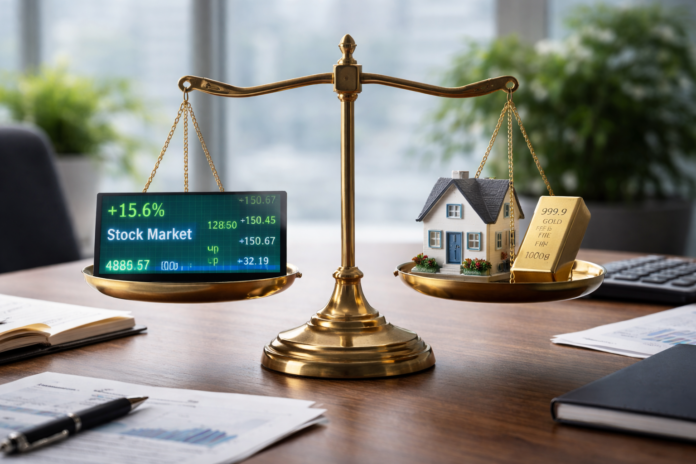
The pursuit of Financial Independence, Retire Early (FIRE) has always been built on a foundation of disciplined saving and aggressive low-cost indexing. However, as of February 2026, the economic landscape has shifted. The traditional 60/40 portfolio—once the bedrock of retirement planning—is facing unprecedented pressure from persistent “sticky” inflation, geopolitical resource competition, and a transition toward a de-globalized economy. For the FIRE practitioner, whose primary concern is the longevity of a 30-to-50-year retirement horizon, simply “buying the dip” in the S&P 500 may no longer be enough.
Hedging a FIRE portfolio involves integrating real assets—tangible, physical assets that have intrinsic value—to act as a buffer against currency devaluation and stock market volatility. Unlike paper assets, real assets like real estate, commodities, and infrastructure often have a low correlation with traditional equities, providing a “cushion” when the broader market falters.
Key Takeaways
- Diversification Beyond Paper: In 2026, real assets are essential for protecting purchasing power against “long-tail” inflation.
- Mitigating Sequence Risk: Real assets can provide stable cash flow, reducing the need to sell stocks during a market downturn (Sequence of Returns Risk).
- Accessibility: Modern fintech has made previously institutional-only assets, like farmland and infrastructure, accessible to individual FIRE investors.
- Balance is Key: A hedge should typically represent 10% to 20% of a FIRE portfolio to be effective without stifling long-term growth.
Who This Is For
This guide is designed for “FIRE-walkers” at various stages:
- The Accumulator: Those 5–10 years away from retirement looking to “fortify” their portfolio.
- The Early Retiree: Those already living off their assets who are concerned about the 4% rule’s viability in a high-inflation environment.
- The FatFIRE Investor: High-net-worth individuals seeking sophisticated diversification into private equity and tangible holdings.
Financial Disclaimer: The information provided in this article is for educational purposes only and does not constitute professional financial advice. Investing in real assets involves risks, including illiquidity and loss of principal. Always consult with a certified financial planner or tax professional before making significant changes to your investment strategy.
Why the FIRE Rules Changed in 2026
For decades, the “Trinity Study” and the 4% rule provided a simple roadmap for FIRE. If you could save 25 times your annual expenses, you were “safe.” But the 2020s have introduced variables that the original studies didn’t fully account for: prolonged periods of negative real interest rates and the “weaponization” of global supply chains.
In 2026, the primary threat to a FIRE portfolio isn’t just a market crash; it’s purchasing power erosion. If your expenses rise by 5% annually due to energy and food costs, but your portfolio is heavily weighted in tech stocks that don’t pay dividends, your “safe withdrawal rate” may actually be closer to 3%. This is where real assets come in. They serve as a structural hedge, often rising in value specifically when the cost of living increases.
1. Real Estate: The Cornerstone of Tangible Wealth
Real estate remains the most popular real asset for the FIRE community because it offers three distinct benefits: appreciation, leverage, and cash flow. As of February 2026, the strategy has evolved from simple “fix-and-flips” to more sophisticated, passive models.
Residential and Commercial REITs
For those who want the benefits of real estate without the “toilets, tenants, and trash,” Real Estate Investment Trusts (REITs) are the primary vehicle. In 2026, investors are looking specifically at Industrial REITs—warehouses and distribution centers that power the e-commerce economy—and Data Center REITs, which support the continued expansion of AI processing.
Common Mistake: Investing only in Residential REITs. While housing is a fundamental need, it is highly sensitive to interest rate hikes. Diversifying into industrial or specialized healthcare real estate provides a more robust hedge.
Direct Ownership and Short-Term Rentals (STRs)
Direct ownership allows for tax advantages like depreciation. Many in the FIRE community use “house hacking” to eliminate their largest expense: housing. However, in 2026, regulatory crackdowns on STRs (like Airbnb) in major cities have shifted the focus toward medium-term rentals (30+ days) for traveling nurses and corporate relocations.
2. Precious Metals: The “Insurance” Policy
Gold and silver have regained their status as “safe haven” assets in 2026. While they don’t produce cash flow, their role in a FIRE portfolio is not growth—it is insurance.
Gold as a Currency Hedge
Gold typically performs well when trust in central banks declines. For a FIRE retiree, holding 5% of their net worth in gold can prevent a total portfolio collapse during a “black swan” event.
Silver and “Green Metals”
Silver is unique because it is both a precious metal and an industrial commodity. In 2026, the global push for solar energy and electric vehicles (EVs) has kept industrial demand for silver at record highs. Similarly, “green metals” like copper and lithium are now considered essential real assets for the modern era.
3. Agricultural Land and Farmland
Perhaps the most significant trend in 2026 is the democratization of farmland. Historically, this was an asset class reserved for the ultra-wealthy (and Bill Gates). Today, fractional ownership platforms allow FIRE investors to buy “shares” in organic corn fields or citrus groves.
Why Farmland?
- Low Volatility: Farmland value is rarely correlated with the S&P 500.
- Intrinsic Value: People will always need to eat, regardless of the economy.
- Inflation Linkage: As food prices rise, the value of the land that produces that food generally follows.
Strategic Model: The “Boredom” Hedge Farmland is not exciting. It doesn’t double overnight. But for someone in the “Withdrawal Phase” of FIRE, the steady 3–5% yield from crop sharing can provide the “sleep well at night” factor that volatile stocks cannot.
4. Infrastructure and Energy
Infrastructure is the “connective tissue” of the economy. This includes toll roads, bridges, pipelines, and, increasingly, renewable energy grids.
Renewable Energy Credits
In 2026, many FIRE investors are participating in community solar projects or infrastructure bonds. These assets often come with government-backed contracts, providing a predictable stream of income that is perfect for covering recurring monthly expenses.
5. Commodities and Managed Futures
While holding physical barrels of oil is impractical, the 2026 investor uses Managed Futures or Commodity ETFs to gain exposure to raw materials.
The Super-Cycle Context
Many economists argue we are currently in a “Commodity Super-Cycle” driven by the transition to renewable energy. Hedging your portfolio with exposure to energy, timber, and base metals can offset the higher costs you’ll face as a consumer.
The Mechanics of Hedging: How Much is Enough?
A common question in the FIRE community is: “If I move 50% of my money into real assets, will I still reach my FIRE number?” The answer is usually no. Real assets often have lower long-term returns than the total stock market.
The “Golden Mean” Allocation
As of February 2026, a resilient FIRE portfolio often follows this “tilt”:
- 60-70%: Low-cost Total Stock Market Index (The Growth Engine)
- 10-15%: Real Estate (REITs or Direct)
- 5%: Precious Metals (Gold/Silver)
- 5%: Alternative Real Assets (Farmland/Infrastructure)
- 5-10%: Cash/Short-term Treasury Bills (The Liquidity Buffer)
Mitigating Sequence of Returns Risk
Sequence risk is the danger of a market crash occurring in the first few years of your retirement. By having a portion of your portfolio in non-correlated real assets, you can draw your “paycheck” from the assets that are performing well (e.g., selling gold or using REIT dividends) while leaving your depressed stock indices time to recover.
Common Mistakes to Avoid
- Over-Leveraging Real Estate: In an era of fluctuating interest rates, carrying too much debt on rental properties can turn a “real asset” into a liability.
- Ignoring Liquidity: Real assets like physical land or private equity syndications are “illiquid”—you can’t sell them instantly to pay for an emergency surgery. Always keep a liquid cash buffer.
- Chasing Hype: In 2026, “tokenized” real estate on the blockchain is popular, but many platforms lack transparency. Stick to established vehicles unless you have a high technical understanding of the underlying tech.
- High Management Fees: Some “alternative” funds charge 2% management fees and 20% of profits. These fees are “FIRE-killers.” Look for low-cost ETFs or direct-access platforms.
Conclusion: The Path Forward in 2026
The search for real assets is not about abandoning the stock market; it is about acknowledging that the world of 2026 is more complex than the world of 1996. For those in the FIRE community, the goal is not just to “have a million dollars,” but to have a million dollars’ worth of purchasing power that lasts for half a century.
By integrating real estate, agricultural land, and precious metals into your strategy, you are building a “weatherproof” portfolio. You are ensuring that whether the future is defined by a tech boom or an inflationary crunch, your lifestyle remains protected.
Your Next Steps:
- Audit your current “Real Asset” exposure. (Does your home count? Technically yes, but it doesn’t pay you dividends).
- Research one fractional farmland platform. Understand the holding periods and expected yields.
- Rebalance your portfolio. If you are 100% in equities, consider moving 5% into a broad-based Commodity or REIT ETF this month to begin your hedge.
FAQs
What is the difference between a “paper” asset and a “real” asset?
A paper asset (like a stock or bond) is a contractual claim on future cash flows or ownership. A real asset is a physical, tangible object with intrinsic value due to its substance and properties, such as a building, an ounce of gold, or an acre of land.
Does the 4% rule still apply if I hold real assets?
The 4% rule was based on stocks and bonds. If you hold a high percentage of real assets, your withdrawal rate may need to be adjusted based on the specific yield of those assets. Many experts in 2026 suggest a “variable withdrawal rate” that adapts to the performance of your different asset classes.
How do real assets help with “Sequence of Returns Risk”?
If the stock market drops 20% in your first year of retirement, selling stocks to pay your bills locks in those losses. If you have real assets (like a rental property or gold), you can use the rental income or sell a portion of your gold—which may have held its value or increased—thereby allowing your stocks to recover.
Is Bitcoin considered a real asset in 2026?
While often called “digital gold,” Bitcoin is technically a digital asset, not a real (tangible) one. While it may serve as a hedge against currency debasement, it does not have the “physical utility” that defines traditional real assets like timber or real estate.
Are REITs as effective as owning physical property?
REITs are highly correlated with the stock market in the short term, which can limit their “hedging” ability during a crash. However, they provide much better liquidity and diversification than owning a single physical rental house.
References
- Vanguard Advisor’s Perspectives (2026): “The Role of Commodities in a Post-Pandemic Economy.”
- National Council of Real Estate Investment Fiduciaries (NCREIF): Historical returns on Farmland vs. Equities (2025 Annual Report).
- BlackRock Investment Institute: “Infrastructure: The New Defensive Play for the 2020s.”
- U.S. Bureau of Labor Statistics: Historical CPI-U data and its correlation with gold prices.
- The Trinity Study (Updated 2025): “Retirement Savings: Choosing a Withdrawal Rate That is Sustainable.”
- Journal of Financial Planning: “Integrating Real Assets into the Modern FIRE Portfolio.”
- World Gold Council: “Gold as a Strategic Asset for Long-term Investors” (2026 Edition).
- Federal Reserve Economic Data (FRED): Real Interest Rates vs. Tangible Asset Appreciation 2020–2026.