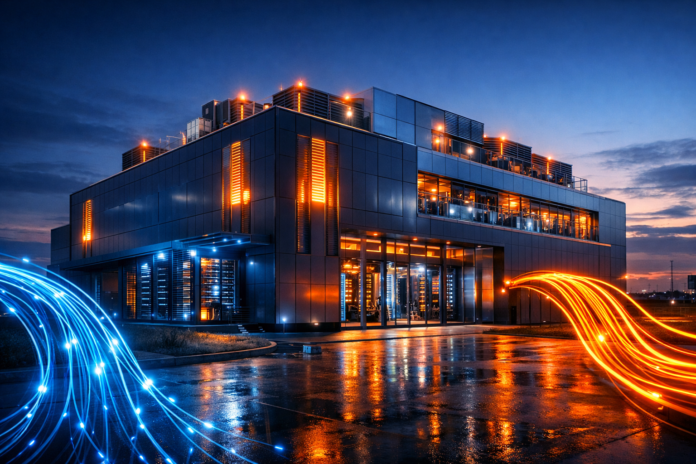
The global economy is currently navigating what economists call the “AI Supercycle”—a generational shift in technology that is fundamentally restructuring the value of physical assets. At the heart of this transformation lie data centers and digital infrastructure. No longer viewed as mere real estate or “dumb pipes,” these assets have become the critical engine rooms of the 21st century.
As of February 2026, the demand for high-density compute power driven by Large Language Models (LLMs) and generative AI has pushed valuations to record highs. However, valuing these assets is no longer a simple matter of square footage or rental income. It requires a deep understanding of power density, thermal management, and network latency.
Financial Disclaimer: This article is for informational purposes only and does not constitute financial, investment, or legal advice. Valuation of infrastructure assets involves significant risk and should be performed by certified professionals.
Key Takeaways
- Power is the New Currency: In 2026, the valuation of a data center is primarily driven by its secured power capacity (Megawatts) rather than its physical footprint.
- GPU-Ready Infrastructure: Facilities capable of supporting liquid cooling and high-density GPU clusters command a significant premium over legacy “brick and mortar” data centers.
- The Multiplier Effect: EBITDA multiples for digital infrastructure have shifted as private equity and sovereign wealth funds compete for long-term, inflation-protected yields.
- Connectivity and Latency: Proximity to fiber intersections and “Edge” nodes remains a critical differentiator for valuation in a world of real-time AI agents.
Who This Article Is For
This guide is designed for institutional investors, infrastructure fund managers, REIT (Real Estate Investment Trust) analysts, and technology executives who need to understand the underlying mechanics of how digital assets are appraised in the current AI-driven market.
The Fundamental Shift: From CPU to GPU Infrastructure
Historically, data centers were valued based on their ability to house traditional enterprise servers (CPUs). These setups typically required 5–10 kilowatts (kW) per rack. However, the AI supercycle has introduced the need for “High-Density” compute. Modern AI training clusters, such as those utilizing the latest Nvidia and AMD Blackwell-class architectures, require 50–120 kW per rack.
The Density Premium
When performing a data center valuation, an appraiser must now distinguish between “Legacy Air-Cooled” and “AI-Ready” facilities. A legacy facility may have a high vacancy rate because it lacks the power density or the floor-loading capacity to support heavy GPU clusters. Conversely, a smaller facility with robust liquid-cooling infrastructure and 100 MW of secured grid power is often worth 3–4 times more than a larger, underpowered counterpart.
Power Scarcity and “Stranded” Assets
As of February 2026, power utility queues in major hubs like Northern Virginia (Data Center Alley), Dublin, and Singapore have stretched to 5–8 years. This scarcity has created a “scarcity premium.” If a facility has “ready-to-use” power today, its valuation is decoupled from replacement cost and is instead valued based on the immediate revenue-generating potential of the compute it can host.
Core Valuation Methodologies for Digital Infrastructure
Valuing digital infrastructure requires a hybrid approach, blending traditional real estate metrics with complex infrastructure and technology assessments.
1. The Income Approach (DCF Analysis)
The Discounted Cash Flow (DCF) model remains the gold standard. However, the variables have changed:
- Revenue Growth: Instead of 2–3% annual escalators, AI-focused data centers are seeing higher renewal rates due to the massive “sinking cost” of moving AI clusters once they are installed.
- The Terminal Value: Given the rapid pace of technological change, the terminal value must account for “re-lifing” the facility—upgrading cooling and power distribution systems every 10–15 years.
2. The Market Approach (EBITDA Multiples)
Market multiples are often used for quick comparisons. In the current 2026 climate:
- Hyperscale Data Centers: 22x – 28x EBITDA.
- Enterprise/Colocation: 15x – 20x EBITDA.
- Managed Services/Cloud: 10x – 14x EBITDA (due to higher churn risks).
3. The Cost Approach (Replacement Cost)
This method sets the floor for valuation. However, in the AI supercycle, replacement cost is often an underestimate. Building a new data center now involves skyrocketing costs for specialized equipment like rear-door heat exchangers (RDHx) and high-voltage switchgear, which currently face significant supply chain lead times.
Key Value Drivers in the AI Era
Power Capacity and Grid Reliability
Valuation begins and ends with the “Utility Service Agreement.” Does the asset have a firm commitment from the utility provider? In 2026, we also look for on-site power generation (e.g., small modular reactors or large-scale battery storage) which adds a “resiliency premium” to the asset.
Thermal Management (Cooling)
Traditional “hot aisle/cold aisle” air cooling is becoming obsolete for AI. Assets that have been retrofitted with:
- Direct-to-Chip Liquid Cooling: Circulating coolant directly over the processors.
- Immersion Cooling: Submerging hardware in dielectric fluid….carry significantly higher valuations because they can support the hardware that AI companies actually use.
Connectivity and Fiber Density
A data center without fiber is just a warehouse. The number of unique carriers, the presence of an Internet Exchange (IX), and the proximity to subsea cable landing stations are massive value drivers. For “Edge” assets, the value is in the low latency—how fast can an AI model respond to a user’s device?
Sustainability and ESG Scores
Institutional investors are increasingly bound by carbon-neutral mandates. A data center powered by 100% renewable energy or one with a low Power Usage Effectiveness (PUE) score—ideally below 1.2—is more liquid and attracts a lower cost of capital, thereby increasing its net present value.
Common Mistakes in Data Center Valuation
Avoiding these pitfalls is essential for accurate asset appraisal in a volatile market:
- Ignoring “Power Stranding”: Assuming a 200,000 sq. ft. building can be fully utilized without checking if the local substation can actually deliver the required Megawatts.
- Overestimating Useful Life: AI hardware runs hotter and is heavier. If the building’s HVAC and floor loading aren’t up to par, the “useful life” of the shell may be much shorter than anticipated.
- Underestimating Operational Expenditure (OpEx): High-density compute requires more maintenance and higher utility costs. Analysts often use legacy OpEx margins (usually 20–30%) which may be too low for modern AI facilities.
- Miscalculating Tenant Credit Risk: While “AI Startups” are booming, their long-term creditworthiness is unproven compared to “Hyperscale” giants (Microsoft, Google, Amazon). A facility 100% leased to a single unrated AI startup should be valued with a higher discount rate.
The Digital Infrastructure Ecosystem: Beyond the Data Center
While the “white space” (the server room) gets the headlines, the surrounding infrastructure is equally vital to the supercycle.
Fiber Optic Networks
Fiber is the nervous system of the AI supercycle. Valuation of fiber assets depends on:
- Dark Fiber vs. Lit Fiber: Dark fiber (unactivated) offers long-term growth potential.
- Route Diversity: Does the network have multiple paths to prevent outages?
- Latency: For financial AI and autonomous systems, every millisecond of “round-trip time” translates to millions of dollars in value.
Edge Computing Nodes
As AI moves from “Training” (massive centralized clusters) to “Inference” (using the model in the real world), Edge computing becomes the focus. These are smaller, localized data centers. Their valuation is driven by their location—think of them as the “prime retail real estate” of the internet.
Cell Towers and 5G/6G
With the rollout of 6G testing in early 2026, cell towers are evolving into mini-data centers. The integration of “compute at the tower” is a new frontier for valuation, blending traditional telecom lease models with compute-as-a-service revenue.
Comparative Analysis: Data Center REITs vs. Private Equity
| Metric | Public REITs (e.g., Equinix) | Private Equity / Infra Funds |
| Typical Multiples | 20x – 25x AFFO | 18x – 24x EBITDA |
| Primary Focus | Retail Colocation & Interconnection | Large-scale Hyperscale Development |
| Risk Profile | Lower (Diversified tenant base) | Higher (Development & Concentration risk) |
| Growth Driver | Ecosystem & Network Effects | Massive Capital Deployment into AI |
Case Study: The “Blackwell” Retrofit (February 2026)
In late 2025, a major North American data center operator undertook a $500 million retrofit of a 10-year-old facility in Ashburn. By upgrading the power density from 8 kW to 60 kW per rack and installing a closed-loop liquid cooling system, the asset’s appraised value jumped from $1.2 billion to $2.1 billion within 14 months. This “Value-Add” strategy is becoming the primary playbook for infrastructure investors during the AI supercycle.
Conclusion
The AI supercycle has fundamentally redefined what makes a digital asset valuable. We have moved from an era of “Real Estate Plus” to an era of “Critical Power and Thermal Engineering.” As of February 2026, the market is bifurcating: legacy assets that cannot adapt to high-density compute are seeing valuation compression, while “AI-Ready” infrastructure is commanding unprecedented premiums.
For investors and operators, the path forward requires a technical lens. You cannot value what you do not technically understand. Assessing the capacity of the local power grid, the efficiency of the cooling loops, and the robustness of the fiber backhaul is no longer optional—it is the core of the valuation process.
Next Steps for Stakeholders:
- Audit Existing Portfolios: Identify “at-risk” legacy assets that lack the floor loading or power for liquid cooling.
- Secure Power Interconnects: In the current market, a signed power agreement is often more valuable than the building itself.
- Invest in Sustainability: As regulatory pressure mounts, green-certified data centers will enjoy a lower cost of capital and higher terminal values.
FAQs
1. What is the most important metric for data center valuation in 2026?
The most critical metric is Price per Megawatt (MW) of Commissioned Power. While square footage still matters for physical layout, the revenue-generating potential of a modern data center is capped by its power capacity and its ability to cool that power.
2. How does liquid cooling affect the value of an older data center?
Liquid cooling can significantly increase the value of an older facility, provided the building’s structure can support the additional weight of the coolant and pipes, and the facility has enough power to run high-density racks. If a retrofit is possible, it can prevent the asset from becoming “stranded.”
3. Why are EBITDA multiples for data centers so high compared to other real estate?
Data centers are treated more like infrastructure than traditional real estate. They have long-term contracts (10–20 years) with “sticky” tenants who find it incredibly expensive and risky to move their equipment. This creates a highly predictable, bond-like cash flow that justifies higher multiples.
4. What is “Sovereign AI” and how does it impact infrastructure value?
Sovereign AI refers to nations building their own domestic AI capacity to ensure data privacy and national security. This has led to a surge in data center construction in regions like the Middle East and Southeast Asia, creating new high-value digital infrastructure markets outside of the traditional hubs.
5. Is there a bubble in data center valuations?
While valuations are at historic highs, they are backed by record-breaking demand from the world’s largest companies (Hyperscalers). As long as the “Utility of AI” continues to grow, the underlying infrastructure remains a necessity rather than a speculative asset. However, assets that cannot support AI workloads are at risk of a “valuation cliff.”
References
- Uptime Institute. (2025). Annual Data Center Survey: The Impact of AI on Infrastructure.
- International Energy Agency (IEA). (2025). Electricity 2025: Analysis and Forecast to 2027. (Section on Data Center Power Consumption).
- CBRE Research. (2026). Global Data Center Outlook: North America and EMEA Trends.
- NVIDIA Corporation. (2025). Technical Specifications for Blackwell Architecture Deployment in Hyperscale Environments.
- Journal of Corporate Real Estate. (2024). Valuation Methodologies for Specialized Digital Assets.
- Equinix, Inc. (2026). Annual 10-K Filing: Infrastructure Expansion and AI Strategy.
- McKinsey & Company. (2025). Investing in the AI Supercycle: A Guide for Private Equity.
- Digital Realty. (2026). The Evolution of Liquid Cooling in Colocation Environments.
- Federal Energy Regulatory Commission (FERC). (2025). Report on Grid Capacity and Data Center Interconnection Requests.
- JLL Global. (2026). Data Center Strategy: Power, Proximity, and Performance.