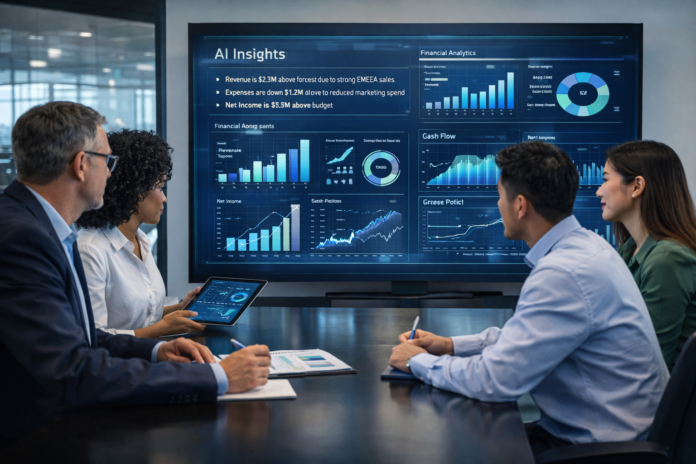
The financial sector is undergoing a profound metamorphosis. As of February 2026, the image of the traditional accountant—hunched over ledger books and drowning in manual data entry—has been entirely rewritten. Today, the most valuable asset in a corporate finance department or public accounting firm isn’t just someone who understands tax codes; it is the finance tech talent who can bridge the gap between complex accounting principles and cutting-edge artificial intelligence.
The infusion of technology into finance is no longer a futuristic concept or an optional upgrade. It is the fundamental baseline for survival in an industry grappling with a severe, persistent talent shortage, shifting regulatory demands, and clients who expect real-time, strategic business advisory rather than historical reporting. Redefining the 2026 accounting workforce means understanding that technology handles the routine, while humans handle the judgment.
Key Takeaways:
- AI is a Collaborator, Not a Replacement: Automation handles up to 77% of routine accounting tasks, allowing professionals to finalize monthly statements significantly faster and redirect their focus to high-value advisory work.
- The Talent Squeeze is Forcing Innovation: With a large percentage of seasoned CPAs retiring and fewer graduates entering the pipeline, firms must attract candidates with non-traditional backgrounds (like data science and IT) to fill critical finance roles.
- Soft Skills Have Become Core Skills: As machines master the “number crunching,” human empathy, data storytelling, and strategic foresight are the primary differentiators for modern accountants.
- Advisory is the New Standard: Clients and executives expect finance professionals to provide predictive insights, risk assessments, and environmental, social, and governance (ESG) reporting.
Who This Is For: This comprehensive guide is designed for Chief Financial Officers (CFOs), accounting firm partners, HR and talent acquisition leaders in the financial sector, and ambitious accounting professionals looking to future-proof their careers. Whether you are building a resilient finance team from the ground up or trying to navigate the complexities of digital transformation, this article will equip you with the actionable strategies needed to thrive in the 2026 landscape.
The State of the 2026 Accountant Shortage (and Why Tech is the Answer)
To understand why infusing tech-talent into finance is so critical, we must first examine the demographic and structural realities of the 2026 labor market. The accounting profession is currently facing a severe demographic squeeze.
The Numbers Behind the Talent Gap
For over a decade, the pipeline of traditional accounting talent has been narrowing. Research from the American Institute of CPAs (AICPA) and other industry bodies has consistently shown a sharp decline in candidates sitting for the CPA exam—dropping by nearly 27% over the last decade. Simultaneously, roughly 75% of the existing CPA workforce has reached or is rapidly approaching retirement age.
Unemployment in the accounting sector continues to hover between 1% and 2%. In practical terms, this means that nearly all skilled finance professionals are already employed. If you are hiring, you aren’t selecting from a pool of active job seekers; you are actively trying to convince top talent to leave their current organization for yours.
How Technology Bridges the Divide
When you cannot hire enough people to do the work manually, the only viable solution is to fundamentally change how the work is done. This is where finance tech talent steps in.
Instead of trying to hire three entry-level bookkeepers to handle data entry, invoice matching, and month-end reconciliations, forward-thinking CFOs are hiring one tech-savvy accountant equipped with generative AI, Robotic Process Automation (RPA), and advanced cloud accounting software.
- Capacity Expansion: According to recent Stanford Graduate School of Business research, accountants leveraging AI can support significantly more clients per week and finalize monthly statements up to 7.5 days faster than those relying on traditional methods.
- Cost Efficiency: While average starting salaries for public accounting roles are rising (projected at 3.7% year-over-year by Robert Half), investing in a smaller, highly paid, tech-enabled team yields a much higher return on investment (ROI) than maintaining a bloated, inefficient back office.
Core Technologies Redefining the Finance Function
The 2026 accounting workforce operates within a highly sophisticated, interconnected tech stack. Understanding these technologies is crucial for leaders trying to identify the right finance tech talent.
1. Generative AI and Machine Learning
Generative AI (like advanced versions of ChatGPT, Copilot, and Gemini) is now deeply embedded in daily finance processes. AI is taking over repetitive tasks—such as transaction classification—allowing accountants to shift their attention to higher-value work.
Practical Example: Instead of manually grouping expenses into broad categories like “payroll,” AI can automatically parse receipts and invoices, breaking them down into highly granular, specific categories like “executive bonuses,” “health benefits,” or “client meals” with remarkable accuracy.
2. Robotic Process Automation (RPA)
While AI handles cognitive tasks, RPA handles the rules-based, repetitive “clicks.” RPA software “bots” can log into ERP systems, download bank statements, cross-reference transactions, and flag anomalies for human review. Finance teams use RPA to streamline the financial close process, manage high-volume accounts payable, and automate compliance checks.
3. Advanced Cloud Ecosystems
Legacy, on-premise desktop software is largely a thing of the past. The modern tech stack features connected cloud ecosystems where accounting software, payroll, expense management, client portals, and reporting tools share data seamlessly in real-time. This eliminates redundant data entry and allows for secure, remote collaboration—a non-negotiable expectation for today’s workforce.
4. Predictive Analytics and Data Visualization
Historical reporting tells you what happened yesterday; predictive analytics tells you what will happen tomorrow. Modern finance tech talent uses tools like Power BI, Tableau, and advanced SQL to build dynamic dashboards. These tools allow finance teams to run complex scenario models, forecast cash flow under various market conditions, and visualize data in a way that non-financial executives can instantly understand.
The Rise of the Hybrid “Tech-Accountant”
The integration of these technologies has given birth to a new archetype: the hybrid tech-accountant. This professional is just as comfortable writing a basic script or prompting an AI as they are calculating depreciation or balancing a ledger.
To thrive in 2026, the modern accounting workforce must master a new set of essential skills.
Prompt Engineering: The New Excel
Just as mastering Microsoft Excel formulas was the defining technical skill for accountants in the 2000s and 2010s, prompt engineering is the defining skill of 2026.
Accountants must know how to communicate effectively with AI programs. This involves phrasing queries correctly, providing the right financial context, setting ethical and regulatory guardrails within the prompt, and rigorously evaluating the AI’s output for “hallucinations” or logical errors.
Data Literacy and Storytelling
Having access to a mountain of data is useless if you cannot extract a narrative from it. Tech-talent in finance must possess strong data literacy—the ability to read, work with, analyze, and argue with data.
More importantly, they need data storytelling skills. When an FP&A (Financial Planning and Analysis) manager presents a budget reallocation proposal to the CEO, they cannot just hand over a spreadsheet. They must use purpose-built visuals to highlight patterns, translating raw statistics into actionable business takeaways.
AI Oversight and Ethical Governance
AI is powerful, but it is not infallible. A critical skill for the 2026 accountant is exercising professional skepticism. Reviewing AI-driven insights for accuracy, reasonableness, and compliance with Generally Accepted Accounting Principles (GAAP) or International Financial Reporting Standards (IFRS) is now a core daily responsibility.
Firms that treat AI as a “set it and forget it” solution risk massive compliance failures. The most successful professionals are those who pair machine efficiency with robust human oversight.
From Number Crunchers to Strategic Advisors
As technology automates the “boring stuff,” the fundamental value proposition of the accountant has shifted. The mantra for 2026 is “judgment over keystrokes.” ### The Expansion of FP&A Demand for FP&A and advanced reporting capabilities has skyrocketed. Finance teams are now expected to move faster, anticipate supply chain risks earlier, and deliver clear guidance to executive boards. Analysts who can run scenario models, translate economic trends into strategic recommendations, and collaborate seamlessly with marketing, sales, and operations leaders are the most sought-after talent on the market.
ESG and Sustainability Reporting
Environmental, Social, and Governance (ESG) reporting has evolved from a niche marketing exercise into a highly regulated, board-level mandate. Tech-accountants are uniquely positioned to handle this. They utilize software to track carbon footprints, audit supply chain ethics, and compile accurate, transparent sustainability disclosures that satisfy both regulators and socially conscious investors.
The Fractional CFO Boom
Another major trend reshaping the workforce is the rise of the fractional finance leader. Businesses—particularly startups and mid-market companies—are increasingly bringing in interim, part-time CFOs for project-based work.
A fractional CFO brings specialized expertise (e.g., navigating a Series B funding round, managing a merger, or implementing a new ERP system) without the long-term cost of a full-time executive. This model provides immense flexibility for the company and lucrative, varied work for the finance professional.
Rethinking Recruitment: How to Attract Tech-Savvy Finance Talent
If you are a finance leader or HR professional, the old playbook for recruiting accountants no longer works. Offering a competitive salary is merely the price of admission; it will not win you the war for top finance tech talent. You must fundamentally rethink how you hire, structure work, and build your team.
1. Hire for Potential and Alternative Backgrounds
Nearly 40% of forward-thinking CFOs are investing in specialized internal training programs to bridge skill gaps, and over a third are actively hiring candidates from outside the typical accounting background.
Instead of waiting months for a candidate with a traditional CPA and Big 4 experience, consider hiring data scientists, IT specialists, or mathematics graduates. You can teach a brilliant data analyst the fundamentals of accounting faster than you can teach a rigid, traditional accountant how to code in Python or build complex machine learning models.
2. Embrace True Workplace Flexibility
Hybrid work is no longer a perk to be dangled in a job description; it is a baseline expectation. According to recent Gallup surveys, 60% of workers expect flexibility in when and where they work.
A rigid, five-days-a-week, office-only policy is widely viewed by top tech talent as a massive red flag—a sign of micro-management and a dated corporate culture. To compete for the best minds, organizations must offer flexible hours, robust remote-work infrastructure, and a culture built on trust and output, rather than physical presenteeism.
3. Leverage the Contract Workforce
Given that hiring for permanent finance roles can take an average of seven weeks, 70% of finance leaders are increasing their use of contract talent.
Contract professionals provide immediate access to specialized expertise. They can be brought in strategically to stabilize workloads during year-end close, manage a complex ERP migration, or clean up legacy data before an AI integration. Contract work also serves as an excellent “extended interview,” allowing both the firm and the professional to assess cultural fit before committing to a permanent role.
4. Compete on Total Compensation and Continuous Learning
While salaries are climbing, top talent also evaluates the total compensation package. This includes:
- Wellness and Lifestyle: Home office stipends, mental health days, and comprehensive healthcare.
- Path to Partnership/Leadership: Clear, transparent frameworks for career advancement.
- Tech Stack Access: Top talent wants to work with the best tools. If your firm still runs on outdated, clunky legacy software, tech-savvy candidates will walk away.
- Upskilling Opportunities: Offer stipends for courses in data analytics, AI prompt engineering, or leadership development.
Common Mistakes Firms Make in Finance Transformation
The journey to redefining a finance workforce is fraught with pitfalls. Based on the experiences of global firms navigating this transition, here are the most common mistakes to avoid:
Mistake 1: Over-Investing in Tech, Under-Investing in People
The greatest AI software in the world is useless if your team doesn’t know how to use it, or worse, is actively afraid of it. Organizations often spend millions on digital transformation initiatives but allocate zero budget for change management or upskilling. Correction: For every dollar spent on new software, an equal investment must be made in training your human capital to leverage it.
Mistake 2: Ignoring the “Soft” Skills in the Interview Process
Because technical skills are in such high demand, hiring managers often blind themselves to a candidate’s interpersonal abilities. An accountant who is a genius at SQL but cannot explain their findings to a non-technical CEO is a bottleneck, not an asset. Correction: Incorporate behavioral interviews, case studies, and presentations into your hiring process to evaluate communication, empathy, and adaptability.
Mistake 3: Treating AI as a Magic Bullet for Bad Processes
If you have a broken, convoluted, and undocumented month-end close process, applying AI to it will only help you execute a bad process faster. Correction: Before implementing automation, you must fundamentally audit, streamline, and standardize your internal workflows. Eliminate redundancies first; automate second.
Mistake 4: Failing to Address Job Security Fears
When leadership announces a major “AI efficiency initiative,” the immediate thought in every junior accountant’s head is, Am I being replaced? This leads to resistance, low morale, and talent flight. Correction: Leaders must clearly and consistently communicate that AI is a collaborator designed to eliminate the “boring stuff,” freeing up the team for more strategic, fulfilling work. Transparency is critical.
Conclusion
The 2026 accounting workforce is defined by an exciting paradox: as the profession becomes increasingly driven by artificial intelligence, cloud computing, and automation, the uniquely human elements of the job have never been more valuable.
Infusing tech-talent into finance isn’t just about surviving the current accountant shortage; it is about elevating the entire finance function from a reactive, back-office necessity to a proactive, strategic driver of business growth. CFOs and firm leaders who embrace alternative hiring pipelines, prioritize continuous learning in tech-fluency, and foster a culture of flexible, advisory-led work will attract the brightest minds in the industry. Those who cling to the legacy models of manual data entry and rigid office mandates will simply be left behind.
Next Step: Would you like me to generate a customized 90-day onboarding checklist designed specifically to integrate new tech-savvy finance hires into your existing accounting department?
FAQs
1. Will AI completely replace accountants by 2030? No. While AI is rapidly automating routine tasks like data entry, transaction categorization, and basic reconciliations, it lacks human judgment, ethical reasoning, and strategic foresight. The role of the accountant is evolving from a “number cruncher” to a strategic business advisor who oversees and interprets AI outputs.
2. What is “prompt engineering” in the context of accounting? Prompt engineering is the skill of effectively communicating with generative AI tools to produce accurate, useful outputs. For accountants, this means knowing how to structure queries to draft financial summaries, write Excel/SQL formulas, or analyze tax regulation changes, while providing the correct context and guarding against AI hallucinations.
3. Why is there such a severe shortage of accountants right now? The shortage is driven by a demographic perfect storm: a massive wave of “Baby Boomer” CPAs retiring, coupled with a nearly 27% decline over the last decade in college students sitting for the rigorous CPA exam. Furthermore, many young professionals have historically opted for careers in tech or broader finance over traditional accounting.
4. How can small to mid-sized businesses (SMBs) compete for finance tech talent against large corporations? SMBs can compete by offering things large corporations often struggle with: ultimate workplace flexibility, rapid career progression, and exposure to high-level strategic decision-making. Highlighting a modern, automated tech stack and offering non-traditional perks (like continuous learning stipends) also levels the playing field.
5. What is a “fractional CFO” and why is the role growing? A fractional CFO is an experienced finance executive who works on a part-time, retainer, or project basis for one or multiple companies. The role is growing because it allows businesses to access top-tier financial strategy and tech-implementation expertise without the hefty salary and equity requirements of a full-time executive.
References
- Stanford Graduate School of Business (2025). AI Is Reshaping Accounting Jobs by Doing the “Boring” Stuff. Analysis on generative AI improving accounting firm efficiency and reporting granularity.
- Robert Half (2025/2026). 2026 Salary Guide for Finance and Accounting. Insights into starting salary growth, the 95% digital transformation expectation, and the rise of contract workforce usage.
- Deloitte Insights (2026). Finance Trends 2026: Where data scientists and accountants meet. Survey data from 1,300 global finance leaders regarding technical capabilities and human-machine collaboration.
- American Institute of CPAs (AICPA) (2024/2025). Reports on the accounting talent pipeline, detailing the demographic shifts and the decline in CPA exam candidates over the past decade.
- Addison Group (2026). Finance & accounting hiring trends & top salaries: 2026 Workforce Planning Guide. Analysis on AI as a collaborator, turnover stabilization, and the 150% surge in open finance roles.
- Gallup (2024/2025). State of the Global Workplace reports highlighting shifting employee expectations around hybrid work and workplace flexibility.