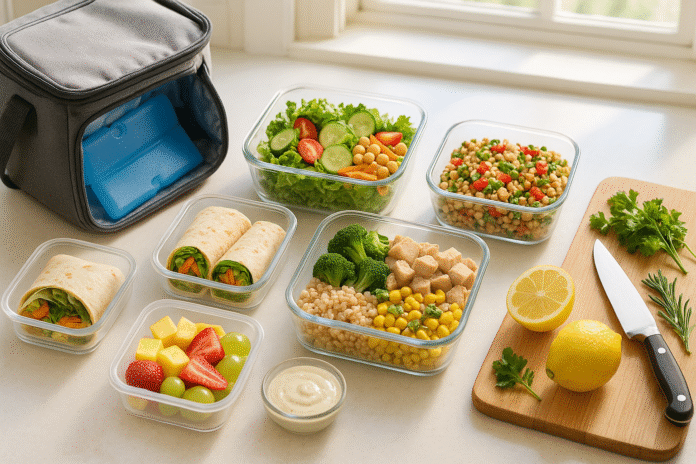
If you’re ready to bring lunch for a full month, this pack-lunch challenge will show you exactly how to do it—without bland food, wasted time, or safety worries. You’ll learn the smart way to plan, shop, batch-cook, pack, and actually stick with it in real-life school or office conditions. In simple terms, the pack-lunch challenge is a 30-day habit sprint: prepare most lunches at home, pack them safely, and track what you save in money, time, and stress. Done right, it’s one of the fastest ways to cut food costs while eating better.
Quick start—what to do this week:
- Choose 3–4 repeatable lunch builds you actually like.
- Shop once; prep base components on a single “prep day.”
- Pack with two cold sources in an insulated bag; keep hot foods hot.
- Portion in leak-proof, microwave-safe containers.
- Reheat leftovers to 165°F (74°C); eat refrigerated items within 3–4 days.
- Track costs and wins; keep a small “emergency lunch kit” at work/school.
Safety note: This guide shares general food and budgeting advice. For allergies or medical conditions, consult a qualified professional. For food-safety specifics, follow official guidance and when in doubt, throw it out.
1. Set a 30-Day Goal, Baseline, and “Why”
Start by defining what “success” means for your month: how many packed lunches you’ll aim for (e.g., 20 weekdays), roughly how much you’d like to save, and one strong personal reason (better energy, less stress, or hitting a savings target). Clear goals reduce decision fatigue during busy mornings. Spend ten minutes listing what makes you skip packing now (no groceries, no time, no fridge, no microwave), then draft simple counter-moves (Sunday prep, cold-lunch options, shelf-stable backups). Finally, take a quick baseline: what you typically spend per lunch out, how long it takes, and how you feel after. This gives you a before/after for motivation.
1.1 How to do it
- Write: “For the next 30 days I’ll pack lunch on all school/workdays except travel.”
- Note average spend when buying lunch (e.g., $10–$15) vs. a homemade build (often $3–$6 in ingredients).
- Pick a savings target (e.g., $150 this month) and a non-financial “win” (better focus at 2 p.m.).
1.2 Numbers & guardrails
- As of January 2025, food-away-from-home prices rose faster than food-at-home, so home-packed lunches typically stretch budgets further.
- Make your metric visible: print a 30-day tracker and check off packed days.
Close the loop with one sentence you’ll see daily: “I pack to save for ___ and feel better in the afternoon.”
2. Lock a 4-Week Lunch Plan You’ll Actually Eat
A winning plan repeats. Choose 3–4 “templates” you love (e.g., grain bowls, hearty salads, wraps, soups) and rotate them weekly. Repetition slashes decision fatigue and grocery waste while making batching easier. Plan for reality: meetings, no-microwave spaces, or long commutes. Build in two “leftovers” days and one “no-cook” day each week to absorb chaos. Put the plan where you can’t miss it—fridge door, phone widget, or desk.
2.1 How to do it
- Templates: Pick four: (1) chicken or chickpea grain bowl, (2) chopped salad with beans, (3) turkey/veg wrap, (4) soup/stew.
- Rotation: Week A/B menus, then repeat with sauce swaps (tahini vs. pesto) for variety.
- Reality check: If your office has no microwave, emphasize cold builds and thermos-packed hot foods.
2.2 Mini checklist
- 1 leafy, 1 protein, 1 grain/starch, 1 crunchy veg, 1 sauce.
- Pack at least one fruit and one snack for the “3 p.m. cliff.”
- Include a hydrate plan (refillable bottle).
2.3 Tools/Examples
- Recipe organizer/app (Paprika, Notion) and shared household calendar for prep day.
- A 4-week calendar snapshot taped inside a cabinet.
Consistency beats novelty; let the plan carry you on busy weeks.
3. Batch-Cook Once, Eat All Week (Without Getting Bored)
Batching is the engine of this challenge. Cook a few base components in one session—proteins, grains, and roasted veg—then assemble fast during the week with different sauces and textures. Use sheet pans, instant pots, and rice cookers to run “parallel” cooks. Portion most items right after cooking so Tuesday-you thanks Sunday-you.
3.1 How to do it
- Proteins (choose 2): roasted chicken thighs/tofu, lentils, tuna salad, turkey meatballs.
- Grains (choose 1–2): brown rice, quinoa, farro; cook 6–8 cups.
- Veg: sheet-pan broccoli/peppers/carrots; quick-pickled onions for punch.
- Sauces: vinaigrette, yogurt-tahini, chimichurri; store in small lidded cups.
3.2 Numbers & guardrails
- Cool cooked foods quickly—aim to refrigerate within 2 hours; divide into shallow containers to chill to ≤40°F faster.
- Use leftovers within 3–4 days; if you won’t eat them, freeze promptly. Reheat to 165°F.
3.3 Common mistakes
- Making five identical lunches (burnout).
- Skipping sauces (bland).
- Overfilling containers (soggy textures).
Batch with variety at the sauce/texture level and you’ll actually want what you packed.
4. Master Cold Chain & Safe Packing (Zero Guesswork)
Food safety is non-negotiable. Keep cold foods at or below 40°F (4°C) and hot foods at or above 140°F (60°C), and avoid the “Danger Zone” in between. For perishable lunches, use an insulated bag with two cold sources (e.g., gel packs or frozen water bottles) so items stay safely chilled until lunchtime. If you’re packing hot soup or chili, preheat an insulated container with boiling water and keep it closed until you eat. When you arrive, refrigerate your lunch if a fridge is available.
4.1 How to do it
- Cold lunches: Use an insulated, soft-sided bag plus two cold sources placed above and below the perishables.
- Hot lunches: Preheat a thermos with boiling water for 5 minutes; fill with piping-hot food; seal.
- At school/work: Store in a fridge if you can; otherwise keep the bag closed in a cool spot.
4.2 Numbers & guardrails
- Bacteria proliferate between 40°F and 140°F; don’t leave perishable food out >2 hours (1 hour if >90°F ambient).
- USDA and FoodSafety.gov advise two cold sources for bag lunches to maintain ≤40°F until lunch.
4.3 Tools/Examples
- Insulated lunch bag + two gel packs (5×3 in or larger), or gel pack + frozen water bottle.
- Clip-on appliance thermometer in the office/kitchen fridge (target ≤40°F).
Safe packing protects your health and keeps your challenge on track—no risky shortcuts.
5. Build a Smart Grocery List and a Sunday Prep Flow
A tight grocery list prevents midweek “nothing to pack” emergencies. Shop once for the week’s plan and batch-prep right after you unload. Group the list by produce, proteins, grains, pantry, dairy, and snacks; buy only what your plan uses to minimize waste. When you get home, run a simple prep assembly line: roast, simmer, chop, and portion.
5.1 How to do it
- Produce: Pre-wash leafy greens; store in a salad spinner with a paper towel.
- Proteins: Cook two; shred/slice and portion 4–5 lunches’ worth.
- Grains: Big batch; cool in shallow trays before lidding.
- Snacks: Pack grab-and-go bags (nuts, fruit, hummus cups).
5.2 Mini checklist
- Label containers with item + date (painter’s tape works).
- Keep a “use first” bin in your fridge.
- Stock shelf-stable sides (crackers, applesauce, tuna pouches).
5.3 Numbers & guardrails
- Refrigerator should be ≤40°F; freezer 0°F or below. Food Safety and Inspection Service
- If power goes out, refrigerated food is safe for about 4 hours; don’t taste to test safety. FoodSafety.gov
A consistent prep flow keeps the rest of the week nearly on autopilot.
6. Leftover Alchemy: Cook Once, Lunch Twice (Safely)
Leftovers are your secret weapon. Design dinners to yield a second act: roast extra veg, double the chili, cook a bigger pot of rice. Pack a portion right after dinner so it’s grab-and-go by morning. Rotate cuisines—today’s roasted chicken becomes tomorrow’s Greek bowl with olives and lemon; taco night becomes burrito bowls.
6.1 How to do it
- Plan: Double the most lunch-friendly dinner 2–3 nights per week.
- Pack now: Portion a lunch while cleaning up dinner; add a fresh crunch element in the morning.
- Transform: Sauce + texture swap (croutons, seeds, pickles) to avoid “same-y” fatigue.
6.2 Numbers & guardrails
- Refrigerate leftovers within 2 hours; store in shallow containers to chill fast.
- Eat refrigerated leftovers within 3–4 days; reheat to 165°F (74°C).
6.3 Mini case
If a bought lunch is $12 vs. a leftover lunch using $4 of ingredients, doing this 15 workdays saves ~$120 in a month—without extra cooking time.
Leftovers cut both cost and effort, which is the whole challenge in a nutshell.
7. No-Cook Lifesavers for “I Overslept” Mornings
You won’t always have time to cook or reheat. Build a roster of tasty no-cook lunches you can assemble in five minutes. The trick is high-flavor pantry items plus fresh produce: think tinned fish, jarred peppers, hummus, olives, crunchy veg, good bread, and a bright dressing. Keep a few “kits” ready so you can grab, pack, and go.
7.1 How to do it
- Mediterranean box: hummus, pita wedges, cucumbers, cherry tomatoes, olives, feta.
- Protein wrap: whole-grain wrap, tuna or chickpeas, slaw mix, pickles, mustard-yogurt sauce.
- Snackable bento: cheese, whole-grain crackers, apple, carrot sticks, nut butter.
- Hearty salad: bagged greens, beans, seeds, vinaigrette.
7.2 Mini checklist
- Pre-portion crunchy add-ins separately to avoid sogginess.
- Keep 2–3 shelf-stable proteins (tuna, beans, chicken packets) at home and work.
- Add one “treat” so packed lunch feels like an upgrade, not a punishment.
7.3 Common mistakes
- Packing only carbs (energy crash).
- Skipping produce (volume without calories keeps you full).
- Forgetting a utensil kit or napkin (annoying).
No-cook builds are your safety valve—fast, satisfying, and mess-free.
8. Microwave, Thermos, or Cold—Match the Method to the Meal
Match your packing method to your environment. If you have a microwave, use vented, microwave-safe containers and reheat in bursts, stirring for even heat. For soups and stews, a preheated thermos keeps foods hot without reheating. No microwave? Lean into cold-friendly meals: grain bowls, sturdy salads, wraps, and yogurt-fruit-nut combos.
8.1 How to do it
- Microwave: Cover to avoid splatters; stir mid-way; let stand 1–2 minutes so heat equalizes.
- Thermos: Fill with boiling water for 5 minutes; empty; add boiling-hot food; seal.
- Cold-friendly: Pack dressing on the side; include a freezer gel pack to keep ≤40°F.
8.2 Numbers & guardrails
- Reheat leftovers to 165°F (74°C); check thick items in multiple spots.
- Keep cold perishables out of the 40–140°F “Danger Zone.”
8.3 Tools/Examples
- Rectangular 28–32-oz containers with tight lids; small lidded cups for sauces.
- A folding spork/knife set and a silicone bottle for dressings.
Choosing the right method means better texture, safety, and satisfaction at lunchtime.
9. The Budget Math That Keeps You Motivated
Seeing savings stack up keeps you packing. Track each packed day and log what you would have spent eating out. Even modest differences add up over a month. If your workplace cafeteria is subsidized, compare apples to apples using ingredient costs at home. Reinvest part of the savings in better containers or pantry staples to make the habit stick.
9.1 How to do it
- Tracker: Use a simple spreadsheet or phone note; record “packed” vs. “bought.”
- Compare: Estimate your per-lunch home ingredient cost (receipt totals ÷ number of portions).
- Reinvest: After Week 2, buy a second set of containers or spices you’ll actually use.
9.2 Numbers & guardrails
- In 2024, food-away-from-home prices rose more than food-at-home, widening the gap many households feel when buying lunch vs. packing.
- Total food spending growth has been driven by away-from-home categories, another nudge toward home-packed options.
9.3 Mini case
If you typically spend $11 out vs. $4 homemade, packing 16 days saves ~$112 this month; stick with it for three months and you’re looking at ~$336—enough to fund a weekend trip or dent a bill.
Make the wins visible and the behavior becomes self-reinforcing.
10. Troubleshoot Like a Pro (So You Don’t Quit on Day 12)
Things will go sideways—late nights, forgotten lunches, surprise meetings. Build a contingency plan now. Keep an “emergency lunch kit” at your desk or locker with shelf-stable items (tuna pouches, beans, crackers, nuts, shelf-stable milk, dried fruit, instant oats). For hot weather, double up ice packs and favor no-cook builds. For long commute days, choose thermos meals or cold grain bowls that don’t wilt.
10.1 How to do it
- Emergency kit: Two proteins, two carbs, one fat, one fruit; rotate monthly.
- Forgot your lunch? Pair office fruit with your kit; buy a yogurt; skip the $15 entrée.
- Travel days: Pack vacuum-sealed snacks; know airport security rules for liquids; choose sturdy wraps over salads.
10.2 Numbers & guardrails
- Bag lunches should include two cold sources to keep foods ≤40°F until eaten; paper bags aren’t safe for perishables.
- Leftovers older than 4 days or kept in the Danger Zone for >2 hours should be discarded.
10.3 Mini checklist
- Spare utensils, napkins, wet wipes.
- Small spice/sauce kit (hot sauce, everything seasoning).
- Reusable ice packs in the office freezer.
Problems don’t end the challenge—preparedness does the heavy lifting when life gets messy.
FAQs
1) What exactly is the pack-lunch challenge?
It’s a 30-day commitment to bring a home-prepared lunch to work or school most days, track your costs and time, and follow basic safety steps (cold ≤40°F, hot ≥140°F). The goal is habit building, not perfection: if you miss a day, use your backup kit and keep going. The month-long span is long enough to build a routine but short enough to stay focused.
2) How much money can I expect to save?
It depends on your current spending and what you cook. A common pattern: $9–$14 bought vs. $3–$6 homemade. Even at a modest $6 difference over 16 packed days, you’d save ~$96 in a month. Recent data show food-away-from-home prices have risen faster than for food at home, which often amplifies savings.
3) Is it safe to pack perishable foods in a paper bag?
Not recommended. Paper bags don’t insulate and can’t maintain safe temperatures as ice melts. Use an insulated bag and include two cold sources (gel packs or frozen drinks). If a fridge is available at work/school, store your lunch there on arrival.
4) How long can I keep leftovers for lunch?
Use refrigerated leftovers within 3–4 days and reheat to an internal temperature of 165°F (74°C). Cool large batches quickly in shallow containers and refrigerate within 2 hours of cooking to stay out of the “Danger Zone.”
5) What if there’s no microwave at my office or school?
Rely on cold-friendly builds (sturdy salads, grain bowls, wraps, snackable bentos) and pack a preheated thermos for hot soups or stews. Keep the bag closed and use two cold sources for perishables until lunch.
6) What container sizes work best?
Most people like 28–32-oz main containers for bowls/wrap fillings, and 1–2 small 2–4-oz cups for sauces or crunchy toppings. Choose leak-proof, microwave-safe options and label with painter’s tape (item + date). Keep an extra set at work or school.
7) How do I handle food safety on hot days or long commutes?
Double up on ice packs and place them above and below perishables; consider frozen water bottles as one cold source. If outside temps exceed 90°F (32°C), minimize time outside refrigeration (≤1 hour). When in doubt, discard.
8) What are good “emergency” shelf-stable items?
Tuna or chicken pouches, beans, whole-grain crackers, nuts, dried fruit, nut butter, instant oats, and shelf-stable milk or soy drinks. Keep a spoon, napkins, and a small spice/sauce kit. Rotate monthly so nothing expires.
9) Can I prep all five lunches on Sunday?
Yes—with variety and safety in mind. Prep bases (proteins, grains, veg) on Sunday, but assemble some fresh elements midweek (greens, crunchy toppings). Label dates, refrigerate promptly, and freeze portions you won’t eat within 3–4 days. Reheat to 165°F.
10) Are there differences for kids’ lunches?
Principles are the same, but younger children are more vulnerable to foodborne illness. Prioritize insulation and two cold sources, portion sizes they’ll finish, and minimal choking hazards. Keep deli meats and dairy cold, and include a frozen drink as a second cold pack when possible. Midland Reporter-Telegram
Conclusion
A month of packed lunches is a powerful reset: you lower costs, control ingredients, and remove a daily decision from your mental load. The key is designing for real life—repetition, a single weekly prep session, safe packing with two cold sources or a preheated thermos, and stress-saving backups at work or school. Track your wins so you see the payoff in dollars and energy. If you miss a day, use your emergency kit and keep moving; the habit is built by showing up, not by being perfect.
Ready to start? Choose four lunch templates, shop once, prep today, and check off Day 1 tomorrow—let’s make this month the one where lunch is easy, safe, and seriously good. Join the pack-lunch challenge and pack your first lunch tonight.
References
- “Danger Zone (40°F–140°F) — Food Safety Basics,” USDA FSIS, June 28, 2017, Food Safety and Inspection Service
- “Leftovers and Food Safety,” USDA FSIS, July 31, 2020, Food Safety and Inspection Service
- “Back to School Meal Prep as Easy as 1, 2, 3, 4,” FoodSafety.gov, (accessed Oct 2025), FoodSafety.gov
- “Keeping ‘Bag’ Lunches Safe,” USDA FSIS, (accessed Oct 2025), Food Safety and Inspection Service
- “Refrigeration & Food Safety,” USDA FSIS, March 23, 2015, Food Safety and Inspection Service
- “Consumer Price Index: 2024 in Review,” U.S. Bureau of Labor Statistics, January 24, 2025, Bureau of Labor Statistics
- “Food Prices and Spending,” USDA Economic Research Service, (data page updated 2024–2025), Economic Research Service
- “USDA Reminds Families to Pack Food Safety with Back-to-School Lunches,” USDA Press Release, Aug 5, 2025, USDA