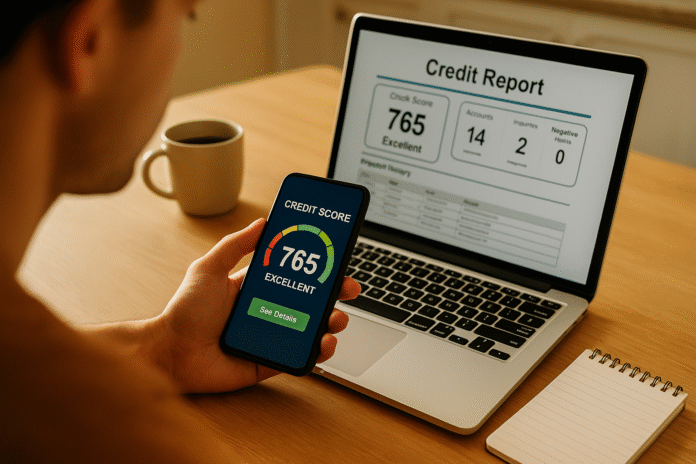
No—checking your own credit score does not lower it. When you check your score or order your credit report, it’s recorded as a soft inquiry, which has zero impact on your scores. By contrast, a lender’s check for a new credit application is a hard inquiry, which can cost a few points temporarily. In this guide, you’ll get nine clear, practical answers to related questions people ask next—how rate shopping works, how many points a hard pull might cost, where to check safely (including free options), and how to avoid and fix unwanted inquiries. Quick disclaimer: this article is educational, not financial advice; consider your personal situation or consult a qualified professional.
Fast answer to the core question: Checking your own credit score (or report) is a soft pull and does not lower your credit score. You can check as often as you like without penalty.
1. Checking Your Own Score Is a Soft Inquiry—and It Doesn’t Lower Your Score
Checking your own credit score or ordering your credit report is treated differently from applying for new credit. It’s recorded as a soft inquiry, which doesn’t factor into scoring models, so your score won’t budge whether you check monthly, weekly, or daily. This includes score checks from your bank’s app, credit monitoring tools, and the official free credit report website. Soft inquiries still appear on your file (visible to you) to create an audit trail, but lenders don’t treat them as risk signals. In fact, monitoring your credit regularly is encouraged because it helps you spot errors or signs of identity theft early, and to prepare before major applications like a mortgage or auto loan. If you’ve heard otherwise, that confusion usually stems from mixing up soft inquiries (you checking you) with hard inquiries (a lender reviewing you for a new account). Bottom line: you can look without losing points.
1.1 Why it matters
When you know that checking your score doesn’t hurt it, you’re more likely to monitor consistently. That habit pays off: catching a fraudulent collection early, confirming that paid accounts are reported accurately, and ensuring old negative items fall off on time.
1.2 Numbers & guardrails
- Impact on score: Soft inquiries = 0 points.
- Visibility: You see soft inquiries; lenders generally do not.
- Frequency: Safe to check as often as you want.
Mini-checklist to check safely
- Use your bank/issuer’s score in-app or a reputable monitoring service.
- Pull your free weekly credit reports to verify accuracy.
- Save PDFs or screenshots and track changes over time.
Synthesis: Treat soft pulls as routine maintenance—look early, look often, and never worry about a score penalty.
2. Soft vs. Hard Inquiries: What Changes Your Score (and What Doesn’t)
A soft inquiry occurs when credit is accessed for information rather than for a new lending decision. Examples include you viewing your own scores/reports, prequalified credit card checks, some employer background screenings, and many rental screenings. These do not affect your score. A hard inquiry is triggered when you apply for credit—credit cards, personal loans, auto loans, mortgages, some lines of credit—and the lender uses your file to decide whether to approve and on what terms. Hard inquiries are a minor, short-term scoring factor, but they matter most when you have several in a short span.
2.1 Common examples
- Soft: Your own checks; bank/issuer’s monthly score updates; prequalification offers; many employer checks; many tenant screenings; some utility/cellular checks.
- Hard: New credit card applications; auto/mortgage/student loan applications; some in-store financing; some tenant screenings (policy varies); some utility deposits.
2.2 Practical tips
- Ask explicitly: “Is this a soft pull or a hard pull?” before authorizing credit access.
- Get it in writing on applications or disclosures.
- Prefer prequalification (soft) when shopping cards or personal loans.
Synthesis: The difference hinges on intent—informational vs. new credit. Only hard checks can shave a few points off your score; soft checks never do.
3. How Many Points a Hard Inquiry Might Cost—and How Long It Lasts
For most people, a single hard inquiry is a small hit—often fewer than five points—and the effect typically fades within about 12 months, even though the inquiry line remains on your reports for up to two years. The precise impact depends on your overall profile: thin files or recent delinquencies may see a slightly larger dip, while long, clean histories may see virtually none. Importantly, inquiries are among the least influential scoring factors compared with payment history, utilization, and derogatory marks. They are, however, visible to lenders, and a cluster of hard pulls can signal risk—especially if not tied to rate shopping for a single loan type.
3.1 Numbers & guardrails
- Typical impact: ~0–5 points per inquiry (varies by profile and model).
- Score effect duration: ~12 months.
- Report visibility: ~24 months.
- Heaviest factors: Payment history and utilization dwarf inquiry effects.
3.2 Mini case
You apply for one rewards card and an auto loan within three months. Expect one hard inquiry for the card and one for the auto. The auto inquiry’s impact may be grouped with other auto inquiries (see the next section) if you applied with several dealers/banks in a focused window. Net effect: a single-digit dip that naturally wanes over the year.
Synthesis: Don’t fear a needed application; do avoid unnecessary hard pulls and bunching multiple unrelated applications.
4. Rate-Shopping Windows: FICO’s 45 Days vs. VantageScore’s 14 Days
Credit scoring models account for “rate shopping”—submitting multiple applications for the same type of installment loan (mortgage, auto, student) to compare offers. Newer FICO® models treat multiple hard inquiries within a 45-day span as one for scoring. VantageScore® uses a 14-day rolling window. Many lenders still use older FICO versions, and treatment can vary slightly by bureau and product, so plan conservatively. Credit card applications do not get this special grouping—each card application is a separate hard inquiry.
4.1 How to use the window well
- Cluster applications: Submit all mortgage/auto/student loan applications within two weeks to be safe across models.
- Keep type consistent: Don’t mix cards, personal loans, and auto loans in the same spree.
- Document timing: Note dates and lenders; keep your files organized.
4.2 Region & product notes
- Mortgages: Often under older scoring versions; stick to a tight window.
- Auto loans: Dealers may shotgun to multiple lenders the same day—this typically still counts as one for scoring if within the window.
- Student loans: Treated like other installment loan shopping.
Synthesis: Rate shop strategically—same loan type, tight timeframe—and the scoring models will generally treat those pulls as a single event.
5. Where (and How Often) to Check: Free Weekly Reports and Reliable Score Sources
You can—and should—review your credit reports and scores regularly. In the U.S., the three nationwide credit reporting companies provide free weekly credit reports through the official portal. Weekly access is now permanent, making routine reviews practical for everyone. For scores, many banks, card issuers, and reputable apps offer free updates (often monthly) based on FICO or VantageScore models. The exact number you see may differ from a lender’s pull, but the trend and the drivers are what matter most.
5.1 Smart monitoring routine
- Weekly (reports): Pull each bureau’s report, rotate if you prefer, and check for accuracy.
- Monthly (scores): Track your score trend and the top factors listed with it.
- Before big applications: Pull reports from all three bureaus, fix errors, and lower utilization.
5.2 Tools & housekeeping
- Use the official portal for reports; beware of look-alike sites.
- Save each report as a PDF; keep a simple spreadsheet to log changes.
- Set alerts (through your bank or a monitoring app) for new inquiries or accounts.
Synthesis: Frequent monitoring is free, safe, and score-neutral—use it to stay error-free and application-ready.
6. Prequalification & Preapproval: Compare Offers Without a Hard Pull
If you’re shopping for a credit card or personal loan, start with prequalification (sometimes called “pre-approval” on websites). These screens typically use a soft inquiry and won’t affect your score. You’ll see estimated APRs and limits based on your current profile, which helps you avoid shotgun applications. However, the final application will require a hard inquiry, and the exact terms can change after that pull. To keep things soft until you’re ready, always read the disclosures and look for language like “checking won’t affect your credit score.”
6.1 How to keep it soft
- Look for the phrase “no impact on your credit score” before clicking.
- Decline optional hard-pull upgrades until you’re ready to apply.
- Screenshot prequal offers and compare APRs, fees, and intro terms.
6.2 Common mistakes to avoid
- Confusing account opening with offer checking—opening an account always requires a hard pull.
- Applying for multiple different product types (e.g., 3 cards + 2 personal loans) in a short span—this stacks hard pulls.
- Ignoring fees and long-term APR in favor of teaser perks.
Synthesis: Use prequalification to narrow choices with zero score impact; then apply once—for the best offer—when you’re comfortable.
7. Spot & Fix Unauthorized Hard Inquiries (and Protect Your Credit)
Unfamiliar hard inquiries can signal fraud or administrative error. Because hard pulls can affect scores and underwriting decisions, handle them promptly. First, confirm whether a dealer or lender used a third-party affiliate name (common in auto or furniture financing), then dispute anything truly unauthorized with the bureau(s) that reported it. If you suspect identity theft, add a fraud alert (free, lasts at least one year) or place a security freeze (free, stops new credit from being opened in your name unless you lift it).
7.1 Step-by-step response
- Verify the name: Search the company; call to ask why they pulled your report.
- Dispute with the bureau(s): Provide proof and a concise explanation.
- File an identity theft report if indicated and keep documentation.
- Add a fraud alert or freeze to block further damage.
7.2 Ongoing protection
- Enable account-opening alerts with your bank/monitoring app.
- Use unique passwords and a password manager; enable MFA.
- Review reports weekly and act quickly on surprises.
Synthesis: Treat unknown hard pulls seriously—confirm, dispute, and protect. The faster you act, the less damage an impostor can do.
8. Smart Application Timing: Minimize Dings While Getting What You Need
You can’t avoid every hard inquiry, and you don’t need to. The goal is to make necessary applications at the right time and manage the rest of your profile so a small inquiry dip doesn’t matter. Plan major applications around periods when your utilization is low, recent delinquencies are absent, and your reports are error-free. Group rate-shopping inquiries tightly (see Section 4), and avoid stacking unrelated applications. If you’re rebuilding, give yourself breathing room—90 days between new credit card applications is a common, conservative cadence.
8.1 Practical playbook
- Lower utilization to under ~30% (or <10% for top-tier results) before applying.
- Batch rate-shopping within two weeks for mortgages/auto/student loans.
- Space other applications (e.g., credit cards) by a few months.
- Pause if you’ve had a recent late payment; focus on on-time streaks first.
8.2 Numeric example
You want a mortgage in six months. Plan to:
- Pay down cards to <10% utilization 60 days prior;
- Pull all three reports 45–60 days prior and fix errors;
- Submit lender applications within a 14-day window;
- Avoid any new card applications until after closing.
Synthesis: Timing, utilization, and clustering matter far more than the tiny dip from a single hard pull.
9. Who Else Checks Credit—and Whether It Hurts (Employers, Landlords, Utilities)
Credit isn’t just for loans. Employers, landlords, and utility providers may review your history, but most of these checks are soft inquiries and don’t affect scores. Employers typically obtain a specialized report for employment screening; it excludes your credit score and won’t impact it. Many landlords use tenant-screening services that rely on soft pulls, though some may run a hard inquiry depending on their policy. Utilities and telecom providers often do soft pulls for identity and deposit decisions; occasionally, they may perform a hard pull if extending credit or financing equipment.
9.1 What to ask before you consent
- “Will this be a soft or hard inquiry?”
- “Which bureau do you use?”
- “If it’s hard, is there an alternative (e.g., larger deposit)?”
9.2 Tenant & employment tips
- Provide recent pay stubs and references to reduce reliance on hard pulls.
- If a landlord insists on a hard inquiry, ask if they accept a recent report you provide.
- For job checks, know your FCRA rights: disclosure, consent, and adverse-action notices.
Synthesis: Outside of new credit applications, most checks are soft—but verify in advance, especially with landlords and utilities where policies vary.
FAQs
1) Does checking my own credit score lower it?
No. Your own checks are soft inquiries and don’t affect your credit scores. You can check as often as you like to monitor accuracy and progress. Use reputable sources like your bank’s app or the official free report portal.
2) What’s the difference between a soft and a hard inquiry?
A soft inquiry is informational (you checking you, prequalification, many background checks) and has no score impact. A hard inquiry occurs when you apply for new credit; it can trim a few points for about a year and stays on your reports for up to two years.
3) How many points will a hard inquiry cost me?
For most profiles, a single hard pull is a small dip—often fewer than five points. The effect diminishes over about 12 months, even though the inquiry remains visible for up to 24 months.
4) How does rate shopping work?
For mortgages, auto loans, and student loans, scoring models group multiple hard pulls in a short window as one. Newer FICO versions use 45 days; VantageScore uses 14 days. Stick to a two-week cluster to be safe across models.
5) Do credit card applications benefit from rate-shopping rules?
No. Each credit card application typically creates its own hard inquiry. Use prequalification (soft) to compare likely terms, then submit one application for your top choice.
6) How often should I check my reports and scores?
Check reports weekly (it’s free and safe) and scores monthly. Before a major loan, pull all three reports 45–60 days in advance to fix errors and lower card balances to improve terms.
7) I see an inquiry I don’t recognize—what now?
First, confirm the company (dealers and finance companies may use unfamiliar names). If it’s truly unauthorized, dispute with the bureau(s), and consider a fraud alert or a security freeze to block new accounts.
8) Do employers see my credit score? Does their check hurt my score?
Employers typically receive a special employment report and not your credit score. Employment checks are generally soft inquiries and don’t affect your credit scores, though you must consent under the FCRA.
9) Can landlords or utilities hurt my score with a credit check?
Many landlord and utility checks are soft pulls, but policies vary. Ask whether it’s soft or hard before you consent. If a hard pull is required, you can ask about alternatives like a larger deposit.
10) What matters more than inquiries for my score?
Payment history and credit utilization are far more influential. Focus on on-time payments and keeping revolving balances low; the occasional necessary hard inquiry is a minor factor by comparison.
Conclusion
The myth that “checking my own score will hurt it” keeps far too many people in the dark about their credit. The truth is uncomplicated: your own checks are soft pulls and don’t affect your scores, while hard pulls for new credit can cause a small, short-term dip. Use that knowledge to your advantage. Monitor your reports weekly and your scores monthly, fix errors promptly, and plan applications strategically—cluster rate-shopping for mortgages, auto, and student loans, and space out unrelated applications. Keep your utilization low and your payment history spotless, and you’ll insulate your scores from the tiny impact of occasional hard pulls. If you encounter an unfamiliar inquiry, act quickly: verify, dispute, and protect with alerts or a freeze. Credit health rewards the proactive.
Next step: Pull your free reports today, note any issues, and set a calendar reminder to review them again in one week.
References
- “Does Checking Your Credit Score Lower It?” Experian, March 8, 2024. https://www.experian.com/blogs/ask-experian/does-checking-your-credit-score-lower-it/
- “Checking Your Credit Report Won’t Hurt Your Score,” Experian, August 29, 2023. https://www.experian.com/blogs/ask-experian/ordering-your-own-credit-report-wont-hurt-your-credit-scores/
- “Do Credit Inquiries Lower Your FICO® Score?” myFICO (FICO®), accessed 2025; page updated in recent years. https://www.myfico.com/credit-education/credit-reports/does-checking-credit-score-lower-it
- “How to Rate Shop and Minimize the Impact to Your FICO® Score,” myFICO (FICO®), July 5, 2023. https://www.myfico.com/credit-education/blog/rate-shop
- “How Does Rate Shopping Affect Your Credit Scores?” Experian, April 18, 2023. https://www.experian.com/blogs/ask-experian/how-does-rate-shopping-affect-credit-score/
- “What happens when a mortgage lender checks my credit? / Does shopping around for a mortgage hurt my credit?” Consumer Financial Protection Bureau (CFPB), August 30, 2023. https://www.consumerfinance.gov/ask-cfpb/what-exactly-happens-when-a-mortgage-lender-checks-my-credit-en-2005/
- “What is a credit inquiry?” Consumer Financial Protection Bureau (CFPB), September 11, 2025. https://www.consumerfinance.gov/ask-cfpb/what-is-a-credit-inquiry-en-1317/
- “Does requesting my credit report hurt my credit score?” Consumer Financial Protection Bureau (CFPB), May 14, 2024. https://www.consumerfinance.gov/ask-cfpb/does-requesting-my-credit-report-hurt-my-credit-score-en-1229/
- “You now have permanent access to free weekly credit reports,” Federal Trade Commission (FTC), January 4, 2024. https://consumer.ftc.gov/consumer-alerts/2023/10/you-now-have-permanent-access-free-weekly-credit-reports
- AnnualCreditReport.com – Official Free Credit Reports Site, accessed 2025. https://www.annualcreditreport.com/
- “Hard vs Soft Inquiries: Different Credit Checks,” TransUnion, September 20, 2024. https://www.transunion.com/blog/credit-advice/the-difference-between-hard-and-soft-credit-inquiries
- “Will Checking Your Credit Hurt Credit Scores?” Equifax, accessed 2025. https://www.equifax.com/personal/education/credit/score/articles/-/learn/will-checking-your-credit-hurt-credit-scores/
- “The Complete Guide to Your VantageScore,” VantageScore, October 11, 2019. https://vantagescore.com/resources/knowledge-center/the-complete-guide-to-your-vantagescore
- “How Many Hard Inquiries Is Too Many?” Experian, August 12, 2024. https://www.experian.com/blogs/ask-experian/how-many-hard-inquiries-is-too-many/