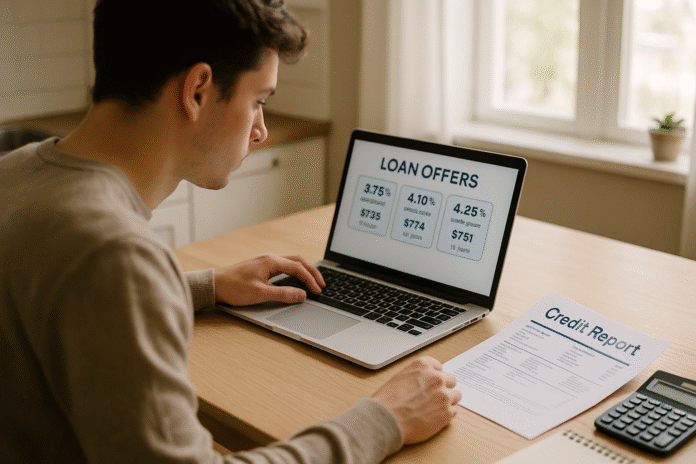
Opening a small personal loan can add an installment account to your file and, in some cases, help diversify your “credit mix.” But whether that move is smart depends on your goals, costs, and timing. In most scoring models, credit mix is a smaller factor than payment history and amounts owed, so opening a loan purely for variety rarely produces big gains—especially if it’s expensive. The short answer: treat this as a credit-building project only if it’s low-cost, intentional, and you’ll make every payment on time. Below you’ll find nine research-backed rules to decide if opening a small personal loan to diversify credit mix is right for you, how to price it, and how to manage it without hurting your score. (Educational information only—this is not individualized financial advice.)
Within the first weeks of borrowing, focus on three priorities: confirm the lender reports to all three bureaus, automate on-time payments, and verify your first statement and credit report entry for accuracy. If you’re consolidating card debt with a small loan, pay the cards to zero immediately and keep them open to preserve available credit. Finally, compare the all-in annual percentage rate (APR)—interest plus fees—before you apply, and use soft-pull prequalification whenever it’s available to limit hard inquiries.
1. Decide if “credit mix” is worth pursuing for your profile
Credit mix is the variety of account types you’ve successfully handled (revolving cards, installment loans, mortgages, etc.). In FICO® Scores, it’s typically a small slice of the pie (about 10%), far less influential than payment history (the biggest factor) and amounts owed. That means opening a loan only to “check the mix box” won’t usually move the needle much—unless you already manage everything else well and are polishing a near-excellent file. The first decision is therefore strategic: will a new installment trade line meaningfully improve your profile given your bigger levers (on-time payments and low revolving utilization)? If your utilization is high or you’ve had late payments, fix those first; they carry far more weight.
1.1 Why it matters
- Score impact is limited: Mix contributes around 10% in FICO models; it’s not a magic shortcut.
- Bigger levers first: Lowering credit-card utilization and never missing payments typically delivers larger, faster improvements.
- New-account tradeoffs: A fresh loan adds a hard inquiry and can reduce the average age of accounts, which might offset small mix benefits in the short term.
1.2 Mini-checklist
- Is your revolving utilization comfortably low?
- Do you have 12+ months of spotless on-time payments?
- Are you okay with a temporary dip from a hard inquiry/new account?
- Is the APR clearly affordable relative to your cash flow?
Synthesis: If your fundamentals aren’t strong, improving them will outshine the modest score lift from an added installment loan.
2. Pick the right product: unsecured personal loan vs. credit-builder vs. share-secured
If you’re brand-new to installment credit or rebuilding, consider credit-builder loans (CBLs) and share-secured loans (secured by your savings or a CD) alongside small unsecured personal loans. CBLs often place the “loan” in a locked account and report your on-time payments; you get the funds at the end, which can reduce temptation to spend and lower risk. Share-secured loans let you borrow against your own savings, typically at lower rates than unsecured loans, with straightforward approval if funds are on deposit. An unsecured personal loan is flexible and fast, but often costs more and may carry origination or other fees. Match the product to your goal: seasoning an installment line safely vs. getting cash now.
2.1 Tools & examples
- Credit-builder loan (CBL): Designed for consumers establishing or rebuilding credit; randomized CFPB study found CBLs can help people with no current debt establish records and improve scores.
- Share-secured loan: Borrow against savings or a CD; credit unions commonly offer these with simpler approvals and lower rates because they’re secured. 1stunitedcu.org
- Unsecured personal loan: Funds up front, but compare APRs and fees carefully (origination, documentation, late fees).
2.2 Mini-checklist
- Do you need cash now? If not, a CBL may be lower-risk.
- Do you have savings/CDs? A share-secured loan could be cheapest.
- Does the lender report to all three bureaus for maximum score impact?
Synthesis: Choose the simplest, safest path that gets you an installment line with predictable payments and verified bureau reporting.
3. Price the all-in cost using APR (not just interest rate)
APR is the standardized way to compare loan cost across lenders because it bakes in interest and mandatory fees (like origination). Federal rules under the Truth in Lending Act (Regulation Z) require clear APR disclosures for closed-end loans so consumers can compare apples to apples. As of now, the most recent Federal Reserve data show the average 24-month personal-loan rate was 11.57% (May 2025); many borrowers will see offers above or below that depending on credit, income, and lender. Before you apply, estimate the total interest paid over the term and factor fees into the APR.
3.1 Numbers & guardrails
- APR vs. rate: APR includes required fees; the “interest rate” alone can look cheaper than the real cost.
- Market context: Fed data (24-month personal loans) show 11.57% in May 2025—use this as a rough benchmark, not a quote. (Next release scheduled Oct 7, 2025.)
- Origination fees: Some lenders charge them; confirm whether the fee is deducted from proceeds or added to the balance.
3.2 Quick example
Borrow $1,000 for 12 months at 12% with a 5% origination fee deducted upfront. You receive $950, but you repay based on $1,000 at 12%—the effective APR is higher than 12% because of the fee. Use the APR to compare this to a $1,000 loan at 12% with no fee.
Synthesis: Compare offers by APR and total dollar cost over the term; small differences matter on short terms and small balances.
4. Use soft-pull prequalification and keep hard inquiries tight
Many personal-loan lenders let you prequalify with a soft credit check to preview rates and terms without affecting your scores. Submit full applications only after you’ve compared prequalified offers. FICO® specifically applies “rate-shopping” deduplication windows to mortgage, auto, and student loan inquiries—not generally to personal loans—so bunching multiple personal-loan applications can still mean multiple hard pulls. When you do apply, do it deliberately and avoid applying for other new credit at the same time.
4.1 How to do it
- Look for “soft credit inquiry” language on the prequalification flow.
- Compare APR, fees, term, autopay discounts, and whether the lender reports to all bureaus.
- Submit one full application (or as few as possible) only after you’ve chosen a front-runner.
- If you must compare full applications, keep them within a short window—but don’t assume personal loans are deduped like auto/mortgage/student loans under FICO.
4.2 Mini-checklist
- Prequalified with 3–5 lenders via soft pulls?
- Confirmed no prepayment penalty and no hidden fees?
- Ready with income verification and bank info to avoid re-pulls?
Synthesis: Soft-pull shopping protects your score; save hard pulls for the one offer you actually intend to accept.
5. Borrow small, pick a term you can comfortably finish, and tie it to a purpose
A “small” personal loan for credit mix is typically a few hundred to a few thousand dollars—enough to create an installment line you can repay easily without straining cash flow. Shorter terms reduce total interest, while longer terms cut the monthly payment but raise total cost. If your actual goal is debt consolidation, size the loan just big enough to retire targeted card balances and then avoid re-spending on those cards. Keep your debt-to-income manageable; lenders assess capacity as well as credit history.
5.1 Mini-checklist
- Amount: Borrow only what you can comfortably repay from your monthly budget.
- Term: Favor the shortest term that fits your cash flow (e.g., 6–24 months for small balances).
- Autopay: Turn it on (sometimes with a rate discount).
- Reporting: Verify the lender reports to Equifax, Experian, and TransUnion.
5.2 Short case
If you borrow $1,200 at 12% APR for 12 months, your payment is roughly $106/month and total interest about $72. At 24 months, payment drops to ~$56, but total interest roughly doubles—a trade-off to consider alongside your mix goal.
Synthesis: Keep it small, short, and purpose-driven so the installment history is affordable and positive from month one.
6. Build payment history first; don’t obsess over early payoff
On-time payment history is the single most important scoring factor. A small personal loan can help by adding predictable, fixed payments—but the lift comes from months of perfect payments, not from immediately closing the loan. Paying off ahead of schedule won’t “ruin” your credit, but it can slightly reduce any benefit you were getting from an active installment account. If you do plan to repay early, make several on-time payments first, then confirm whether the lender has no prepayment penalty before you accelerate.
6.1 Tips & tools
- Autopay + calendar reminders to avoid late fees and dings.
- Biweekly or extra-principal payments to shorten interest while still showing active history.
- Confirm the lender applies extra payments to principal and doesn’t treat them only as future interest.
- Verify “paid as agreed” reporting after your first 30-60 days.
6.2 Numbers & guardrails
- A single 30-day late can damage scores far more than any mix benefit; never miss a payment.
- Prepaying a loan early changes status to “closed—paid,” which is fine, but it ends future monthly positive updates from that account.
Synthesis: Use the loan to stack on-time payments; prepay only after you’ve banked enough positive history and confirmed no penalties.
7. Consolidating card debt? Do it once, pay to zero, and guard utilization
If your small loan consolidates high-interest card balances, the instant benefit to your score often comes from lower revolving utilization (balances vs. limits). That helps the bigger “amounts owed” category, while the new installment loan doesn’t count in utilization the same way. The key mistakes are failing to pay cards to zero immediately, canceling old cards that help your age/limits, and re-charging the balances you just moved. A consolidation that doesn’t change spending habits can leave you with more total debt and a higher monthly nut.
7.1 How to do it
- Same-day payments: As soon as funds arrive, pay targeted cards to $0.
- Keep cards open (if fee-free) to preserve available credit and account age.
- Freeze the cards or set spending limits to avoid backsliding.
- Track utilization monthly; many banks offer free score/usage tools.
7.2 Region-specific note (U.S.)
The CFPB warns that debt consolidation is not automatically beneficial; compare costs, watch for fees, and consider nonprofit credit counseling if you’re struggling.
Synthesis: Consolidation helps when it cuts utilization and you don’t rebuild the balances—otherwise you’re paying interest twice.
8. Read the contract for fees, penalties, and disclosures—APR tells the truth
Before signing, review Truth in Lending (TILA/Reg Z) disclosures: APR, finance charge, total of payments, payment schedule, and whether any origination or prepayment terms apply. Personal loans often advertise “no prepayment penalty,” but never assume; confirm in writing. Late fees, returned-payment fees, and optional add-ons (like credit insurance) can raise your effective cost. If the fee is deducted from proceeds at funding, remember you’ll receive less cash than the amount you’ll repay.
8.1 Mini-checklist
- APR shown and consistent with disclosures?
- Origination fee amount and how it’s collected (deducted or financed)?
- Any prepayment penalty or odd clause? (Many lenders don’t charge one, but verify.) Consumer Financial Protection Bureau
- Due date, grace period, and late-fee policy?
- Reporting to all three bureaus?
8.2 Numeric example
A $2,000 loan at 14% for 18 months with a 6% origination fee deducted upfront gives you $1,880 cash but payments based on $2,000. A competing offer at 16% with no fee might be cheaper—or not—depending on the term. Only the APR settles the comparison.
Synthesis: Don’t sign until you understand APR, fees, and penalties; small terms and fees swing the real cost more than you think.
9. Monitor reporting, verify accuracy, and dispute errors
After funding, the new loan should appear on your credit reports within 30–60 days. Check AnnualCreditReport.com (the official site) and verify the tradeline, balance, and payment status. You now have permanent weekly access to free credit reports from each bureau; use it to confirm the loan is reporting to all three and that your consolidation payments posted correctly. If you spot a mistake, dispute it with the bureau and the furnisher (lender); the CFPB provides step-by-step dispute guidance and sample letters.
9.1 Mini-checklist
- Confirm the new loan shows as “opened” with correct limit/balance.
- Verify on-time status each month.
- If consolidating, ensure card balances show $0 after payments post.
- Dispute inaccuracies promptly; keep copies and screenshots.
9.2 Tools
- AnnualCreditReport.com (official portal) for free weekly reports. annualcreditreport.com
- Your bank/issuer’s free score tools for alerts and utilization tracking.
Synthesis: Monitor early and often—fast error correction protects both your score and your credit-mix goal.
FAQs
1) Will opening a small personal loan to diversify credit mix automatically raise my score?
Not automatically. Credit mix is a smaller scoring factor; the bigger drivers are on-time payments and amounts owed. If the loan is inexpensive and you pay perfectly, it can help round out your profile, but the gain is usually modest compared with keeping revolving utilization low and never paying late.
2) How big should a “small” personal loan be for credit mix?
Think in terms of affordability and purpose: a few hundred to a few thousand dollars, with a term short enough to minimize interest but long enough to rack up several on-time payments. Your plan should fit your budget without raising financial stress or risking a late payment.
3) Are personal-loan applications “deduped” like mortgage or auto rate shopping?
FICO’s rate-shopping logic consolidates inquiries for mortgage, auto, and student loans within a window; personal loans aren’t generally included. Use soft-pull prequalification to compare offers and limit hard pulls to the best final choice.
4) What APR is “good” for a small personal loan right now?
Rates vary widely by credit, income, and lender. As a reference point, the Federal Reserve’s series for 24-month personal loans showed 11.57% in May 2025 (latest available as of now), but your offers may differ. Always compare APR across lenders because it includes required fees.
5) Do credit-builder loans actually work?
They can for the right consumer. CFPB-funded research found credit-builder loans can help consumers without existing debt establish credit records and improve scores. If you don’t need cash up front, a CBL is often a low-risk way to add an installment line and build savings.
6) Should I pay off the small loan early to save interest?
It’s fine to prepay after you’ve built a track record of on-time payments, and many personal loans have no prepayment penalty—verify in your contract. Paying off very early can slightly reduce the benefit of ongoing positive payment updates, but avoiding interest and staying debt-light are also wins.
7) I’m consolidating credit-card debt with a small loan—what’s the right sequence?
Fund, immediately pay cards to $0, keep no-fee cards open, and avoid re-spending. This reduces revolving utilization, which is part of the larger “amounts owed” category in FICO scores. Slipping back into card debt after consolidating can leave you worse off.
8) How do I compare offers without hurting my score?
Use soft-pull prequalification to view potential APRs and terms, confirm reporting to all three bureaus, and read fee disclosures. Submit a full application only after you’ve chosen a front-runner.
9) What fees should I watch for on small personal loans?
Origination, documentation, optional credit insurance, and late fees are common. Ask how origination is collected (deducted from proceeds vs. financed) and use APR for the true apples-to-apples comparison. Consumer Financial Protection Bureau
10) How do I verify the new loan is reporting correctly?
Pull your credit reports at AnnualCreditReport.com—you now have permanent weekly access for free from each bureau—and confirm the tradeline details. If something’s wrong, dispute with the bureau and the lender; the CFPB has instructions and sample letters.
Conclusion
Opening a small personal loan can help diversify your credit mix—but only when the fundamentals are already in place and the cost is low. The mix factor is secondary to keeping balances low and paying on time. If you decide to proceed, choose the right product (credit-builder, share-secured, or a small unsecured loan), shop with soft-pull prequalification, and compare APR and fees—then size the loan conservatively so each payment is easy. If you’re consolidating card balances, pay them to zero right away and avoid re-spending to preserve the utilization win. For pure mix-building, make several on-time payments to demonstrate reliability before considering early payoff (after confirming there’s no penalty). Finally, monitor your reports and dispute errors promptly; accuracy is essential to seeing any benefit from your new account.
Bottom line: Keep it small, cheap, and flawless—and let the on-time payments do the scoring work. Ready to price your options? Prequalify with soft pulls, compare APRs, and pick the single best offer before you apply.
References
- How are FICO Scores calculated? — myFICO (FICO), updated, accessed Sep 2025. myFICO
- Types of Credit and How They Affect Your FICO Score — myFICO (FICO), updated, accessed Sep 2025. myFICO
- Finance Rate on Personal Loans at Commercial Banks, 24-Month Loan (TERMCBPER24NS) — Federal Reserve Bank of St. Louis (FRED), updated Jul 8, 2025. FRED
- What’s the difference between a loan interest rate and the APR? — Consumer Financial Protection Bureau (CFPB), Jan 30, 2024. Consumer Financial Protection Bureau
- How to Rate Shop and Minimize the Impact to Your FICO Score — myFICO (FICO), Jul 5, 2023. myFICO
- What’s the difference between a prequalification letter and a preapproval letter? — CFPB, Dec 12, 2023. Consumer Financial Protection Bureau
- Targeting Credit Builder Loans (CBLs): Study & Practitioner Guide — CFPB, Jul 10–13, 2020. and https://files.consumerfinance.gov/f/documents/cfpb_targeting-credit-builder-loans_practitioner_guide_2020-07.pdf Consumer Financial Protection Bureau
- Amounts Owed & Credit Utilization — myFICO (FICO), Apr 3, 2018 & ongoing education pages, accessed Sep 2025. and https://www.myfico.com/credit-education/blog/credit-score-factor-amounts-owed myFICO
- What do I need to know about consolidating my credit card debt? — CFPB, Dec 21, 2023. Consumer Financial Protection Bureau
- Will Paying Off a Personal Loan Early Help My Credit? — Experian, Aug 18, 2020; Can You Pay Off a Personal Loan Early? — Experian, Jun 5, 2025. and https://www.experian.com/blogs/ask-experian/can-you-pay-off-personal-loan-early/ Experian
- How do I dispute an error on my credit report? — CFPB, Dec 18, 2024; You now have permanent access to free weekly credit reports — FTC, Jan 4, 2024; AnnualCreditReport.com (official portal), accessed Sep 2025. ; https://consumer.ftc.gov/consumer-alerts/2023/10/you-now-have-permanent-access-free-weekly-credit-reports ; https://www.annualcreditreport.com/ Consumer Financial Protection BureauConsumer Advice