When your income is uneven—or missing for a stretch—building credit can feel impossible. It isn’t. You can still add positive data to your credit file, protect your score, and qualify for better terms later using tools that don’t require a traditional 9-to-5 paycheck. This guide is for people between gigs, freelancers, contractors, gig workers, and small-business owners with variable income. In short: to build credit when unemployed or self-employed, focus on accounts that report reliably (secured cards, credit-builder loans, rent/utility reporting), optimize payment history and utilization, and leverage rules that allow “accessible” household income on card applications (as of now).
Quick start (skim this, then dive deeper):
1) Pull your free credit reports and fix errors; 2) Open one secured card and automate small monthly charges; 3) Add an installment line via a credit-builder or share-secured loan; 4) Turn on rent and utility reporting (e.g., Experian Boost + a rent service); 5) Consider becoming an authorized user on a well-managed card; 6) Keep reported utilization under ~10% and never miss a due date.
Important: This article is educational, not financial advice. Credit rules and product features change; verify details with issuers and regulators (links in References). As of now, guidance and policies cited were current.
1. Open a secured credit card and run it like a “training-wheels” card
The fastest, most controllable way to start reporting positive credit activity with minimal approval friction is a secured credit card. You provide a refundable cash deposit (often a few hundred dollars), which becomes your credit limit; the issuer reports the account like any other credit card. This works whether you’re unemployed or your self-employed income is irregular because issuers primarily rely on your deposit and your ability to make minimum payments. Open exactly one secured card to start, put 1–2 predictable bills on it (e.g., your phone plan), enable autopay for the full statement balance, and aim to keep your statement-reported balance low. Over three to six billing cycles, this builds payment history—the single most important factor in FICO Scores—and helps you demonstrate self-managed discipline even when cash flow is lumpy. Consumer Financial Protection Bureau
1.1 Why it matters
Payment history drives roughly 35% of your FICO Score, and revolving “amounts owed” (utilization) about 30%. Secured cards report just like unsecured cards, so on-time payments and low balances on a secured line can meaningfully shift your score. Don’t obsess over a specific “magic” utilization number; lower is generally better, and staying well under 10% at the statement date is a prudent target many high-score profiles share.
1.2 Mini-checklist
- Choose a secured card that reports to all three bureaus and has a clear graduation path.
- Deposit only what you can keep idle (you want headroom without straining cash).
- Autopay full balance; set reminders a week before statement close.
- Keep reported utilization under ~10%; pay early if you must.
- Avoid fees you don’t need; you’re buying reporting, not perks.
Synthesis: A single, well-managed secured card gives you predictable, low-risk reporting that directly feeds the two heaviest FICO factors.
2. Add an installment tradeline with a credit-builder or share-secured loan
If you have no open installment accounts, add one on your terms. A credit-builder loan locks a small sum (say, $300–$1,000) in a savings account or CD while you make fixed monthly payments; when you finish, you get the money back, and your on-time payments have been reported. Alternatively, a share-secured loan at a credit union uses your own savings as collateral. Both are designed for thin or rebuilding files and can be set to modest amounts that fit uncertain income. The goal isn’t borrowing money; it’s reporting predictable on-time installment payments to complement your revolving line from Section 1.
2.1 How to do it
- Start small (e.g., 12–24 months at a payment you can automate).
- Choose a local credit union or community bank; confirm it reports to all three bureaus.
- Automate from your checking account the day after income usually hits.
- Avoid add-on junk fees and early closure penalties.
- Keep the loan open long enough to establish history (6–12+ months).
Synthesis: A tiny, automated installment line paired with a secured card diversifies your file and builds a record you control, even with volatile earnings.
3. Turn your rent into credit: enroll in rent-reporting that hits multiple bureaus
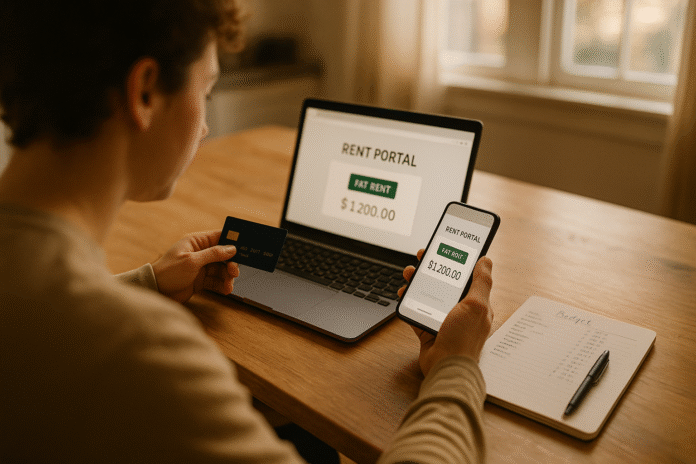
Rent is often your largest monthly payment—and historically it didn’t build credit. Today, several services report rent to one or more bureaus. If your landlord or property manager already partners with a platform, opt in; if not, choose a tenant-side service that can verify payments (through your bank or landlord) and report to at least Experian and TransUnion—and ideally Equifax too. This creates consistent, on-time installment-like data without taking on new debt. Expect modest fees (some programs are free via landlords), and confirm whether past rent can be added retroactively.
3.1 Numbers & guardrails
- Reporting to more bureaus = wider lender visibility.
- Some services can add up to 24 months of prior rent; verify policies and cost.
- Late rent can be reported negatively or sent to collections—protect payment timing.
- Your rent data may not influence every score version (e.g., older mortgage models).
Synthesis: If you already pay rent on time, turning that habit into tradeline data is one of the lowest-effort credit wins available today.
4. Use Experian Boost (utilities/phone/streaming) and consider UltraFICO for cash-flow lift
Experian Boost lets you permission utility, telecom, rent, insurance, and streaming payments to your Experian file; positive history can raise scores using Experian data. It’s free, opt-in, and you choose which bills to link and report. The limitation: it only affects your Experian report (lenders pulling other bureaus may not see it). UltraFICO is a separate, lender-opt-in score that layers your checking/savings behaviors (balances, account age, no recent overdrafts) on top of your Experian credit data; some lenders use it to approve borderline cases. Both tools help when traditional credit is thin, common during unemployment or early self-employment.
4.1 Mini-checklist
- Link recurring bills in your name (Boost only adds positives you select).
- Re-scan periodically as you add services or switch providers.
- For UltraFICO, keep no recent overdrafts and adequate average balances.
- Treat these as supplements, not substitutes, for Sections 1–3.
Synthesis: Boost and UltraFICO leverage payments and cash-flow you already have—useful add-ons while you build traditional tradelines. Experian
5. Leverage an authorized-user spot—strategically and with safeguards
Becoming an authorized user (AU) on a trusted person’s well-managed card can add age and positive history to your file quickly. This works best when (a) the issuer reports AU data to the bureaus, (b) the account has on-time payments and low utilization, and (c) your relationship can handle clear spending boundaries. AU impact is usually smaller than primary accounts in newer FICO versions, but it can still help you clear underwriting tripwires for first approvals. Set ground rules: you don’t need a physical card, and you should confirm reporting policies before proceeding.
5.1 Common mistakes
- Getting added to an account with late payments/high balances (can hurt you).
- Assuming all issuers report AU data—they don’t always; verify first.
- Relying only on AU when lenders want primary accounts.
Synthesis: A carefully chosen AU slot can speed up thin-file progress—just pair it with your own primary tradelines for durable results.
6. Use the ability-to-pay/household income rule correctly on card applications
If you’re 21 or older, card issuers must consider whether you can make minimum payments based on income or assets and current obligations. Since 2013, adults can list income they have a reasonable expectation of access to (e.g., a partner’s income in the same household), not just personal wages. This can help you qualify for a starter unsecured card—or for higher limits on a secured card that later graduates. Be honest and conservative: over-stating access can invite denials or worse. For applicants under 21, different rules apply (independent income or a cosigner).
6.1 Mini-checklist
- If unemployed but living with a spouse/partner, you may count accessible household income (21+).
- Assets (savings) count; keep documentation handy.
- Prequalification can reduce hard pulls and denials.
- Self-employed? Keep clean books, bank statements, and recent tax returns to verify income consistency.
Synthesis: Knowing how income can be counted legally widens your approval options without bending the rules.
7. Win the two biggest FICO levers: on-time payments and low utilization
No matter your employment status, two habits dominate score improvement: never missing payments and keeping credit card utilization low, both overall and per card. Automate at least the minimum due on every account, then pay the rest before the statement closes to control reported balances. Avoid fixating on a hard 30% line; aim lower when you can (single-digit is excellent), but prioritize never missing a due date. These behaviors are model-agnostic and lender-approved.
7.1 Practical tactics
- Autopay minimum + calendar reminder 3–5 days pre-close to pay down balances.
- Use two payments per month if cash flow is uneven.
- If you carry a balance, avoid maxing out any card; spread, then pay down.
- Ask for a credit-limit increase after six months of perfect history (may require income verification).
Synthesis: Scoring models reward predictable, boring excellence—on-time and low balance—over flashy hacks every time. myFICO
8. Enroll in issuer or lender hardship options to protect payment history during gaps
When income dips, your top priority is preserving on-time status across all accounts. Most banks offer hardship programs—reduced payments, temporary interest reductions, or structured plans—that keep your account current while you recover. Use them early, before you miss a payment, and document every agreement. Pair this with autopay of the minimum due, a bare-bones budget, and proactive communication if anything changes. Protecting payment history during a downturn prevents months (or years) of score damage. Consumer Financial Protection Bureau
8.1 Mini-checklist
- Call before you miss a payment; ask for hardship or payment assistance.
- Confirm whether your account remains reported as current during the plan.
- Pause new applications; focus on stabilizing existing lines.
- If overwhelmed, speak to a nonprofit credit counselor (NFCC/FCAA).
Synthesis: Hardship plans and nonprofit counseling are safety valves that keep your file clean while you rebuild income. Consumer Financial Protection BureauNFCC
9. Audit and fix your reports: pull them free, then dispute errors properly
You’re entitled to free reports from Equifax, Experian, and TransUnion; get them and scan for inaccuracies (wrong balances, duplicate collections, mixed files). Dispute errors with the bureau that’s reporting the mistake—online, by phone, or by mail with documentation—and follow up with the furnisher if needed. Keep copies and send certified mail for paper disputes. Cleaning errors can deliver immediate score improvements, especially on small files where one mistake dominates.
9.1 Steps to dispute
- Pull all three reports (do not rely on just one).
- Highlight the error with evidence (statements, letters, police report).
- Dispute with the bureau reporting the item; include the furnisher’s info.
- Track responses (30–45 days typical) and escalate if unresolved.
Synthesis: A thin or rebuilding file can’t afford inaccuracies; precise disputes reclaim points you’ve already earned.
10. Consider a co-signed personal loan only with clear safeguards
A co-signed installment loan can add a positive tradeline you couldn’t qualify for alone and often beats high-cost “second-chance” products. But it’s a shared risk: the cosigner is fully liable if you miss payments, and late payments will hit both parties’ credit. If you go this route, keep the amount small, automate payments, and be transparent about your budget swings as a self-employed borrower. Agree in writing how you’ll avoid missed payments and what happens if income falls.
10.1 Guardrails
- Borrow only what you can cash-flow on autopay.
- Build a 1–2 month payment buffer in a separate account.
- Share view-only access to the loan portal so the cosigner can monitor.
- Target 12–24 months; pay early only if it won’t erase positive history.
Synthesis: Co-signed loans can fill a gap, but they require adult-level transparency and a budget that survives slow months. Consumer Financial Protection Bureau
11. Explore cash-flow underwriting and alternative-data products—carefully
Some card programs and lenders use cash-flow underwriting—permissioned bank data—to evaluate applicants with little traditional credit. Interagency guidance acknowledges potential benefits when used responsibly, and several mainstream initiatives (e.g., UltraFICO) use bank behaviors to supplement a credit file. Additionally, certain BNPL and alternative-data products may report to bureaus in specific ways. If you try these, vet reporting practices, fees, and whether lenders you care about actually use those data. Treat them as complements to, not replacements for, the durable lines in Sections 1–3.
11.1 Mini-checklist
- Read the issuer’s reporting disclosures (which bureaus, which data).
- Prefer products that report monthly and positively with clear terms.
- Keep overdrafts at zero; some models penalize recent negatives.
- Re-evaluate after 6–12 months; trim what isn’t helping.
Synthesis: Alternative-data paths can open doors when you’re between paychecks or self-employed—but you still need the core habits and accounts that every lender recognizes.
FAQs
1) What’s the single best move if I can only do one thing this month?
Open one secured credit card, automate one small recurring bill, and enable autopay in full. This builds payment history (35% of FICO) and lets you control utilization by paying before the statement closes. Even if income wobbles, the small charge + autopay structure keeps you current.
2) Does being unemployed block me from getting a card?
Not necessarily. For applicants 21+, issuers can consider income you reasonably have access to (e.g., a spouse/partner’s) and your assets when assessing ability to pay. Be truthful about access and obligations; under 21, rules are stricter. Secured cards also rely on your deposit and prudent limits.
3) I’m self-employed with variable income. How do I show “ability to pay”?
Keep clean books, steady bank deposits, and recent tax returns. Issuers consider income or assets and your obligations; cash-flow consistency and savings help. Where offered, prequalification can reduce hard inquiries while you gauge approval odds.
4) Does Experian Boost really help?
For many, yes—especially thin files—because it adds on-time utilities/phone/streaming/rent to your Experian report. But lenders pulling a different bureau may not see that lift. It’s free and opt-in, so it’s a low-risk supplement.
5) Should I worry about a hard inquiry?
A hard pull can cause a small, usually temporary dip. It matters less than building flawless payment history and low utilization over time. Use issuer prequalification where available to shop with fewer dings. Investopedia
6) Will rent reporting help with a mortgage later?
It can deepen your file and may affect some newer score versions; some underwriters also review credit reports directly and can see rental tradelines. But older mortgage scores may ignore rent data. Regardless, consistent reported on-time payments are inherently positive. Investopedia
7) Is becoming an authorized user safe?
It helps if the account is pristine and the issuer reports AU data. But if the primary account runs high balances or pays late, it can harm you. Also, newer score versions often weight AU lines less than primary ones—so pair AU with your own accounts.
8) What utilization should I target?
There’s no magic cliff, but lower is better. Many top-tier profiles report single-digit utilization. Focus on paying before statement close and keeping both per-card and overall utilization low.
9) Do utilities build credit?
By default, no; most utility accounts don’t report unless they’re late/collections. But Experian Boost can add certain utility/telecom payments to your Experian file, and some third-party services let you report them. On-time is helpful; late is harmful. Experian
10) How do I dispute a credit report error correctly?
Dispute with the bureau reporting the error (online/mail/phone), include documentation, and keep copies. Pull all three reports first, then follow the bureau’s timelines and escalate if needed. Use certified mail for paper disputes.
11) Are credit-builder loans safe?
They’re designed for building credit, often through credit unions or community banks. You pay a small fixed amount monthly; the funds are released at the end. Watch fees and only borrow an amount you can automate.
12) Should I cosign for someone—or ask someone to cosign for me?
Cosigning can help qualify and build an installment history, but the cosigner is fully liable if payments are missed, and both parties’ credit can suffer. If you proceed, borrow small, automate payments, and be transparent.
Conclusion
Building credit while unemployed or self-employed is about controllables, not luck: create a small but sturdy mix of reporting accounts (secured card + builder/share-secured loan), add rent and utility data where it counts, and lock in perfect payment habits with automation and low reported balances. Use the ability-to-pay rules properly on applications, and lean on hardship options or nonprofit counseling if you hit a cash-flow pothole. Most of these steps cost little or nothing beyond discipline and a small deposit—and they scale with you as income rebounds. If you implement just three moves this week—pull reports and fix errors, open one secured card, and turn on rent/utility reporting—you’ll have transformed a thin or stalled file into a living, growing credit profile.
Copy-ready CTA: Take 30 minutes today to open a secured card, enroll rent/utility reporting, and turn on autopay—your future approvals will thank you.
References
- § 1026.51 Ability to Pay (Regulation Z), Consumer Financial Protection Bureau (Apr 29, 2013; page updated ongoing). Consumer Financial Protection Bureau
- The CFPB Amends CARD Act Rule to Let 21+ Consumers Rely on Accessible Income, Consumer Financial Protection Bureau (Apr 29, 2013). Consumer Financial Protection Bureau
- What’s in My FICO® Scores?, myFICO (accessed 2025). myFICO
- How Payment History Impacts Your Credit Score, myFICO (accessed 2025). myFICO
- What Should My Credit Utilization Ratio Be?, myFICO (Feb 9, 2022). myFICO
- How to Rebuild Credit, Experian (Nov 2, 2023). Experian
- Experian Boost® — Improve Your Credit Scores for Free, Experian (accessed 2025). Experian
- What Is Experian Boost?, Experian (Jul 31, 2025). Experian
- UltraFICO® Score, FICO (product overview, updated Jan 5, 2023). FICO
- Are Authorized-User Accounts Reported to All Three Bureaus?, Experian (Oct 25, 2024). Experian
- How Do Authorized User Accounts Impact the FICO® Score?, myFICO (accessed 2025). myFICO
- AnnualCreditReport.com — What Is a Credit Report?, Central Source, LLC (official site, accessed 2025). Annual Credit Report
- How Do I Dispute an Error on My Credit Report?, CFPB (Dec 18, 2024). Consumer Financial Protection Bureau
- Disputing Errors on Your Credit Reports (Handout), CFPB (Aug 2021). Consumer Financial Protection Bureau
- Experian RentBureau — Rent Reporting Overview, Experian (accessed 2025). https://www.experian.com/rentbureau/ Consumer Financial Protection Bureau
- TransUnion — Rent Payment Reporting (ResidentCredit/TruVision), TransUnion (accessed 2025). TransUnion
- Equifax Expands Partnerships With Rent-Reporting Service Providers, Equifax (Jan 8, 2020). Equifax Inc.
- Credit-Builder Loan: What It Is and How It Works, Investopedia (updated periodically; accessed 2025). https://www.investopedia.com/what-is-a-credit-builder-loan-5180680
- Co-Signing a Loan FAQs, Federal Trade Commission (accessed 2025). Consumer Advice
- Should I Agree to Co-Sign Someone Else’s Car Loan?, CFPB (Sep 14, 2023). Consumer Financial Protection Bureau
- Interagency Statement on the Use of Alternative Data in Credit Underwriting, OCC/FDIC/Fed/CFPB (Dec 3, 2019). https://www.occ.gov/news-issuances/news-releases/2019/nr-ia-2019-142a.pdf
- How Buy Now, Pay Later May Affect Your Credit, Experian (accessed 2025). https://www.experian.com/blogs/ask-experian/buy-now-pay-later-and-your-credit/ Wikipedia