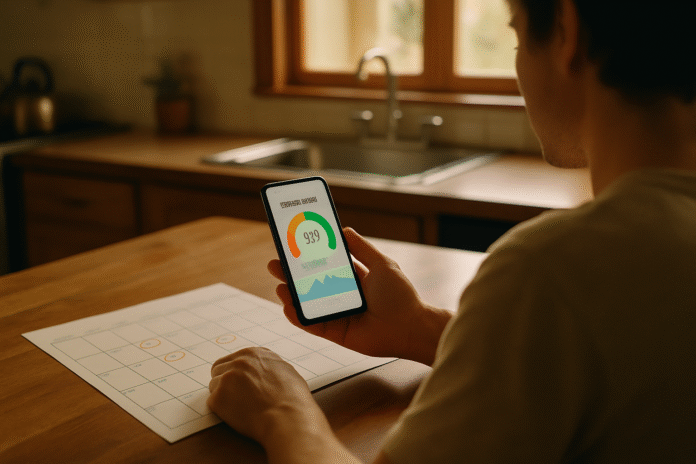
If you’ve ever wondered how often to look at your credit, here’s the clear answer: check your credit score monthly as a baseline, step up to weekly when you’re actively building or repairing credit or after a data breach, and always review it closely before major loan applications. Checking your own credit is a soft inquiry and won’t hurt your scores. Pair your score checks with regular reviews of your credit reports from Equifax, Experian, and TransUnion so you can spot mistakes early and respond fast. As of now, you can get free weekly credit reports from all three bureaus via AnnualCreditReport.com—use that access wisely. Below, you’ll find seven practical rules that translate real-world situations into a monitoring cadence you can follow without obsessing.
Brief disclaimer: This guide is educational and not individualized financial advice. Consider your own situation and, if needed, consult a qualified professional.
1. Make Monthly Your Default Cadence
For most people, checking your credit score once a month is the right rhythm. Monthly checks align with the way most lenders report account activity, so you’re seeing changes soon after they hit your files. This frequency is often enough to catch errors or fraud early, track progress if you’re paying down balances, and avoid anxiety that can come from daily refreshes that don’t reflect new data. Monthly also gives you time to act on what you see—like lowering utilization or disputing an error—before the next cycle. Crucially, reviewing your own score doesn’t damage it; it’s a soft inquiry, not a hard one.
1.1 Why monthly works
- Reporting cycle match: Most furnishers (creditors and lenders) update your accounts about once every 30 days, so monthly checks capture meaningful changes.
- Behavioral balance: You’ll monitor consistently without turning it into a daily obsession that offers little new signal.
- Action window: A month is enough time to implement changes (e.g., paying down balances) and see if your actions are reflected next cycle.
1.2 How to do a monthly check
- Use a trusted score source (your bank’s dashboard, a bureau’s app, or myFICO). Confirm whether you’re seeing FICO or VantageScore—they can differ.
- Log results and key drivers (utilization, new accounts, derogatories).
- If your score shifts unexpectedly, pull your credit reports to investigate.
1.3 Mini example
You pay $400 toward a $1,200 credit card balance mid-month. By the next billing cycle, your utilization drops, and a monthly score check shows a small bump—often a few points—because utilization is a major factor.
Bottom line: Monthly checks give you timely, low-stress visibility that fits how creditors report.
2. Go Weekly When You’re Building, Repairing, or After a Breach
If you’re in active credit-building mode, recently disputed errors, or you’ve been caught in a data breach, weekly monitoring is prudent. When you’re changing balances fast, opening secured cards, or re-establishing payment history, more frequent checks help you see whether tactics are working and catch problems early. After known breaches or signs of identity theft, weekly review is a defensive move—errors and fraudulent accounts can appear quickly, and swift action matters. Thanks to permanent free weekly credit reports via AnnualCreditReport.com, you can pair weekly score checks with weekly report reviews during high-risk periods without paying. Checking your own score and reports is a soft inquiry—no score harm.
2.1 Practical weekly workflow
- Every week: Review your score trend line; scan for utilization spikes or new account alerts.
- Alternate bureaus: Pull one bureau’s report each week (e.g., Experian on Week 1, Equifax Week 2, TransUnion Week 3) so you’re rotating coverage while staying sane.
- Act fast: If you see an unknown account or inquiry, freeze your credit and file disputes; don’t wait a month.
2.2 Tools & protections
- Place a fraud alert or credit freeze if you suspect identity theft; both are free. A fraud alert can be set by contacting one bureau, which must notify the others; freezes must be placed with each bureau individually.
- Use account alerts from your card issuers and banks to catch anomalous charges rapidly.
2.3 Mini case
After a retailer breach, you set a one-year fraud alert and start weekly checks. Two weeks later, an unfamiliar inquiry appears. Because you looked within days, you disputed it, froze your credit, and avoided a fraudulent card account.
Bottom line: In “active change” or “elevated risk” periods, weekly checks offer early detection without overkill.
3. Check Before and During Major Credit Applications
When you plan to apply for a mortgage, auto loan, or student loan, check your score and reports before you apply, then monitor during your rate-shopping window. Pulling your own score and reports won’t hurt your credit, but lender pulls are hard inquiries. Fortunately, FICO treats multiple hard inquiries for the same type of loan within a 45-day window as one, and VantageScore uses a 14-day window—so bunch your applications accordingly. This way, you can compare offers without adding multiple inquiry hits. Always verify terms with your lender, since some still use older scoring versions.
3.1 Numbers & guardrails
- FICO: Group similar loan inquiries within 45 days to count as one for scoring. Some models also ignore relevant inquiries in the 30 days before scoring.
- VantageScore: Group similar loan inquiries within 14 days.
- Credit cards: No rate-shopping window; each application is its own hard inquiry.
3.2 Prep checklist before applying
- Review all three reports for errors and fix them first.
- Pay down revolving balances to lower utilization a statement or two ahead.
- Pause new credit applications outside your rate-shopping window.
3.3 Mini example
You plan to buy a car. You check your score and reports first, clean up a small reporting error, then submit applications to three lenders within 10 days. On FICO, those pulls are treated as one inquiry for scoring, minimizing impact.
Bottom line: Before big loans, check in advance and then monitor within the rate-shopping window to protect your score and unlock better offers.
4. Review After Big Balance Changes or Credit Limit Moves
Any time your utilization ratio (balance ÷ credit limit) shifts meaningfully—because you made a big payment, ran up a seasonal balance, or got a credit-limit increase—check your score after the next statement closes. Utilization is a major scoring factor, so swings can move your scores by several points. Since furnishers typically report around the billing cycle, a check soon after the cycle closes shows the updated data. If you were approved for a higher limit or you paid down debt, you’ll likely see improvement once the new numbers report. Conversely, a large purchase may temporarily raise utilization and lower your score until it’s paid down.
4.1 Timing tips
- Wait for reporting: Most card issuers report on or near the statement date—not the due date—so check after statements close.
- Plan payments: If you want lower utilization to show up for a mortgage underwriter, time extra payments a few days before the statement closes.
4.2 Mini checklist
- Note current balances and limits.
- Calculate utilization per card and overall (aim under ~30%; under ~10% is often better).
- Confirm the next statement close date; calendar your check for shortly after.
- If utilization is high, consider a mid-cycle payment and re-check next month.
Bottom line: Whenever balances or limits change, check shortly after the next statement cycle to see the impact reflected in your score.
5. Audit Quarterly With Full Credit Reports From All Three Bureaus
Scores are summaries; reports hold the details. Do a quarterly deep-dive into your credit reports from Experian, Equifax, and TransUnion so you can catch identity-related errors, duplicate accounts, or outdated negatives. As of now, you can access free weekly reports at AnnualCreditReport.com, but a quarterly cadence is realistic for most people outside of risk events and ensures you examine all three reports over time. Reports can differ because not all lenders report to every bureau, and because update timing varies. Quarterly audits help you spot bureau-specific discrepancies and dispute them early.
5.1 What to review each quarter
- Personal info: Names, addresses, date of birth—watch for typos or unknown addresses.
- Trade lines: Open/closed status, limits, balances, payment history; confirm accuracy.
- Public records: Bankruptcies; ensure dates and statuses are correct.
- Inquiries: Recognize each hard inquiry; investigate unknown ones.
5.2 How to use free access wisely
- Rotate pulls: e.g., Experian in Q1, Equifax in Q2, TransUnion in Q3—or use the weekly allowance to stagger reviews without overwhelm.
- Dispute inaccuracies with the bureau and the furnisher; keep documentation.
Bottom line: A quarterly report audit complements monthly score checks and keeps all three bureau files accurate.
6. Monitor Closely After New Accounts, Hard Inquiries, or Derogatories
When you open a new account, authorize someone as an AU (authorized user), or take a hard inquiry, check your score within the next one to two cycles to verify how it lands. New accounts can temporarily trim your score because of reduced average age and the inquiry itself; they can also help longer term by diversifying credit mix or lowering utilization. Likewise, if a derogatory (late payment, collection) appears—or if you think one will—you’ll want to see exactly how it’s reported so you can respond, negotiate, or correct errors. Since furnishers report mainly monthly, plan score checks after the next statement and again the month after to confirm the data stabilized.
6.1 Common mistakes to avoid
- Assuming instant reflection: Data often lags until the next report date; avoid daily checking.
- Ignoring model differences: The impact of a new account can vary between FICO and VantageScore and between versions.
- Missing unknown inquiries: Unknown hard pulls warrant immediate investigation and, if needed, a credit freeze.
6.2 Mini case
You open a new rewards card to lower utilization. After the first statement, your score dips 5 points from the new inquiry and reduced average age, but by month three, utilization benefits offset the initial dip and you net a small gain.
Bottom line: After new accounts, inquiries, or negative marks, check over the next one to two cycles to confirm accurate reporting and trajectory.
7. Tie Checks to Life Events—and Automate the Rest
Your life drives your credit needs. When you anticipate events like moving, job changes, insurance shopping, or co-signing, check your score a month or two in advance and again within your relevant application window. If you’re not in a special situation, automate your monthly baseline and quarterly report audit so you don’t have to think about it. Automation ensures you’ll still catch issues quickly without decision fatigue, and you can temporarily switch to weekly after a breach or before a major loan. Remember: checking your own credit is a soft inquiry and does not hurt your scores.
7.1 Event-triggered cadence examples
- New apartment: Check 30–60 days before lease applications; fix errors first.
- Insurance quotes: Review your score and reports; some insurers use credit-based insurance scores in certain states.
- Cosigning: Audit reports in advance; agree on guardrails with the borrower.
- Refi or new mortgage: Follow the rate-shopping window rules in Section 3.
7.2 Quick automation checklist
- Calendar a monthly score check and a quarterly three-bureau report audit.
- Turn on email/SMS alerts from your score provider and banks.
- Keep fraud-response steps handy: freezes, alerts, disputes.
Bottom line: Map your monitoring to life events, but keep automated monthly and quarterly routines running so nothing slips.
FAQs
1) Does checking my own credit score hurt it?
No. Reviewing your own score or reports is considered a soft inquiry and has no impact on your credit. Soft inquiries appear only to you when you look at your reports; lenders can’t see them. Save your lender pulls for genuine applications, which are hard inquiries. Consumer Financial Protection Bureau
2) What’s the difference between a credit report and a credit score?
A credit report is a compilation of your credit history from a bureau; a score is a number calculated from the data in that report using a model like FICO or VantageScore. You actually have many scores, and they can differ by bureau, model version, and day of calculation. That’s normal and expected.
3) How often do lenders update my information?
Most furnishers submit updates about monthly, typically tied to billing cycles. That’s why monthly is a sensible default cadence for checking your score: it lines up with when new information becomes available to scoring models and the bureaus.
4) How often should I pull my full credit reports?
Outside of special situations, a quarterly deep-dive is a good practice. As of September 2025, you can obtain free weekly reports from each bureau via AnnualCreditReport.com, but using them on a rotated quarterly schedule is realistic and effective for most people.
5) I’m applying for a mortgage—how should I time checks?
Check your score and all three reports before you apply, correct errors, then submit lender applications within a 45-day FICO window (or 14-day VantageScore) so inquiries are grouped as one for scoring. Keep monitoring during your shopping window for any unexpected changes.
6) Do credit card applications get the same “rate-shopping” protection?
No. The inquiry-grouping logic applies to certain installment loans, like mortgage, auto, and student loans. Credit card applications are usually treated individually, so multiple applications can rack up multiple hard inquiries. Plan card applications sparingly. FICO
7) What should I do if I spot an error or unknown account?
Pull the relevant bureau report, dispute the item with the bureau and the furnisher, and consider a credit freeze and/or fraud alert to prevent further damage while you investigate. Fraud alerts can be placed by contacting one bureau, which then alerts the others; freezes must be placed with each bureau.
8) Why are my FICO and VantageScore numbers different?
They’re built by different companies, use different data weighting, and can be based on different bureau files and model versions. The gap doesn’t mean something’s wrong; it reflects multiple vantage points on the same underlying data. Focus on trends and the factors driving both.
9) Does prequalification affect my score?
Prequalification typically uses a soft inquiry, which doesn’t affect your scores. Only when you formally apply and the lender runs a hard inquiry might you see a small, usually temporary, score dip. Rate-shop within the appropriate window to minimize the effect for loans. Investopedia
10) Is daily checking ever helpful?
Usually not. Underlying account data doesn’t update daily, so you’ll rarely see meaningful changes day-to-day. Daily checking can create anxiety without adding information. Exceptions are brief high-risk periods after breaches or during time-sensitive loan shopping—then weekly (not daily) is typically enough.
Conclusion
“How often should you check your credit score?” boils down to matching your monitoring to how credit data actually moves and to what’s happening in your life. Use monthly checks as your default because creditors usually report on a monthly cadence. Layer in weekly checks if you’re building or repairing credit, disputing errors, or reacting to a data breach. Before a major loan, check early to fix issues, then monitor within the rate-shopping window to avoid unnecessary inquiry damage. Complement score checks with a quarterly deep-dive into all three credit reports so you catch bureau-specific errors. Remember that looking at your own score and reports is a soft inquiry—it won’t hurt you—and as of September 2025 you have free weekly report access to support smarter monitoring. Put the cadence on autopilot with reminders and alerts, and you’ll protect your credit health with minimal effort.
Ready to put this into practice? Set a monthly reminder now, schedule your next quarterly report audit, and turn on alerts so your credit stays one step ahead.
References
- When should I review my credit report?, Consumer Financial Protection Bureau (CFPB), accessed Aug 2025, https://www.consumerfinance.gov/ask-cfpb/when-should-i-review-my-credit-report-en-312/
- Does requesting my credit report hurt my credit score?, CFPB, May 14, 2024, https://www.consumerfinance.gov/ask-cfpb/does-requesting-my-credit-report-hurt-my-credit-score-en-1229/
- Credit reports and scores (Know your rights), CFPB, Jul 14, 2025, https://www.consumerfinance.gov/consumer-tools/credit-reports-and-scores/
- Understand your credit report (handout: lenders typically report monthly), CFPB, Aug 31, 2019, https://files.consumerfinance.gov/f/documents/cfpb_understand_your_credit_report_handout.pdf
- You now have permanent access to free weekly credit reports, Federal Trade Commission (FTC), Jan 4, 2024, https://consumer.ftc.gov/consumer-alerts/2023/10/you-now-have-permanent-access-free-weekly-credit-reports
- Is a credit freeze or fraud alert right for you?, FTC, accessed Aug 2025, https://consumer.ftc.gov/credit-freeze-or-fraud-alert-right-you
- Credit Freeze or Fraud Alert: What’s Right for Your Credit Report? (PDF), FTC, accessed Aug 2025, https://www.bulkorder.ftc.gov/system/files/publications/fraud_alert_credit_freeze_whats_the_difference.pdf
- What is the difference between a credit report and a credit score?, CFPB, Nov 12, 2021, https://www.consumerfinance.gov/ask-cfpb/what-is-the-difference-between-a-credit-report-and-a-credit-score-en-2069/
- What happens when a mortgage lender checks my credit? (45-day window), CFPB, Aug 30, 2023, https://www.consumerfinance.gov/ask-cfpb/what-exactly-happens-when-a-mortgage-lender-checks-my-credit-en-2005/
- Thinking About Applying for a Loan? Shop Around to Find the Best Offer (14-day window), VantageScore, Dec 8, 2023, https://vantagescore.com/resources/knowledge-center/thinking-about-applying-for-a-loan-shop-around-to-find-the-best-offer
- How to Rate Shop and Minimize the Impact to Your FICO Score, myFICO, Jul 5, 2023, https://www.myfico.com/credit-education/blog/rate-shop
- How Often Do Credit Card Companies Report?, Equifax, accessed Aug 2025, https://www.equifax.com/personal/education/credit-cards/articles/-/learn/credit-card-reporting-credit-bureaus/
- AnnualCreditReport.com (official site), accessed Aug 2025, https://www.annualcreditreport.com/index.action