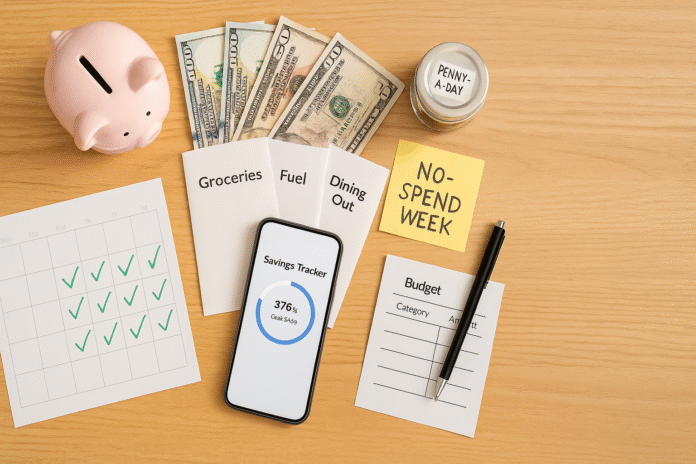
If you’ve struggled to build momentum with saving, money saving challenges can give you the structure, deadlines, and tiny wins that make progress feel fun and doable. In this guide, you’ll learn exactly how to run five proven saving challenges step-by-step, with templates, pitfalls to avoid, ways to scale up, and a four-week starter plan. It’s designed for beginners who want practical instructions, as well as experienced savers looking to refresh their routine.
Disclaimer: This article is educational and not individualized financial advice. Everyone’s situation is different—before making significant changes to your finances, consider consulting a qualified financial professional.
Key takeaways
- Simple, rules-based challenges remove decision fatigue and turn saving into a game.
- Start small, automate, and track: tiny amounts + automatic transfers + visible progress = consistency.
- Pick a challenge that fits your cash flow (weekly, daily, or monthly) and your personality (strict vs flexible).
- Expect friction the first month—most habits stabilize over time; miss a day and resume without guilt.
- Measure success with clear metrics (savings total, streaks, % of income saved, number of “no-spend” days).
1) The 52-Week Savings Challenge
What it is and why it works
You save an amount that corresponds to the week number: $1 in week 1, $2 in week 2 … $52 in week 52. By the end, you’ll have $1,378 saved if you follow the classic format. The ramp-up makes it beginner-friendly, builds habit strength, and delivers a satisfying year-end payoff.
Requirements and low-cost alternatives
- Account: A basic savings or high-yield savings account.
- Tracking: A printable table, notes app, or any habit tracker.
- Automation (optional): Weekly recurring transfer from checking to savings.
- Low-tech option: Cash in a jar with a handwritten checklist.
Step-by-step setup
- Pick your start date (any week of the year works).
- Set a weekly transfer for the target amount. If your bank allows, create a rule that increases by $1 each week; otherwise, adjust manually.
- Label your goal (e.g., “holiday travel,” “emergency buffer”).
- Track visibly—check off weeks, and celebrate milestones (week 13, 26, 39, 52).
- Lock it in—turn on account alerts for missed transfers.
Beginner modifications and progressions
- Reverse method: Start at $52, work down to $1 to front-load when motivation is highest.
- Flat auto-save: Transfer $26.50 weekly for 52 weeks to reach the same total without variable amounts.
- Double-up weeks: If you get a bonus or windfall, check off extra weeks early.
Recommended duration and metrics
- Duration: 52 weeks.
- KPIs: Total saved, on-time transfers %, number of skipped/made-up weeks, streak length (weeks in a row successfully completed).
Safety, caveats, and common mistakes
- Don’t raid the fund—use a separate savings account you don’t spend from.
- Watch end-year pressure—weeks 40–52 are larger; plan for them in your monthly budget.
- Avoid overdrafts—set transfers for payday or a day after to ensure funds are there.
Mini-plan example
- Week 1–4: $1, $2, $3, $4.
- Automation: Create a weekly transfer that increases $1 each week.
- Tracking: Print a 52-box grid; color a box each successful week.
2) The No-Spend Challenge (7–30 Days)
What it is and why it works
For a set period (weekend, week, or month), you eliminate all nonessential purchases and spend only on essentials (rent, utilities, basic groceries, transport, required medications). This resets habits and surfaces wasteful spending you don’t notice day-to-day.
Requirements and low-cost alternatives
- Prep list: Define essential vs nonessential for your household.
- Meal plan + pantry audit: Plan low-cost meals from what you already have.
- Accountability: A buddy, group chat, or calendar to log no-spend days.
- Low-cost support: Free entertainment list (library, walks, hosted potlucks).
Step-by-step setup
- Choose the length: 7 days (quick reset) or 30 days (deeper habit reset).
- Write your rules: Essentials only; list permitted exceptions (pre-planned wedding gift, school fees).
- Unsubscribe & silence: Mute promo emails/notifications for the duration.
- Replace spend triggers: Identify your top three impulse categories and swap in free alternatives (e.g., coffee at home, at-home workout, movie night from library).
- Track daily: Mark each no-spend day on a wall calendar or app.
Beginner modifications and progressions
- “Weekday lock, weekend flex”: No-spend Monday–Friday; set a modest weekend allowance.
- Category-specific: No clothes or takeout for 30 days, everything else normal.
- Advanced: 30 days strict, then repeat monthly with 10% stricter grocery cap.
Recommended duration and metrics
- Duration: 7, 14, or 30 days.
- KPIs: Number of no-spend days, total saved vs typical month, number of canceled subscriptions, pantry meals cooked.
Safety, caveats, and common mistakes
- Health isn’t optional—don’t skip prescriptions or necessary care.
- Avoid rebound splurges—plan a small, budgeted reward rather than a blowout.
- Don’t confuse “cheap” with “better”—buying a low-quality item that fails quickly costs more.
Mini-plan example
- Days 1–3: Audit subscriptions; pause two.
- Day 4: Pantry cook-off; plan five dinners.
- Day 7: Transfer the week’s savings to a labeled goal account.
3) The Penny-a-Day (365-Day) Challenge
What it is and why it works
Start with the smallest coin (e.g., 1¢) on day 1 and increase by that coin each day (2¢ day 2, 3¢ day 3, etc.). If you run it with pennies for a full year, you’ll save $667.95 by day 365. The daily micro-amounts feel effortless, and the gradual increase builds a saving rhythm that’s hard to abandon once established.
Requirements and low-cost alternatives
- Account or jar: Digital savings “pot” or a sealed jar.
- Reminder: Daily phone reminder or habit app.
- Spreadsheet (optional): To auto-calculate the daily amount.
Step-by-step setup
- Create a daily reminder at the same time (e.g., after lunch).
- Day 1: Transfer $0.01; Day 2: $0.02; continue increasing by $0.01 each day.
- Batching option: If daily is too fussy, deposit the total for the month in a single transfer using a monthly total table.
- Track visually: Use a 365-square grid; cross off each day.
Beginner modifications and progressions
- Reverse order: Start higher (e.g., $3.65) and decrease by a cent daily to front-load.
- Currency adaptation: Use your smallest coin or set your own daily increment (e.g., $0.25).
- Round-up variant: Turn on your bank’s automatic purchase round-ups—it mirrors the micro-savings effect with less effort.
Recommended duration and metrics
- Duration: 365 days.
- KPIs: Total saved to date, streak days, % of days funded on time, average daily amount.
Safety, caveats, and common mistakes
- Don’t miss two days in a row—missing happens; just catch up promptly.
- Avoid deposit fees—some banks restrict tiny transfers; batch monthly if needed.
- Keep it visible—out of sight, out of mind; set a lock-screen widget or printed tracker.
Mini-plan example
- Week 1: Set a daily 12:30 p.m. reminder; fund days 1–7.
- Week 2: Switch to weekly batching if daily feels tedious; deposit the week’s total on Sunday.
- Week 3: Turn on card purchase round-ups to add extra passive savings.
4) The Cash-Only Envelope Challenge (“Cash Stuffing”)
What it is and why it works
You assign cash to a handful of flexible categories (groceries, fuel, dining out, entertainment) and spend only from each envelope until it’s empty. Physically handing over cash raises the “pain of paying,” curbing impulse buys and anchoring your spending to finite amounts.
Requirements and low-cost alternatives
- Envelopes or binder: Labeled with categories and starting amounts.
- Monthly budget: Identify fixed bills (paid online) vs flexible categories (paid with cash).
- Digital alternative: “Virtual envelopes” in budgeting apps or separate sub-accounts.
Step-by-step setup
- Choose 4–6 categories to fund with cash (avoid fixed bills).
- Withdraw cash right after payday; split between envelopes.
- Log each spend on the envelope’s back (starting balance, date, store, amount).
- When an envelope is empty, stop spending in that category (or reallocate from another envelope—mindfully).
- Sweep leftovers at month-end into savings.
Beginner modifications and progressions
- Half-cash: Start with just 1–2 problem categories (e.g., takeout, entertainment).
- Digital stuffing: Use app-based envelopes or separate debit cards for categories.
- Advanced: Decrease envelope amounts by 5% each month until spending aligns with your goals.
Recommended duration and metrics
- Duration: Try 1–2 months to feel the effect.
- KPIs: % of categories that finish under budget, number of zero-days (no spending), leftover sweep total.
Safety, caveats, and common mistakes
- Security: Don’t carry or store large amounts of cash at home.
- Card rewards trade-off: If you forgo rewards, make sure the saving from reduced spending exceeds lost points—track it.
- Online bills: Keep fixed bills on autopay; envelopes are for flexible, cash-payable items.
Mini-plan example
- Payday: Withdraw cash; fund groceries $400, fuel $160, dining $120, fun $80.
- Mid-month check: If groceries are running low, plan pantry meals; move $20 from “fun” only if necessary.
- Month-end: Sweep leftovers ($62) into emergency savings.
5) The Auto-Escalation Savings Rate Challenge
What it is and why it works
You automatically increase your savings rate on a fixed schedule (for example, by 1% of income each quarter or after every raise). This approach uses commitment and timing so you feel little pain: you raise the bar when cash flow can accommodate it, and you never have to remember to change settings.
Requirements and low-cost alternatives
- Direct deposit split or automated transfer to savings/retirement.
- Scheduler: Calendar reminders aligned with pay raises or quarterly milestones.
- Employer plan (if available): Auto-increase features in retirement accounts.
- DIY alternative: If your provider lacks auto-increase, schedule your own transfer bump (e.g., +$10/month).
Step-by-step setup
- Pick a base rate (e.g., 5% of take-home pay to savings).
- Define your escalation (e.g., +1% every 3 months, or +2% after each raise).
- Set the automation: Adjust direct deposit splits or scheduled transfers today and pre-program the first increase.
- Cap it: Set a ceiling (e.g., 15–20% of income) or until a goal is funded (fully-stocked emergency fund).
- Review annually: Confirm increases ran and adjust based on life changes.
Beginner modifications and progressions
- Micro-escalations: Increase $5–$25 monthly instead of whole percentages.
- Two-track: Auto-increase short-term savings until your emergency fund reaches target, then redirect the same auto-increase to long-term investing.
- Windfall rule: Save a fixed share of every unexpected inflow (e.g., 50% of bonuses, refunds).
Recommended duration and metrics
- Duration: Ongoing (review quarterly).
- KPIs: Current savings rate %, number of completed escalations, months to reach emergency-fund target, net worth trend.
Safety, caveats, and common mistakes
- Cash-flow crunch: If an escalation creates stress, pause the next bump rather than canceling entirely.
- All-or-nothing thinking: A 0.5% increase still counts—consistency beats intensity.
- Mis-timed increases: Schedule bumps right after raises or debt payoffs to avoid lifestyle whiplash.
Mini-plan example
- Today: Set 5% paycheck split to savings.
- Quarter 2: Auto-increase to 6%; raise your weekly grocery envelope by $0 to keep pressure on spending, not saving.
- Quarter 3: Auto-increase to 7%; review goals and celebrate with a free reward (park picnic).
Quick-Start Checklist (10 minutes)
- Pick one challenge that fits your cash flow: weekly (52-week), daily (penny-a-day), monthly (envelopes), strict short burst (no-spend), or ongoing (auto-escalation).
- Name your goal: “Emergency buffer,” “Travel fund,” “Back-to-school,” etc.
- Open/choose a savings spot: a separate account or digital “pot.”
- Set automation: recurring transfer or deposit split timed to payday.
- Make it visible: print a tracker or pin a widget.
- Choose your metric: total saved, streak days, % income saved.
- Tell one person for accountability (text a friend with your start date).
Troubleshooting & Common Pitfalls
“I missed a day/week—did I ruin it?”
Not at all. Catch up the missed amount or add a week at the end. Habits tolerate occasional misses; what matters is the next action.
“My bank won’t allow tiny daily transfers.”
Batch deposits weekly or monthly. For daily challenges, use a tracker and transfer the period’s total in one move.
“The last weeks of the 52-week challenge feel heavy.”
Reverse the challenge (start high, end low) or use the flat $26.50/week variant.
“Going cash-only is inconvenient.”
Try a hybrid: keep bills and fuel on card, but make takeout/entertainment cash-only. Or use digital “envelopes” inside an app.
“I binge spend after a no-spend month.”
Pre-plan a small, budgeted treat and a re-entry budget so you don’t swing from deprivation to splurge.
“Automation caused an overdraft.”
Schedule transfers the day after payday, keep a $50–$100 buffer in checking, and turn on low-balance alerts.
How to Measure Results (and Stay Motivated)
Core metrics to track
- Savings total: cumulative amount in your challenge fund.
- Consistency: % of on-time transfers; number of streak days.
- Savings rate: short-term (to cash goals) and long-term (retirement/investing).
- Spending leak fixes: number of canceled subscriptions; reduction in target categories (e.g., dining out).
- Cash-flow resilience: months of essential expenses in savings.
Feedback loops that work
- Visual dashboards (thermometer chart, habit chain calendar).
- Milestone rewards (free experiences vs purchases).
- Social proof (group challenge updates, accountability buddy check-ins).
- Quarterly reviews (adjust envelopes, escalate savings, pick a new mini-goal).
A Simple 4-Week Starter Plan
Week 1: Choose & Prepare
- Pick one challenge that fits your month.
- Name your goal and open or designate a separate savings space.
- Set up automation (transfer or deposit split).
- Print or pin your tracker; schedule two 15-minute budget reviews.
Week 2: Execute Small and Daily
- Run the first seven days of your challenge to the letter.
- Replace one spend trigger with a free alternative (coffee at home, park run).
- Do a subscription audit; cancel or pause at least one recurring charge.
Week 3: Add Friction to Spending
- If you chose a daily or weekly challenge, add a no-spend weekend.
- If you chose envelopes, drop cash amounts by 5% and notice the difference.
- Move all “leftover” money on Sunday night to your savings pot.
Week 4: Review & Lock In
- Tally total saved; note what felt easy vs hard.
- Set your next month’s automation (and, if relevant, your first auto-escalation).
- Pick a tiny celebration (free picnic, game night) and share your success with a friend for accountability.
FAQs
1) Which challenge is best if I live paycheck to paycheck?
Start with the penny-a-day or a 7-day no-spend. They’re low-pressure and reveal quick wins without straining cash flow.
2) Can I run more than one challenge at once?
Yes, but avoid overload. Pair a daily micro-save with a monthly envelope system, or combine no-spend weekends with the 52-week plan.
3) I use credit cards for rewards—can I still do envelopes?
Try digital envelopes. Keep spending on the card but manually subtract from category totals and pay in full monthly to avoid interest.
4) What if my bank doesn’t support automatic round-ups or variable weekly transfers?
Batch your deposits weekly/monthly, or use external budgeting trackers and move the period total in one transfer.
5) How much should I save each month overall?
There’s no universal number. Many people aim to build an emergency buffer first, then increase long-term savings with auto-escalation until they reach their personal target.
6) How do I stop a no-spend month from feeling like punishment?
Create a list of free substitutions before you start, set permitted exceptions, and schedule social, no-cost activities.
7) What happens if I miss multiple days in the penny-a-day challenge?
Catch up by depositing the sum of the missed days, or switch to monthly totals so the habit stays intact but the admin burden drops.
8) Is it worth doing the 52-week challenge if I’m already saving regularly?
Yes—use it as a goal-specific fund (e.g., holidays). Or run the flat $26.50/week variant alongside your usual savings.
9) How do I keep from “borrowing” from my challenge fund?
Open a separate account, nickname it for your goal, and disable the debit card. Keep a small buffer in checking to prevent accidental dips.
10) What if cash-only envelopes feel unsafe or impractical?
Use virtual envelopes via separate sub-accounts or apps. The key is category limits, not physical cash.
11) How long until saving feels automatic?
Habit formation varies, but many people notice it gets easier after a couple of months. Consistency at a fixed daily/weekly cue speeds things up.
12) Do I need to start on January 1st?
No—start any day. For calendar-based challenges, use reverse or monthly batching to fit your timeline.
Conclusion
Money saving challenges work because they make the next step crystal-clear: a specific amount, on a specific day, for a specific goal. Pick one challenge, automate it, and keep your progress visible. The first month is the hump; after that, saving becomes part of your routine—and your goals start moving from “someday” to “done.”
CTA: Pick your challenge, set your first transfer today, and color in your first box—your savings streak starts now.
References
- The 52-Week Money Challenge, Fidelity, June 2, 2025. https://www.fidelity.com/learning-center/smart-money/52-week-money-challenge
- How to Do a No-Spend Month, Fidelity, March 12, 2025. https://www.fidelity.com/learning-center/personal-finance/no-spend-challenge
- How to Use the Envelope Budgeting System, Investopedia, updated January 23, 2025. https://www.investopedia.com/envelope-budgeting-system-5208026
- How Gen Z’s “Cash Stuffing” Trend Trades Digital Convenience for Physical Control, Investopedia, May 30, 2025. https://www.investopedia.com/gen-z-s-and-the-cash-stuffing-trend-11731846
- Is Your Monthly Budget the Victim of the “Cashless Effect”?, Investopedia, updated July 29, 2025. https://www.investopedia.com/the-cashless-effect-and-your-spending-11739269
- Monzo 1p Saving Challenge: How to Save £667.95, Monzo (feature page), accessed August 14, 2025. https://monzo.com/features/1p-saving-challenge
- How to Save £667.95 in 2025 with the 1p Savings Challenge, MoneySavingExpert Team Blog, created December 28, 2019; edited December 27, 2024. https://www.moneysavingexpert.com/team-blog/2019/12/the-1p-365-day-savings-challenge/
- Keep the Change® FAQs: What Is It and How It Works, Bank of America, accessed August 14, 2025. https://www.bankofamerica.com/deposits/keep-the-change-faqs/