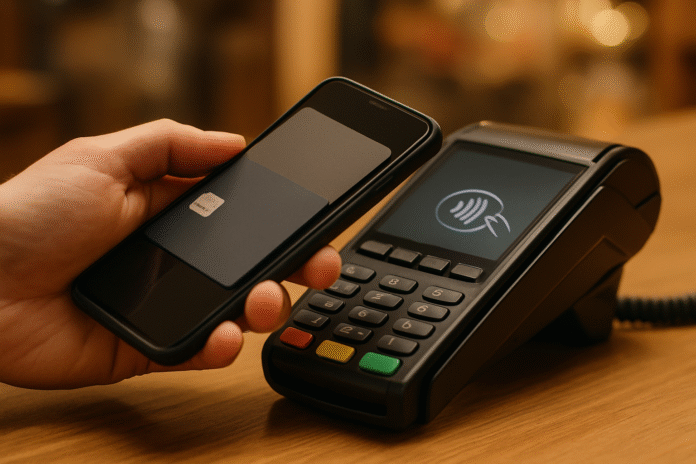
If you’ve ever wondered what actually happens when you insert a chip card, type a PIN, or just tap to pay, this guide breaks it down in plain English. You’ll learn how the chip creates a unique code for every purchase, when a PIN (or your phone’s biometrics) is required, why contactless is both fast and secure, and how limits and regional rules affect your checkout experience. This is practical, people-first guidance for everyday cardholders, small-business owners, and payments pros. For clarity: this article is general information, not financial advice.
Quick answer: Chip transactions use the EMV standard to generate a one-time cryptogram that proves the card is genuine and the data wasn’t tampered with. PIN, signature, or device biometrics verify you are the cardholder, while contactless uses near-field communication (NFC) to transmit the same secure EMV data at close range.
1. The Chip’s One-Time Codes: What Actually Happens in a Transaction
A chip card proves it’s real by generating a unique cryptogram each time you pay. That cryptogram—called an ARQC (Authorization Request Cryptogram)—binds together details like the amount, date, and terminal info so the issuer can detect tampering and counterfeit cards. After you insert or tap, the terminal collects transaction data, the chip calculates the ARQC, and the acquirer sends it across the network to your bank (the issuer). If the issuer verifies the cryptogram, it responds with an ARPC (Authorization Response Cryptogram), and the sale is approved if funds and other checks pass. This “dynamic data” is the core difference versus old magstripe transactions, which relied on static data that was easier to copy.
1.1 Why it matters
- Counterfeit defense: Dynamic, per-transaction cryptograms make cloned cards far harder to use than magstripe clones.
- Tamper detection: If the amount or terminal parameters are altered, the issuer’s verification fails.
- Interoperability: EMV specs are global; your chip card works in most countries and terminals that follow the standards.
1.2 Mini example (numbers)
Imagine a $27.45 grocery purchase. The chip uses its secret keys and a counter (the ATC) to compute an ARQC over $27.45 + terminal data + date/time. Your bank checks that the ARQC matches the expected value for that exact set of inputs; if yes (and funds are available), it returns an ARPC and authorization.
Synthesis: The chip’s cryptogram is the “one-time code” that makes EMV secure in face-to-face payments, replacing the weak static data of the magstripe era.
2. PIN, Signature, and CDCVM: How the Terminal Decides If You Must Verify Yourself
Whether you’re asked for a PIN, signature, or nothing at all depends on CVM (Cardholder Verification Method) rules loaded in the card and supported by the terminal. Options include online PIN, offline PIN, signature, no CVM, and CDCVM (consumer-device biometrics like Face ID/Touch ID). Merchants and networks also set CVM limits so small purchases can be faster (often “no CVM”), while higher amounts require PIN or other verification. On phones and watches, CDCVM often satisfies verification even for higher amounts because the device confirms you before sending the tap.
2.1 How CVM selection works
- The terminal reads the card’s/phone’s CVM capabilities.
- It checks amount vs. configured CVM limit(s) and terminal features.
- It picks the first supported method in the priority list that fits the scenario.
- For mobile wallets, CDCVM (biometrics or passcode) can fulfill the CVM requirement on-device.
2.2 Common pitfalls
- Assuming “chip = PIN only.” EMV supports PIN, signature, no CVM, and CDCVM—PIN is not mandatory everywhere. EMVCo
- Mismatched limits. Acquirers and merchants must configure terminals correctly for network CVM limits and local rules.
- Ignoring CDCVM. If a phone verifies you, asking for a terminal PIN can be redundant and increase friction.
Synthesis: CVM is flexible by design—small taps fly through, larger ones prompt PIN or use your device biometrics—balancing speed and fraud prevention.
3. Contact vs. Contactless: The Same EMV Security, Different Experience
Contactless uses NFC at 13.56 MHz over a very short range (typically under ~4 cm) to transmit EMV data without inserting the card. Under the hood, it’s still an EMV transaction with dynamic cryptograms and issuer checks; the difference is speed and user experience. Many terminals also implement Quick Chip or similar optimizations so you can dip briefly or remove a card sooner while the backend completes online authorization—reducing time at checkout without sacrificing security.
3.1 Numbers & guardrails
- Range: NFC contactless cards and devices operate at ~13.56 MHz and are intended for a few centimeters’ range.
- Online-only markets: In the U.S., contactless floor limits are typically set to zero, forcing online authorization.
- Speed helpers: Quick Chip lets you remove your card earlier while keeping standard EMV security.
3.2 Mini-checklist for merchants
- Enable EMV contactless in the terminal and payment gateway.
- Confirm CVM limits and CDCVM support in your settings.
- Keep firmware updated to current network/EMV guidance.
Synthesis: Contact and contactless both use EMV’s dynamic security; tapping just shortens the physical step while the same cryptographic checks run behind the scenes.
4. Tokenization and Mobile Wallets: Why Your Phone Uses a Different “Card Number”
When you add a card to Apple Pay, Google Pay, or a wearable, the wallet receives a payment token (a “device PAN” or DPAN) instead of your real card number. That token is domain-constrained—bound to a specific device, merchant, or use case—so it’s far less valuable if stolen. In every tap or in-app purchase, the token plus a per-transaction cryptogram are sent instead of the real PAN. If a retailer’s systems are compromised, attackers get limited-use data, not your primary account number. This is a major reason mobile wallets can reduce fraud exposure for both in-store and online transactions.
4.1 Why it matters
- Damage containment: Stolen tokens often can’t be reused outside their allowed context.
- Seamless CDCVM: Your device’s biometric unlock counts as cardholder verification for many transactions.
- Lifecycle control: Tokens can be suspended or replaced without reissuing your physical card.
4.2 Tools & examples
- Network token services (e.g., from card networks) handle token provisioning and lifecycle.
- Transit and in-app use domain-limited tokens tailored to that environment. EMVCo
Synthesis: Tokenization swaps sensitive card data for context-bound stand-ins, combining with EMV cryptograms and device biometrics for layered protection.
5. Online vs. Offline Authorization: What Gets Decided Where
EMV supports both offline and online authorization. In offline mode (still common at some transit gates or remote merchants), the terminal and card perform checks—like data authentication and risk parameters—without contacting the issuer, sometimes using SDA/DDA/CDA and offline PIN. In online mode (dominant in many regions and for contactless in the U.S.), the issuer verifies the ARQC and decides whether to approve. Terminals have floor limits to determine when they must go online. Even in offline scenarios, issuers can set strict risk parameters that push transactions online or decline them. downloads.acs.com.hk
5.1 Common mistakes
- Relying on offline where online is mandated: Some markets set contactless floor limits to zero; configure accordingly.
- Confusing offline PIN with CDCVM: Offline PIN is verified on the card; CDCVM is verified on the device (phone/watch). Priority Commerce
- Skipping updates: Network bulletins change parameters; keep kernels and configurations current. Visa
5.2 Mini example (transit gate)
A metro turnstile uses offline risk management for speed. It might approve small fares offline for known low-risk cards, while periodically forcing an online check or declining cards that exceed a risk threshold set by the issuer profile.
Synthesis: Knowing when transactions stay local versus go online helps explain why some taps are instant while others take a second—and why configuration matters.
6. Limits, Thresholds, and Rules: Why Some Taps Need a PIN (and Some Don’t)
Networks and regulators allow no-CVM for small amounts to keep lines moving, but above a CVM limit your terminal will prompt for PIN or accept CDCVM. Limits vary by country, network, and merchant configuration. In the EU/EEA, Strong Customer Authentication (SCA) under PSD2 sets specific low-value exemptions for contactless: single-transaction thresholds and cumulative caps that trigger additional verification after a series of taps. The U.S. model relies more on network CVM rules and often requires online authorization for every contactless transaction (floor limit = 0), while the UK historically set a £100 no-CVM limit—and, as of now, the FCA is consulting on scrapping the cap so issuers can set dynamic limits.
6.1 Region-specific notes
- EU/EEA: Contactless under €50 may skip SCA until you hit either €150 cumulative or five consecutive taps since the last SCA; then PIN/device verification is required.
- UK: No-CVM limit has been £100; regulators are evaluating removing the fixed cap to let issuers tailor limits by risk.
- U.S.: Readers usually force online authorization; network CVM rules and terminal settings control when PIN is needed.
6.2 Mini-checklist
- Confirm CVM limit settings with your acquirer and ensure CDCVM is enabled.
- Understand local SCA or network rules so staff aren’t surprised by intermittent PIN prompts.
- Review floor limits and “online-only” requirements for your market.
Synthesis: Limits keep small purchases fast and bigger ones safer; know your region’s thresholds and configure terminals to avoid unnecessary declines.
7. Fraud, Liability, and Trends: What the Data Says Now
EMV chips slashed counterfeit card fraud by replacing static magstripe data with dynamic cryptograms and pushing more checks to issuers. Liability for counterfeit card-present fraud largely shifted in 2015 to the party using the least secure tech (e.g., a non-chip merchant). At the same time, criminals pivoted toward card-not-present (CNP) and “remote purchase” fraud, which relies on stolen details used online. Recent UK data show high volumes of fraud cases with remote purchase a major driver, even as chip adoption keeps in-person fraud comparatively lower. This context explains why SCA, 3-D Secure 2, and tokenization are critical countermeasures for online shopping.
7.1 Numbers & signals (2024–2025)
- UK Finance: 3.31 million reported fraud cases in 2024; losses ~£1.17 billion; remote purchase fraud surged.
- Liability shift: Card networks moved counterfeit liability toward the least compliant party starting Oct 2015 in the U.S.
- Contactless growth: In 2024 the UK recorded 18.9 billion contactless transactions; average contactless ticket £15.86.
7.2 What it means for you
- For consumers: EMV and contactless are secure for face-to-face; enable alerts and use mobile wallets for token/biometric protection.
- For merchants: Keep terminals updated, enable contactless with CDCVM, and use fraud tools for e-commerce (3-D Secure 2, address and risk checks).
Synthesis: Chip and PIN reduced counterfeit fraud at the point of sale, but attackers shifted online—so extend your defenses to CNP with SCA, 3DS, and tokens.
8. Merchant & Consumer Hygiene: Configurations and Controls That Actually Matter
Security is a stack: EMV cryptograms, PIN/CDCVM, tokenization, and PCI DSS data-handling controls all work together. For merchants, PCI DSS v4.0/4.0.1 emphasizes continuous security, better risk assessments, and clear scoping—especially crucial if your systems ever touch PAN data. For consumers, card controls, alerts, and wallet tokens reduce exposure if a retailer suffers a breach. Small technical choices—like setting contactless floor limits to online, enabling CDCVM, and maintaining firmware—significantly lower risk without slowing checkout.
8.1 Merchant checklist
- Stay current on PCI DSS v4.0.1 clarifications; no new requirements vs. 4.0, but guidance and wording were refined in 2024.
- Enable contactless + CDCVM and review CVM limits with your acquirer.
- Set floor limit to online if required in your region—U.S. readers typically use zero.
- Keep Quick Chip/contactless firmware up to date to reduce friction and errors.
8.2 Consumer checklist
- Use mobile wallets (Face ID/Touch ID) for in-store and in-app purchases; tokens and CDCVM add extra layers.
- Turn on purchase alerts and card controls in your banking app to catch misuse quickly.
- Prefer chip/tap over swiping magstripe, which uses static data.
Synthesis: Good configurations and habits amplify EMV’s built-in security, keeping payments smooth for buyers and safer for sellers.
9. Edge Cases and Troubleshooting: Fallbacks, Offline PIN, and Travel Tips
Sometimes you’ll see odd prompts or declines. Magstripe fallback occurs when a chip read fails; terminals may allow a swipe, but the transaction can carry higher fraud risk or liability. Offline PIN—where the PIN is checked on the card—still appears in some markets and may not be supported for contactless due to security concerns; many systems prefer online PIN or CDCVM. Travelers may meet offline approvals at transit gates or rural merchants; your bank’s risk controls can force periodic online checks. If taps or dips fail repeatedly, cleaning the card, trying a different terminal, or using your phone wallet (token + CDCVM) can save the day.
9.1 Common scenarios
- Chip read errors → fallback: Terminals can permit magstripe fallback after multiple failed dips; review your device guide for rules and liability notes.
- “Enter PIN” after many taps: You may have hit the cumulative exemption threshold (EU/UK) or local CVM limit; SCA or CDCVM clears it.
- Contactless declines at restaurants: Some verticals hold an estimated amount; if the final total exceeds setup, the terminal may re-prompt for CVM or require dip.
9.2 Mini travel tips
- Carry at least one chip card plus your phone wallet.
- Know your card’s overseas PIN behavior (some U.S. credit cards are signature-preferring).
- Expect offline approvals in metro systems and small shops; keep funds available for periodic online checks.
Synthesis: When in doubt, try a different interface (tap → dip → wallet), and remember that prompts often reflect sensible risk controls—not a broken card.
FAQs
1) Is contactless really as secure as dipping the chip?
Yes. Contactless card and mobile wallet taps still run EMV with dynamic, per-transaction cryptograms, and issuers verify the data before approving. Mobile wallets add tokenization and on-device biometrics, so your real PAN isn’t shared with merchants. Keep terminals updated and require online authorization where applicable.
2) Why am I sometimes asked for a PIN after several small taps?
In the EU/EEA and UK, PSD2 SCA low-value contactless exemptions allow a series of small transactions without SCA, but after €150 cumulative or five consecutive taps, extra verification is required. Your issuer can also set stricter rules. Using a mobile wallet with CDCVM usually satisfies the verification.
3) What’s the difference between online and offline PIN?
Offline PIN is checked by the card itself, useful when connectivity is limited; online PIN is verified by the issuer during authorization. Many markets favor online PIN or device biometrics (CDCVM) for contactless. Offline PIN behavior can vary by country and card type. Royal Holloway Research Portal
4) What exactly is an ARQC?
The Authorization Request Cryptogram is a one-time code generated by your chip (or wallet token) that binds the amount, terminal, and other data. The issuer verifies it to confirm the card is genuine and the data unchanged. If valid, the issuer replies with an ARPC to complete authorization.
5) Do contactless transactions have a maximum amount?
There’s no single global cap. Networks and countries define CVM limits for “no-CVM” taps; above those, you’ll be asked for PIN/verification. The U.S. typically enforces online authorization for every contactless transaction (reader floor limit = zero). Always follow your acquirer’s configuration guidance. Visa
6) Are mobile wallets safer than using the physical card?
Mobile wallets replace your PAN with a device-bound token and use biometrics before each tap, so stolen merchant data is less useful to attackers. If you lose the device, you can revoke tokens without replacing the physical card, reducing downtime and risk.
7) What is the liability shift and does it still matter?
Since Oct 2015 in the U.S., counterfeit card-present fraud liability generally falls on the party with the least secure technology (e.g., a non-chip terminal). It still matters—using chip/contactless appropriately helps avoid chargebacks and losses tied to counterfeit fraud. Bureau of the Fiscal Service
8) Why do restaurants sometimes ask to insert instead of tap?
Some environments need to adjust totals (tips, add-ons) or have specific risk and CVM configurations. If the terminal can’t complete the flow with a tap (for example, due to limits or pre-auth requirements), it may request a chip insert or PIN. Enabling CDCVM and correct CVM limits reduces unnecessary prompts.
9) How close do I need to tap? Can someone skim me from far away?
Contactless is designed for very short range—a few centimeters at 13.56 MHz—and terminals power the field. Practical skimming from afar isn’t how retail compromises happen; most risk comes from online theft of card data, not long-distance NFC reads. Use wallets and alerts for additional peace of mind.
10) What are the key merchant steps for 2025?
Update to current Visa/Mastercard deployment guidance, enable contactless + CDCVM, verify CVM limits and online-only settings where required, and maintain PCI DSS v4.0/4.0.1 controls. If you sell online, add 3-D Secure 2 and tokenization to push back on remote-purchase fraud.
Conclusion
Chip, PIN, and contactless payments are all facets of the same EMV security model built for today’s point-of-sale reality. The chip’s per-transaction cryptogram neutralizes counterfeit attempts; PIN, signature, or CDCVM make sure it’s really you; and contactless shortens the physical step without reducing protection. Regional rules like PSD2 SCA and network CVM limits are there to balance speed with fraud defenses, which is why you’ll occasionally see a PIN prompt after a handful of small taps. For merchants, the big levers are proper terminal configuration, online authorization where required, and staying current with PCI DSS and network bulletins. For consumers, mobile wallets, alerts, and preferring chip/tap over swipes keep daily payments both fast and safe.
Put simply: if you configure terminals well and use modern wallets, you get the best of both worlds—speed at checkout and layered security.
CTA: Enable contactless with CDCVM, verify your CVM limits, and turn on purchase alerts today.
References
- EMV® Chip At-a-Glance, EMVCo, 2022, EMVCo
- EMV® Payment Tokenisation – Technical QRG, EMVCo, Oct 2024, EMVCo
- Payment Tokenisation (Overview), EMVCo, 2025, EMVCo
- CDCVM: Promoting Security, Reliability and Convenience, EMVCo, Oct 2020, EMVCo
- ISO 14443 Contactless Card Standard, Thales, 2023, Thales Group
- Visa EMV Chip Media FAQ, Visa, 2018, Visa
- Transaction Acceptance Device Guide, Visa, Aug 2025, Visa
- Quick Chip for EMV (Guide), Visa, 2016, Visa
- Contactless Toolkit for Merchants, Mastercard, 2016, Mastercard
- PCI SSC: Just Published PCI DSS v4.0.1, PCI Security Standards Council, Jun 11 2024, PCI Perspectives
- EBA Single Rulebook Q&A (2018_4182): Contactless SCA Limits, European Banking Authority, Oct 11 2019, European Banking Authority
- Britain sees 12% spike in fraud cases…, Reuters, May 27 2025, Reuters
- £1 trillion worth of UK card transactions in 2024, UK Finance, 2025, UK Finance
- FCA plan to scrap contactless card limits (reporting), Financial Times, Sep 2025, Financial Times
- Verify an EMV ARQC and generate an ARPC (Issuer guide), AWS Docs, 2024, AWS Documentation