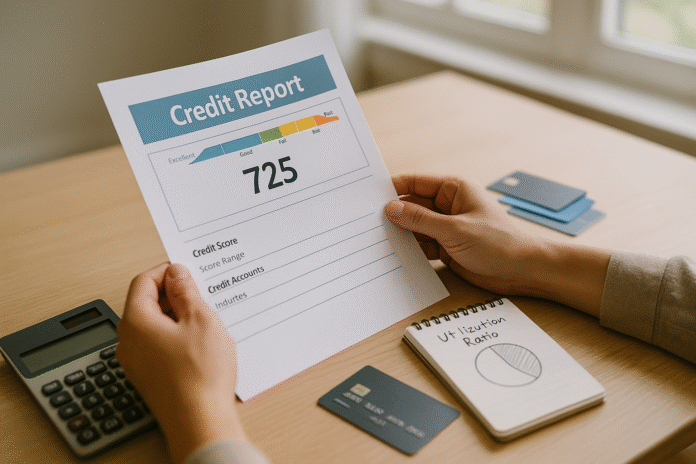
You’ve probably heard a dozen conflicting rules about credit—but not all of them are true. This guide tackles the most common misunderstandings head-on so you can protect (and improve) your score with confidence. It’s for anyone who has ever wondered if checking their own report hurts, whether closing a card helps, or if carrying a balance is “good.” Quick answer up front: your credit score reflects the information in your credit reports; the biggest drivers are on-time payments and how much of your available credit you use. Everything else—income, bank balance, and even checking your own reports—doesn’t directly factor into most credit scores. This article is educational, not financial advice.
1. Checking Your Own Credit Hurts Your Score
It doesn’t. Pulling your own credit report or score is a soft inquiry, which isn’t visible to lenders and has no impact on your credit scores. That includes getting your free reports from AnnualCreditReport.com, using a bank’s in-app score, or ordering a report to monitor for errors. In fact, regularly reviewing your reports is one of the best ways to spot mistakes and identity-theft red flags early. You can now access free weekly credit reports from all three major bureaus—an easy habit that helps you catch problems before they cost you points or money. If you see an error, dispute it promptly; the bureaus are required to investigate and correct verified inaccuracies. Soft vs. hard checks often gets muddled: pre-qualification offers and your own checks are soft; applications for new credit are hard pulls that can slightly affect scores.
1.1 Why it matters
- Monitoring helps you detect inaccurate late payments, duplicate collections, or mixed-file errors.
- Early disputes can prevent score damage ahead of a mortgage or auto loan.
- Weekly access (free) removes the excuse to “set it and forget it.”
1.2 Mini-checklist
- Pull all three reports (Experian, Equifax, TransUnion).
- Verify personal info, open/closed accounts, balances, and payment history.
- Dispute inaccuracies with documentation (statements, confirmations).
- Set a quarterly reminder—even if nothing seems wrong.
Bottom line: Check your credit as often as you like; it won’t hurt your score and it can only help.
2. Carrying a Credit Card Balance Helps Your Score
No—paying in full is best. The confusion here is between “carrying a balance” (letting charges roll and paying interest) and “having activity” (making purchases, then paying them off). Scoring models don’t reward interest payments; they look at whether you pay on time and how much of your credit you’re using (your utilization ratio). Lower utilization is generally better. If your statement cuts with a balance that’s 10% of your limit and you pay it in full by the due date, you’ll likely score better than if you carried that balance month to month. Carrying balances costs interest and can nudge utilization upwards right when lenders check your report.
2.1 Numbers & guardrails
- Utilization = statement balance ÷ credit limit.
- Common guardrail: keep each card and total utilization under ~30%, and lower if you can.
- Example: $300 balance on a $3,000 limit = 10%—healthy territory.
2.2 How to do it
- Time payments before statement close to report a lower balance.
- Ask for a limit increase (if it won’t trigger a hard pull) to reduce utilization.
- Spread purchases across cards to avoid one card spiking above 30%.
Bottom line: Interest payments don’t earn points—on-time, low-utilization payments do.
3. Income and Debt-to-Income (DTI) Drive Your Credit Score
Your income and DTI don’t directly factor into standard FICO® Scores or VantageScore®. Those models use only what’s in your credit reports, not your salary or employer. Lenders do look at income and DTI during underwriting (to decide how much credit to extend or whether to approve you), but the score itself is built from things like payment history, amounts owed, length of credit history, new credit, and credit mix. Practically, someone earning $45,000 can have an 800 score, and someone earning $450,000 can have a 620—because scores track behavior with credit, not wealth.
3.1 Why it matters
- Don’t assume a raise equals a score boost; focus on report-based habits.
- High debt can hurt your score indirectly via utilization and missed payments—even if your DTI is acceptable to a lender.
- Underwriting ≠ scoring: great score + high DTI can still be declined.
3.2 Mini-checklist
- Track utilization monthly.
- Automate minimums to avoid accidental lates.
- If DTI is high, pay down revolving balances first—those influence utilization most.
Bottom line: Lenders may care about income and DTI; score models don’t. Keep attention on the factors they do use.
4. One Late Payment Isn’t a Big Deal
Even one 30-day late can dent your scores, and the effect can be significant—especially on otherwise clean files. Lates are usually reported once you’re 30+ days past due (a few days late typically triggers a fee but not a bureau report). The later it gets (60, 90 days), the worse. Most negative information, including late payments, can remain on your reports for seven years from the first delinquency date. The good news: impact fades over time if you return to on-time habits, and a single slip on an otherwise excellent file may heal faster.
4.1 Numbers & guardrails
- Payment history is the largest FICO factor (about 35%).
- Late payments can be reported at 30 days past due; aim to pay before the due date, not on it.
- Set autopay for at least the minimum + a calendar reminder five days before.
4.2 If you’re already late
- Pay asap to prevent a 60- or 90-day hit.
- Call the issuer and ask for a courtesy removal of a fee if you’re a long-time on-time customer.
- If misreported, dispute with evidence (bank confirmation, cleared check).
Bottom line: Don’t test the “one late won’t matter” myth—on-time, every time is the single best credit habit.
5. Closing a Credit Card Always Helps Your Score
Often the opposite. Closing a card can raise your utilization (by shrinking your total available credit) and may shorten your average account age over time—both can weigh on scores. If you’re closing to avoid an annual fee, consider a product change to a no-fee option from the same issuer so the account stays open and history intact. If you must close, make sure your other limits and balances keep utilization low.
5.1 How to minimize score impact
- Pay balances down before closure to keep total utilization low.
- Ask for a product change rather than closing outright.
- Keep your oldest card open if possible; age helps.
5.2 Example
If you have two cards with $5,000 limits each ($10,000 total) and a combined $2,000 balance, your utilization is 20%. Close one card and it jumps to 40%—a potential score hit until you pay balances down.
Bottom line: Closing a card can be fine for fees or simplicity, but plan around utilization and account age.
6. Paying a Collection Makes It Vanish From Your Reports
Paying collections is smart, but it doesn’t erase history overnight. Collection accounts can remain for up to seven years from the original delinquency date, even after you pay. That said, newer score models treat paid collections more leniently: FICO® 9 and FICO® 10 ignore paid collections, and VantageScore 3.0/4.0 exclude them as well. Medical debt is changing even more: the nationwide bureaus removed paid medical collections and medical collections under $500, and in January 2025 the CFPB finalized a rule to ban medical bills from credit reports used by lenders. Lenders and industries adopt models and rules at different speeds, so your results can vary until transitions are complete.
6.1 Action steps
- Ask collectors to update to “paid” promptly and keep proof.
- Verify the first delinquency date—that starts the 7-year clock.
- For medical bills, check whether the debt should appear at all under current policies/rules.
6.2 Mini-case
You pay a $900 collection. Your reports still show a collection tradeline (status: paid), but scores built on FICO 9/10 or VantageScore 3.0/4.0 won’t count it—while older models might. Over time, the impact lessens either way.
Bottom line: Paying helps, but removal depends on the model and evolving medical-debt rules—know which versions your lender uses. Consumer Financial Protection BureauExperianmyFICO
7. All Credit Scores Are the Same
They’re not. “Credit score” is a family of models—not a single number. FICO and VantageScore are the most common, and each has multiple versions (FICO 8, 9, 10T; VantageScore 3.0, 4.0). Lenders in different industries prefer different versions, and mortgage underwriting has been shifting: the FHFA has approved newer models (FICO® 10T and VantageScore® 4.0) for loans sold to Fannie Mae/Freddie Mac, with staged implementation. That’s why your bank app’s score may not match the score a mortgage lender uses. Ranges often look similar (300–850), but inputs and weighting can differ (e.g., paid collections treatment, trended data).
7.1 Why it matters
- Expect variation across apps and lenders—it’s normal.
- Ask lenders which score/version they’ll use so you can set expectations.
- Improvement strategies (on-time payments, low utilization) are model-agnostic.
7.2 Quick glossary
- FICO 10T: Incorporates trended data (how balances change over time).
- VantageScore 4.0: Uses broader data and complex analytics; widely used for consumer credit and expanding in mortgages.
Bottom line: Different models, different numbers—focus on healthy habits that work across versions and know which score a lender will pull. FHFA.gov
8. Shopping for a Loan Will Tank Your Score
Rate-shopping is built into many scoring models. Multiple hard inquiries for the same loan type (mortgage, auto, student loans) within a defined window are treated as one inquiry for scoring. With current FICO versions, that window can extend up to 45 days; VantageScore uses about a 14-day rolling window. Practically, you can (and should) compare offers—just cluster applications tightly and avoid mixing different credit types. Credit cards are the exception: multiple card applications are typically counted separately, so pace those.
8.1 How to shop smart
- Plan applications within a 14–45 day window, depending on model.
- Keep documentation consistent (same loan type/amount).
- Use pre-qualification first when available—those are soft checks.
8.2 Example
Apply with five mortgage lenders over two weeks: scoring models treat those as a single inquiry, limiting the impact while you secure the best terms.
Bottom line: Shop deliberately and within the window—your score won’t “crash” for being a smart consumer. Consumer Financial Protection BureaumyFICO
9. Debit, Utilities, and Rent Never Help Your Credit
Traditionally, no—because those bills weren’t routinely reported. But this is changing. Certain programs now allow positive rent and utility data to be added to your reports or used in underwriting. Examples include Experian Boost® (telecom/utility/rent data added to your Experian file) and positive rent payment features that Fannie Mae’s Desktop Underwriter can consider when you apply for a mortgage (with your permission). Not every lender uses these data, and reporting coverage varies by bureau and landlord, so manage expectations. Still, for thin-file consumers, verified on-time rent or utility history can help.
9.1 Tools & paths
- Experian Boost®: opt-in; can add utility/telecom/rent payments to your Experian file.
- Rent reporting services: some property managers and third-party services report to one or more bureaus.
- Mortgage underwriting: newer systems can factor verified positive rent history.
9.2 Guardrails
- Missed payments that get sent to collections can hurt, just like any other debt.
- Confirm which bureaus receive the data; not all services report to all three.
Bottom line: Debit activity doesn’t build credit, but verified rent/utility reporting and certain programs can—especially for thin files.
10. You Need to Carry Debt to Build Credit
You don’t need to be in debt to build credit—you need reported, on-time payments. You can build history by using a card for small purchases and paying in full every month, becoming an authorized user on a well-managed card, opening a secured card, or using a credit-builder loan (where payments are reported and you receive the funds at the end). These approaches establish a track record without long-term interest costs.
10.1 Options that work
- Secured card: refundable deposit becomes your limit; ensure it reports to all three bureaus.
- Credit-builder loan: payments reported monthly; funds released after you’ve paid in.
- Authorized user: piggyback on someone’s good history (choose wisely).
10.2 Evidence snapshot
A randomized CFPB study found credit-builder loans helped consumers without existing loans establish scores and increase them more than peers, and even boosted savings balances on average.
Bottom line: Use credit; don’t carry expensive debt. Responsible activity + on-time payments builds credit efficiently. Consumer Financial Protection Bureau
11. Disputing Errors Is Pointless or Too Hard
You have clear rights under the Fair Credit Reporting Act (FCRA) to dispute inaccurate information, and bureaus must investigate. Today, filing disputes is straightforward online or by mail. Many consumers see corrections or deletions when they provide documentation. And because negative marks can legally remain up to seven years (ten for some bankruptcies), fixing an error promptly can spare years of damage. With free weekly reports, you can monitor progress and follow up if needed.
11.1 How to dispute effectively
- Gather proof (payment confirmations, letters, identity-theft reports).
- Dispute with the bureau and the furnisher (bank/collector).
- Keep copies; follow up within 30–45 days.
11.2 What to expect
- Accurate negative info generally cannot be removed early; patience and positive new history matter.
- Duplicate accounts, mixed files, or misreported lates are commonly corrected when supported by evidence.
Bottom line: Disputes work when you have evidence; use your FCRA rights and the now-permanent weekly free reports to stay on top of errors.
12. A Credit Freeze Hurts Your Score
It doesn’t. A security freeze blocks new creditors from accessing your file without your consent, which helps prevent fraudulent accounts. It has no effect on your existing accounts or your credit scores. If you plan to apply for new credit, you can temporarily lift (thaw) the freeze online or via the bureau apps and then reinstate it afterward. Freezes are free, and you can set one with each bureau separately.
12.1 Quick steps
- Place freezes at Equifax, Experian, TransUnion.
- Store your PINs/passwords securely for easy temporary lifts.
- Thaw for a specific creditor or time window when applying.
12.2 When to use
- After a data breach or identity-theft alert.
- Anytime you want to reduce the risk of unauthorized new accounts.
Bottom line: Freezes protect you from new-account fraud and don’t touch your score. Consumer Financial Protection Bureau
13. Paying Off a Loan Early Always Hurts Your Score
Paying off an installment loan early can cause a small, temporary dip because you’re closing an active account and potentially reducing your credit mix—but it doesn’t “harm” your credit long-term, and it saves interest. Many borrowers see little to no meaningful change, and continued on-time payments on other accounts offset any short-term movement. If paying early will strain your cash flow or trigger prepayment penalties, weigh the trade-offs. Otherwise, eliminating interest and lowering risk is often worth a brief wobble.
13.1 When early payoff makes sense
- You’re paying high interest and have emergency savings.
- No prepayment penalty; the loan is your only high-rate debt.
- You won’t drop below a lender’s minimum age-of-credit threshold for a near-term application.
13.2 Guardrails
- Keep at least one open, well-managed account to maintain active history.
- Time payoffs after big applications if you’re worried about short-term dips.
Bottom line: Early payoff can nudge scores briefly but often improves your overall finances—plan timing and keep other accounts healthy.
FAQs
1) What matters most in a credit score?
For FICO scores, payment history and amounts owed/utilization carry the most weight, followed by length of history, credit mix, and new credit. Exact weights vary by model, but the principles hold: pay on time, keep balances low, and avoid opening lots of accounts in a short period.
2) How low should my credit utilization be?
There’s no magic cutoff, but many experts and consumer agencies point to below ~30% as a practical ceiling, with lower generally better. Remember: utilization is calculated at statement time, so paying before the statement closes can help what gets reported. Consumer Financial Protection Bureau
3) Do soft inquiries ever show to lenders?
No. Soft inquiries (your own checks, pre-qualification, some account reviews) don’t affect your score and are visible only to you on your report. Hard inquiries (applications) are visible to lenders and can have a small, temporary impact.
4) How long do negative items stay?
Generally up to seven years for late payments and collections; ten years for Chapter 7 bankruptcy. The clock starts at the original delinquency date, not when a collector buys the debt. Impact wanes over time with positive behavior.
5) What’s the current status of medical debt on credit reports?
Paid medical collections and those under $500 have been removed by the bureaus. In January 2025, the CFPB finalized a rule to ban medical bills from credit reports used by lenders. Implementation and adoption timelines vary by product and lender, so verify what a given lender uses.
6) Is it okay to open a new card before a big loan?
Be cautious. A new card can help utilization but also adds a hard inquiry and new account, which may trim points short-term. If a mortgage or auto loan is imminent, consider waiting; otherwise, a well-timed new line that you use lightly can be helpful.
7) Do married couples share one credit score?
No. Credit files are individual. Joint accounts affect both spouses’ scores, but marriage itself doesn’t merge files. If you apply together, lenders will consider both scores. Consumer Financial Protection Bureau
8) Can rent and utilities really help my score?
Yes—if reported or used by a specific underwriting model. Programs like Experian Boost® and positive rent payment history features in mortgage underwriting can help thin files. Not all lenders or bureaus use these data, so results vary.
9) What’s the safest way to shop rates without hurting my score?
Cluster applications within the rate-shopping window (up to 45 days under current FICO versions; 14 days under VantageScore), and keep them to the same loan type. Use pre-qualification first when possible.
10) Where do I get legitimate free reports?
Use AnnualCreditReport.com, the only site authorized by federal law to provide free reports. As of now, free weekly pulls are available from all three bureaus.
Conclusion
Most credit score mistakes come from mixing up what lenders care about with what score models actually measure. Models read your reported behavior: paying on time, using a small slice of your limits, keeping accounts stable, and applying thoughtfully. They ignore your salary, your checking account balance, and whether you checked your own report yesterday. The myths in this guide—carrying balances, closing old cards, skipping disputes, fearing freezes, and avoiding essential rate-shopping—can cost you real money if you follow them blindly. Instead, use the playbook that works across models: automate on-time payments, keep utilization comfortably low, hold onto well-aged accounts, and monitor your reports routinely so errors don’t linger.
If you’re rebuilding, lean on secured cards, credit-builder loans, and legitimate rent/utility reporting to add positive history without expensive debt. If you’re optimizing, time applications, consider product changes over closures, and verify exactly which score a lender will use so you can set expectations. Above all, be consistent; strong credit is the compound interest of good habits. Next step: Pull your three free reports today, fix what’s wrong, and put autopay on everything due.
References
- How are FICO Scores Calculated? myFICO (n.d.). myFICO
- Does requesting my credit report hurt my credit score? Consumer Financial Protection Bureau, May 14, 2024. Consumer Financial Protection Bureau
- Will paying off my credit card balance every month improve my credit score? CFPB, Jan 29, 2024. Consumer Financial Protection Bureau
- Does it hurt my credit to close a credit card? CFPB, Jan 14, 2025. Consumer Financial Protection Bureau
- Do Credit Inquiries Lower Your FICO Score? myFICO (n.d.). and How Does Rate Shopping Affect Your Credit Scores? Experian, Apr 18, 2023. https://www.experian.com/blogs/ask-experian/how-does-rate-shopping-affect-credit-score/ and Thinking About Applying for a Loan? Shop Around… VantageScore, Dec 8, 2023. https://vantagescore.com/resources/knowledge-center/thinking-about-applying-for-a-loan-shop-around-to-find-the-best-offer myFICOExperian
- How long does negative information remain on my credit report? CFPB, Jun 6, 2023. Consumer Financial Protection Bureau
- How Do Collections Affect Your Credit? myFICO (n.d.). and Can Paying Off Collections Raise Your Credit Score? Experian, Oct 19, 2023. https://www.experian.com/blogs/ask-experian/can-paying-off-collections-raise-your-credit-score/ myFICO
- CFPB Finalizes Rule to Remove Medical Bills from Credit Reports. CFPB, Jan 7, 2025. and Equifax, Experian and TransUnion Remove Medical Collections Debt Under $500… TransUnion Newsroom, Apr 11, 2023. https://newsroom.transunion.com/equifax-experian-and-transunion-remove-medical-collections-debt-under-500-from-us-credit-reports/ Consumer Financial Protection Bureau
- What is a credit inquiry? CFPB, Sep 11, 2025. Consumer Financial Protection Bureau
- You now have permanent access to free weekly credit reports. FTC, Jan 4, 2024. and AnnualCreditReport.com (official site). https://www.annualcreditreport.com/index.action Consumer Advice
- Positive Rent Payment Reporting (DU 12.0). Fannie Mae, 2025. and What Is Experian Boost? Experian, Jul 31, 2025. https://www.experian.com/blogs/ask-experian/what-is-experian-boost/ Fannie Mae Single-Family
- What’s not in my FICO Scores? myFICO (n.d.). myFICO
- How to rebuild your credit. CFPB, Jun 24, 2025. Consumer Financial Protection Bureau
- Does paying off a car loan early hurt your credit? Experian, Mar 24, 2025. Experian