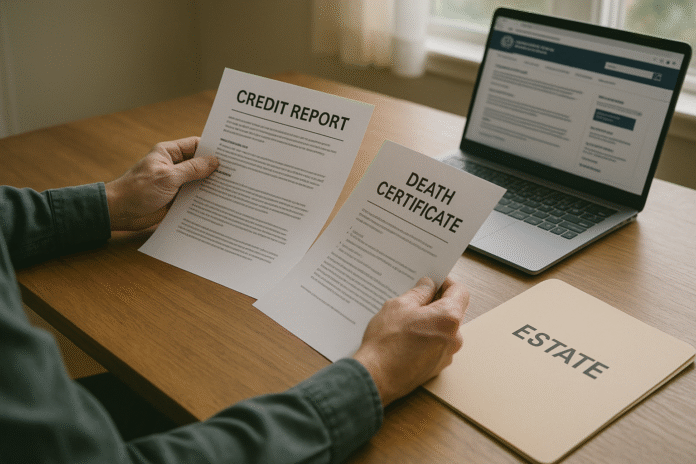
Losing a loved one is hard; untangling their finances shouldn’t make it harder. This guide walks executors, personal representatives, and family caregivers through estate credit management: repairing credit after death of owner, preventing fraud, correcting records, and paying only what the law requires. You’ll learn exactly who to notify, how to get and read the decedent’s credit reports, what to dispute, and how to coordinate claims and payments in probate. In one line, here’s the core answer: estate credit management means securing and correcting the decedent’s credit files, stopping misuse, and settling legitimate debts in the order the law requires so the estate can be closed efficiently.
Before we start, a quick, plain-language disclaimer: this is general information, not legal, tax, or financial advice. Laws vary by state and change over time. When in doubt, speak with a qualified probate attorney or tax professional.
Fast path overview — the 12 steps
- Prove authority and collect documents
- Lock down identity and get credit reports
- Map all accounts and addresses
- Stop autopays and block misuse
- Notify creditors and card issuers the right way
- Prioritize and pay claims per state law
- Dispute errors and fight fraud
- Handle student loans and special debts
- Fix reporting after payments
- Manage collectors and communications
- Prevent ongoing identity theft
- Close out records, taxes, and timelines
1. Prove your authority and assemble the right documents
The first move is to establish that you’re legally allowed to act, then gather the paperwork that opens doors with agencies, banks, and credit bureaus. Start by confirming your role as personal representative (executor or administrator) through the probate court and obtaining certified copies of the death certificate. Next, notify the IRS that you’re the fiduciary by filing Form 56 (Notice Concerning Fiduciary Relationship) and review IRS Publication 559 to understand your filing duties; you may also need an Employer Identification Number (EIN) for the estate. Having these items on hand lets you request the decedent’s credit reports, speak to creditors, and redirect mail without delays. Commit to building a master folder; you’ll reference it constantly as you repair and close out credit records.
1.1 What to gather first (mini-checklist)
- Court appointment papers (letters testamentary/administration).
- Certified death certificates (order several).
- Government IDs for you and the decedent.
- IRS Form 56 acknowledging your fiduciary role; keep the stamped copy.
- Estate EIN (if needed for banking/tax filings) and a dedicated estate bank account.
- A single, secure place to store originals and a cloud folder for scans.
1.2 Common mistakes
- Calling banks or bureaus before you have court papers—expect roadblocks.
- Mixing personal and estate funds—use the estate account for all receipts/payments.
- Forgetting to notify the IRS early (Form 56), which can delay tax notices and refunds.
Wrap-up: Authority and documents are the key that unlocks every other step; get them right and everything downstream goes faster.
2. Lock down the decedent’s identity and request credit reports
Protecting the decedent’s identity is the fastest “repair” you can make because it prevents new fraud before it starts. First, confirm the death is reported to Social Security (the funeral director often does this automatically), which then propagates to other systems. Next, notify at least one nationwide credit bureau (TransUnion, Equifax, or Experian) to place a “deceased” indicator and request the decedent’s credit report; bureaus share death notices with each other, but contacting one directly can be faster. At the same time, set up USPS mail forwarding for the deceased and reduce junk prescreened offers, which are a common fraud vector.
2.1 How to do it
- Report to SSA (or confirm it was reported): contact your local SSA office; funeral homes typically file the report.
- Notify the credit bureaus and request the report: follow TransUnion’s deceased reporting instructions (they’ll notify the other two), and Equifax’s policy for spouses/executors requesting reports.
- USPS mail: go in person with proof of your appointment to forward the deceased person’s mail.
- Prescreened offers: opt out via the industry system (OptOutPrescreen) or phone.
2.2 Numbers & guardrails
- Bureaus mark files “deceased – do not issue credit” to deter new accounts.
- SSA reports are typically made by funeral homes; verify to avoid benefit overpayments.
Synthesis: Lock identity, get the reports, and reroute mail—now you can see the full picture and reduce new risks.
3. Map every account, address, and recurring payment
The decedent’s credit reports are your master index for open accounts, but don’t stop there. Cross-reference bank statements, tax returns, email, and physical mail to catch utilities, subscriptions, insurance, and any accounts that don’t always report to bureaus. Build a ledger showing creditor names, account numbers, balances, payment status, and whether the account is joint, individual, or authorized user. This ledger guides who to contact, what to close, what to keep temporarily (e.g., utilities at an occupied home), and where disputes may be required. Creating a complete map is the backbone of estate credit management: repairing credit after death of owner depends on finding everything first.
3.1 Mini-checklist (3–7 essentials)
- Extract all accounts from credit reports and recent bank/credit statements.
- Flag autopays and ACH debits (mortgage, insurance, utilities, subscriptions).
- Note any collection accounts, charge-offs, or data mismatches.
- Separate joint vs authorized user relationships (important for liability).
- List due dates and minimums to avoid avoidable fees during administration.
3.2 Tools/Examples
- Spreadsheet or estate-settlement software with columns for status, notes, and next actions.
- Use your mail forwarding to catch stragglers like medical bills or HOA dues.
Bottom line: inventory beats surprises—your ledger is what keeps the process calm and controlled.
4. Stop autopays and block misuse without freezing legitimate estate activity
Fraudsters target estates during the transition period, and autopays can drain accounts you’ll need for court costs and taxes. Move quickly to revoke authorizations for automatic debits and, where necessary, issue bank stop-payment orders under federal rules. For credit cards, once you notify the issuer of the death, they should cut off new charges and cooperate with the estate. You’re not trying to “freeze” the decedent’s credit score (there isn’t one after a true deceased indicator); you’re shutting down leakage and misuse so you can settle properly.
4.1 How to do it
- Autopays/ACH: revoke authorization with the merchant and notify the bank; banks must block future payments once authorization is revoked (Reg E). Consumer Financial Protection Bureau
- Card accounts: notify the issuer; they should disclose balances and limit trailing interest/fees once the estate requests a payoff amount.
- Authorized users should stop using the card immediately; liability is generally not theirs, but new charges after death can create problems.
4.2 Numbers & guardrails
- Federal rules require card issuers to provide the balance within 30 days of the estate’s request and restrict new fees/interest thereafter.
- Banks must honor stop-payment orders and revocations of authorization for future debits.
Takeaway: plug the leaks first—then you’ll have the runway to handle claims in order.
5. Notify creditors and card issuers the right way (and stop junk fees)
After you secure accounts, notify each creditor with your appointment papers and death certificate. Ask for final balances and itemized statements, and request they note the file as “deceased—estate contact only.” For credit cards, Regulation Z §1026.11(c) provides a roadmap: after you (the administrator) request the balance, issuers must provide it timely and stop adding most fees/penalty interest while the estate pays. Document everything; accurate logs make disputes and negotiations faster.
5.1 Mini-checklist for each notice
- Your name and contact, estate case number, and authority (attach letters + death certificate).
- Request: “Provide payoff as of [date], cease further fees/penalties per 12 CFR 1026.11.”
- Ask for written confirmation the account is coded “deceased” and that no new credit will issue.
5.2 Common mistakes
- Paying unsecured debts before court costs, taxes, and last-illness expenses (see Step 6).
- Allowing collectors to speak with family members not involved with the estate—keep communication centralized to avoid confusion.
Summary: precise notices prevent balance creep and keep you in control of the timeline.
6. Prioritize and pay claims in the order state law requires
Not all debts are equal in probate. States using versions of the Uniform Probate Code classify claims—administration costs first, then funeral expenses, debts/taxes with federal preference, last-illness medical, and so on. If there isn’t enough money to pay everyone, lower-priority creditors may get partial payment or none. Before writing checks, learn your state’s order and the deadlines for creditor claims. Many states set a claims window of about 3–6 months after notice, but it varies; missing this step can lead to personal liability for the representative or needless overpayment.
6.1 Why it matters (with examples)
- Order of payment: Maine, Arizona, Massachusetts, and other UPC states codify a specific sequence; follow it to the letter.
- Deadlines: claim periods often run months from first publication/mailed notice; check local statute.
- Federal tax claims: federal law can control priority where state and federal law conflict. IRS
6.2 Mini-checklist
- Publish and mail required creditor notices; track statutory dates.
- Segregate classes of claims and pay in order; prorate within a class if short.
- Retain reserves for taxes, disputed claims, and late medical bills.
Bottom line: paying in the right order is credit repair—because it prevents avoidable collections and litigation later.
7. Dispute errors, bogus balances, and identity theft
Estates often inherit credit report errors: duplicates, paid accounts showing as open, medical collections that shouldn’t be there, or even post-death identity theft. Use the decedent’s credit reports to spot issues and dispute in writing with documentation (death certificate, letters, proof of payment). If collectors call about debts you don’t recognize, ask for validation and keep communication in writing. For identity theft, file a report at IdentityTheft.gov for a tailored action plan and sample letters.
7.1 How to do it
- Write to the bureaus and furnishers with copies of your court papers and evidence.
- Tell collectors to validate in writing and to contact only the estate representative.
- For identity theft, use the FTC portal for a recovery plan and affidavits.
7.2 Numbers & guardrails
- After a true “deceased” indicator, scoring models don’t generate a FICO® Score—focus on cleaning the file for accurate records, not score changes.
- SSA reporting + bureau “deceased” coding sharply reduces new-account fraud attempts; still monitor for 6–12 months.
Synthesis: accurate reports and controlled communications are your shield against phantom debt.
8. Handle student loans and other special debts the right way
Some obligations have special rules after death. Federal student loans (including PLUS loans) are discharged when the borrower (or the student for a parent PLUS) dies—submit the death certificate to the servicer and follow their process. Private student loans vary by lender; some discharge on death, others may file estate claims or pursue co-signers. For medical debts, industry and regulatory rules have shifted in recent years; understand what still shows up on reports and what doesn’t.
8.1 How to do it
- Federal loans: see studentaid.gov—send death certificate; servicer confirms and returns any post-death payments to the estate.
- Private loans: review the promissory note and contact the servicer; policies differ and may involve the estate or co-signers.
- Medical collections: the nationwide bureaus removed paid medical collections and those under $500 (April 2023). A separate CFPB rule finalized in Jan 2025 to ban medical bills from reports was struck down in July 2025, so availability varies again. As of September 2025, check both bureau and state rules.
8.2 Mini-checklist
- Pull the loan list from the credit reports and the decedent’s email.
- Ask servicers for written confirmation of discharge or claim status.
- Keep copies of discharge letters for the probate file.
Key point: special-case debts can be resolved quickly if you know the rules—freeing estate cash for higher-priority obligations.
9. Fix credit reporting after you pay accounts
Paying legitimate debts is only half the job; you also want the credit files to reflect the correct status so collectors don’t recycle paid items later. After each payment, ask creditors to update tradelines to show zero balance/closed and the deceased notation where appropriate. Then, order updated credit reports to confirm the changes. If a creditor fails to update, dispute the tradeline with both the furnisher and the credit bureau, attaching proof of the estate’s payment.
9.1 How to do it
- Keep a simple “paid-and-updated” tracker: creditor, amount, date paid, date updated, verification method.
- If a creditor sells a paid account in error, use your documentation to demand deletion or correction.
- Re-run credit reports toward the end of administration to ensure everything sticks (and to catch late medical or telecom stragglers).
9.2 Numbers & guardrails
- Equifax guidance confirms death notices flag reports “deceased – do not issue credit.” Request written confirmation when they code the file.
Takeaway: updating reports prevents “zombie” collections and speeds closing the estate.
10. Manage collectors smartly: write, validate, escalate
Collectors may contact relatives after a death, but you don’t have to discuss details with everyone who calls. Direct them to the estate representative only. If you don’t recognize the debt, request validation and insist on written correspondence. Use the CFPB’s guidance to understand who pays (usually the estate, not family members) and to stop harassment. Keep a log of dates, callers, balances, and outcomes.
10.1 Practical moves
- Use written letters to control the conversation and ask for itemization.
- If a collector keeps calling family members, send a cease-contact letter naming the estate representative as the sole contact.
- If a debt is time-barred or lower priority, document that and pay in proper order.
10.2 Mini case
A collector calls the decedent’s adult child about a $1,400 card balance. The child forwards the call to the executor. The executor requests validation and the payoff per §1026.11, receives the amount within 30 days, and pays from estate funds after reserving for taxes. No junk fees accrue.
Bottom line: written, law-anchored responses keep collections proportionate and fair.
11. Prevent ongoing identity theft and clean up the paper trail
Identity thieves target obituaries and unforwarded mail. Continue proactive defenses for at least a year. Ensure the SSA death report is confirmed, mail is forwarded, prescreened offers are opted-out, and the deceased indicator is present on all three bureau files. If anything suspicious surfaces, file at IdentityTheft.gov for specific next steps and sample affidavits.
11.1 Mini-checklist
- Confirm SSA file updated; keep SSA contact info handy.
- Maintain USPS forwarding until the estate is closed.
- Keep OptOutPrescreen in place (5-year or permanent). Consumer Advice
- Check for new inquiries or accounts on updated reports quarterly for 12 months.
- Use IdentityTheft.gov if fraud appears. IdentityTheft.gov
11.2 Numbers & guardrails
- With a true deceased indicator, no FICO® Score is produced—this is a protective feature, not a problem with your work.
Takeaway: prevention costs little and saves hours of cleanup.
12. Close out records, taxes, and timelines
Finishing strong means documenting everything you did and closing tax and administrative loops. Use your ledger and correspondence log to prepare the final accounting for the court. File required tax returns (final 1040, 1041 if needed), and keep your Form 56 on file with the IRS so notices reach you—not the decedent’s old address. If appropriate in your case, consult Publication 559 for elections, deductions, and timing. Once claims windows have closed, debts are paid in order, reports are corrected, and tax matters wrapped, you can distribute remaining assets and close the estate.
12.1 Mini-checklist
- Final accounting package: ledgers, receipts, creditor releases, updated reports.
- Tax filings per Publication 559; keep IRS Form 56 current if roles change. IRS
- Maintain records for several years in case of late claims or audits.
- Provide beneficiaries a simple summary of actions and distributions.
Closing thought: a clean paper trail is the best parting gift to beneficiaries—and to your future self if questions arise.
FAQs
1) What does “estate credit management” actually mean?
It’s the process of protecting and correcting a decedent’s credit identity, getting and reviewing their credit reports, disputing errors, shutting down misuse, and paying valid debts in the order the law requires. The goal is to prevent fraud, avoid unnecessary fees, and keep probate moving so you can distribute what’s left to beneficiaries efficiently. Expect to contact SSA, credit bureaus, USPS, creditors, and (often) the IRS.
2) Do deceased people have a credit score?
No. Once a credit file is properly coded with a deceased indicator, major scoring models don’t generate a FICO® Score. That’s by design to prevent new credit from being issued in the decedent’s name. Focus on accurate reporting and debt settlement—not score changes.
3) Who pays debts after death? Am I, as a spouse/child, personally liable?
Generally, the estate pays debts. If the estate can’t pay and there’s no joint liability or special state-law rule, debts often go unpaid. Collectors are allowed limited contact but must follow the law; you can direct them to speak only with the estate representative. Check any local community-property rules with counsel.
4) How do I obtain the credit report of someone who died?
As the spouse or court-appointed personal representative, send a written request with your legal authority and a copy of the death certificate to each credit bureau. TransUnion notes that notifying one bureau can trigger notification to the others, but request all three reports to ensure completeness.
5) Should I freeze the decedent’s credit?
A true deceased indicator effectively closes the file to new credit (“deceased—do not issue credit”). Focus on getting the indicator applied by notifying the bureaus and SSA and on redirecting mail and opting out of prescreened offers; that combination typically stops new-account fraud more reliably than a traditional consumer freeze.
6) How do I stop automatic payments (ACH) draining the decedent’s account?
Revoke the merchant’s authorization and instruct the bank to block future debits. Under Regulation E, once authorization is revoked, the bank must stop further transfers for that payee. Keep written records and follow up if any debits slip through.
7) A credit card issuer keeps adding fees after I asked for the payoff. Can they?
After the estate’s administrator requests the balance, Regulation Z §1026.11(c) requires timely disclosure (30-day safe harbor) and prohibits new fees/penalty APR increases while the estate pays, with narrow exceptions. Ask for a corrected statement citing the rule.
8) What happens to student loans when the borrower dies?
Federal student loans (including PLUS) are discharged upon the borrower’s death (or the student’s death for a parent PLUS). Submit the death certificate to the servicer; any post-death payments are returned to the estate. Private loans depend on contract terms; contact the lender.
9) Do medical bills still appear on credit reports?
As of April 2023, the credit bureaus removed paid medical collections and those under $500. A separate CFPB rule finalized in January 2025 to remove medical bills from reports was vacated by a federal court in July 2025, so medical debt reporting depends on current bureau practices and state laws. Check the latest status before disputing.
10) How long do creditors have to file a claim?
It varies by state and often runs a few months from the first published notice or from mailed notice to known creditors. Follow your state’s statute and don’t pay out to beneficiaries until that claims window closes and higher-priority items (taxes, last-illness medical, administration) are handled. Nolo
11) Which debts get paid first?
States using versions of the Uniform Probate Code generally pay: administration costs, funeral expenses, debts/taxes with federal preference, last-illness medical, then other claims. If assets are insufficient, lower classes may be paid pro rata or not at all. Always confirm your state’s list. Maine State Legislature
12) What mail can I manage as the executor?
With proof of your appointment, you may forward and manage the decedent’s mail through USPS. Forwarding helps you capture bills and stop fraud. A death certificate alone isn’t enough—you need executor/administrator documentation.
Conclusion
Estate credit management isn’t about chasing a score—it’s about control, accuracy, and order. You start by proving authority and locking down identity, then you inventory every account, stop autopays, and notify creditors using the right language and the right rules. You pay what you must in the order the law requires, dispute what’s wrong, and fix reporting after payments so the same debts don’t resurface later. Along the way, you keep collectors in bounds and shut down fraud by forwarding mail, opting out of prescreened offers, and using IdentityTheft.gov if anything shady appears. Finally, you file the taxes, document your work, and close the estate with clean records. Follow these 12 steps, and you’ll honor your loved one while protecting beneficiaries and your own peace of mind.
Ready to act? Start with Step 1—gather your court papers and file IRS Form 56—then move down the list today.
References
- Report the death of a Social Security or Medicare beneficiary, USA.gov, Dec. 4, 2024, USAGov
- Stop or Forward Mail for the Deceased, U.S. Postal Service, (accessed Sep. 2025), USPS
- Reporting a Death of a Loved One to TransUnion, TransUnion Blog, May 20, 2025, TransUnion
- Credit and Debt After Death: What You Need to Know, Equifax, (accessed Sep. 2025), Equifax
- What are the minimum requirements for a FICO® Score?, myFICO (Fair Isaac), (accessed Sep. 2025), myFICO
- When a loved one dies and debt collectors come calling, CFPB, Dec. 12, 2024, Consumer Financial Protection Bureau
- 12 CFR §1026.11 – Treatment of credit balances; account termination (Regulation Z), govinfo (Official PDF), 2024 ed., GovInfo
- 12 CFR §1005.10 – Preauthorized transfers (Regulation E), CFPB, (accessed Sep. 2025), Consumer Financial Protection Bureau
- Loan Forgiveness & Discharge—Discharge Due to Death, Federal Student Aid (studentaid.gov), (accessed Sep. 2025), Federal Student Aid
- Have medical debt? Anything already paid or under $500 should no longer be on your credit report, CFPB Blog, May 8, 2023, Consumer Financial Protection Bureau
- Court Overturns Federal Rule That Keeps Medical Debt Off Credit Reports, Berkeley Law Policy Advocacy Clinic, Aug. 15, 2025, consumerlaw.berkeley.edu
- About Form 56, Notice Concerning Fiduciary Relationship, IRS, (accessed Sep. 2025), IRS